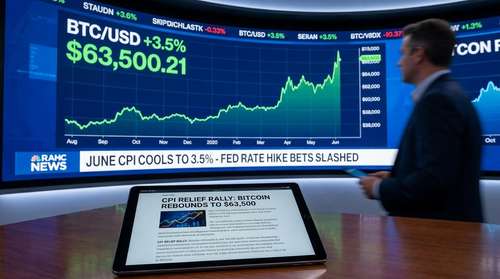

CME Group has officially cemented its dominance in the digital asset derivatives space, announcing today that its cryptocurrency suite now covers over 75% of the total crypto market capitalization. This historic milestone follows the successful February launch of futures contracts for Cardano (ADA), Chainlink (LINK), and Stellar (XLM), effectively bridging the gap between traditional finance and the burgeoning altcoin economy. As Bitcoin grapples with stiff technical resistance near $70,000 amidst escalating geopolitical tensions in the Middle East, institutional investors are increasingly pivoting toward these newly regulated altcoin instruments. With total institutional open interest across the suite hitting a record nearing $25 billion, the market is witnessing a decisive shift in how Wall Street manages crypto exposure in 2026.
Institutional Crypto Market News: The 75% Milestone
The expansion of CME crypto futures represents a calculated strategy to capture the broader digital asset ecosystem. By adding ADA, LINK, and XLM to a roster that already includes Bitcoin, Ether, and the 2025 additions of Solana and XRP, the derivatives giant now offers regulated hedging tools for seven of the top assets by market cap. According to CME Group, this expanded suite allows institutions to manage risk across three-quarters of the entire crypto market, a figure that was unimaginable just two years ago.
"The launch of these altcoin futures is not just about adding new tickers; it's about providing granular exposure," noted a senior analyst at FalconX, one of the counterparties involved in the inaugural trades alongside Marex and Wintermute. The new contracts, available in both standard and micro sizes, are cash-settled against CME CF Reference Rates, ensuring the transparency and liquidity that institutional players demand.
Bitcoin Resistance Levels and Geopolitical Volatility
While the institutional infrastructure expands, the headline asset, Bitcoin, faces a challenging macro environment. Bitcoin resistance levels have hardened between $70,000 and $72,000, capping upside momentum as traders react to crypto market volatility 2026 driven by renewed instability in the Middle East. Unlike previous cycles, however, this volatility has not triggered a mass exodus. Instead, the data suggests a "flight to quality" within the crypto asset class itself.
Despite the headwinds, the resilience of the CME's order book is telling. Institutional open interest has remained near all-time highs, signaling that smart money is hedging rather than fleeing. The divergence between stagnant spot prices and rising derivatives activity indicates that large players are positioning for a breakout once the geopolitical dust settles.
Cardano and Chainlink: The New Institutional Darlings
The spotlight has shifted significantly toward the new entrants. Cardano ADA price forecast models have turned increasingly bullish as the asset's inclusion in the CME suite legitimizes it as an institutional-grade asset. With the probability of a U.S. spot Cardano ETF approval now estimated at over 85% by prediction markets, whales have been accumulating ADA aggressively in anticipation of a liquidity injection.
Chainlink's Deepening Integration
Similarly, Chainlink LINK institutional adoption has accelerated. The network's Cross-Chain Interoperability Protocol (CCIP) is now being utilized by major financial entities for tokenized asset settlement, making the new futures contract a vital tool for hedging operational risk. Reports that the U.S. Department of Commerce is exploring blockchain data verification via Chainlink have further fueled altcoin ETF rumors, with Bitwise's recent filing for a LINK ETF serving as a potential catalyst for the next leg up.
Future Outlook: 24/7 Trading and Beyond
Looking ahead, the market is bracing for CME Group's next major evolution: the transition to 24/7 trading for its crypto portfolio, slated for Q2 2026. This move is expected to eliminate the weekend gaps that have historically plagued crypto futures, aligning regulated derivatives closer to the always-on nature of the underlying spot market. As the boundaries between traditional markets and decentralized finance continue to blur, CME's aggressive expansion confirms that crypto has become a permanent fixture in global institutional portfolios.