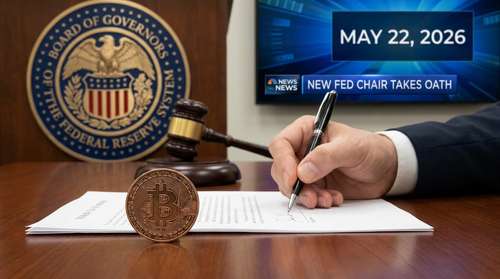
On May 22, 2026, the United States financial landscape experienced a seismic shift perfectly timed with a legendary industry holiday. As the cryptocurrency community celebrates Bitcoin Pizza Day 2026, Kevin Warsh officially took the oath of office at the White House to become the New Fed Chair 2026. Replacing Jerome Powell, Warsh arrives with unprecedented personal and professional ties to the digital asset sector, signaling what many analysts believe will be a golden age for institutional blockchain adoption. This historic transition marks the beginning of the "Warsh Era," fundamentally altering the trajectory of American monetary strategy and banking oversight.
The Dawn of the 'Warsh Era' at the Central Bank
The White House hosted a rare swearing-in ceremony this morning, marking the first time in nearly four decades that a central bank leader took the oath at the executive mansion. The Kevin Warsh Federal Reserve leadership officially began following a deeply divisive 54-45 Senate confirmation vote earlier this month. The vote fell largely along party lines, with Democratic Senator John Fetterman notably crossing the aisle to join the Republican majority in securing Warsh's four-year term.
This confirmation officially ends Jerome Powell's eight-year tenure as chairman. However, the drama surrounding the central bank's leadership is far from over. In a highly unusual move, Powell has opted to remain on the Fed's Board of Governors until his separate 14-year term expires in January 2028. This decision ensures Powell will remain a formidable voice during the transition, potentially setting the stage for ideological clashes over borrowing costs and inflation targets.
A Historic Shift: The Most Crypto-Friendly Fed Chair
What makes today's inauguration truly unprecedented is the incoming chairman's extensive background in decentralized finance. Warsh steps into the role as the most crypto-friendly Fed chair in American history. His financial disclosures released during the nomination process revealed a massive portfolio, with direct stakes in spot Bitcoin ETFs, blockchain infrastructure firms, and prominent projects like Solana, Optimism, and Bitcoin Lightning payment startup Flashnet.
While federal ethics rules require him to divest these holdings, his underlying philosophy remains unchanged. During his confirmation hearings, the former Fed governor consistently argued that policymakers must embrace blockchain-based finance rather than regulate it into the shadows. He has publicly referred to Bitcoin as "the new gold" for younger generations and expressed vocal opposition to a central bank digital currency (CBDC) while favoring private stablecoin issuance.
The Federal Reserve does not explicitly write US digital asset regulation, but its immense influence over banking access, market liquidity, and institutional risk management is undeniable. Industry advocates anticipate that Warsh's appointment could rapidly accelerate the integration of crypto rails into traditional banking frameworks, offering clarity that American firms have demanded for years.
Bitcoin Pizza Day 2026 Meets Wall Street
The poetic timing of today's inauguration carries massive symbolic weight. Exactly 16 years ago today, Florida developer Laszlo Hanyecz spent 10,000 BTC—worth roughly $41 at the time—on two Papa John's pizzas. That simple transaction proved digital scarcity could function as a real-world medium of exchange. Celebrating Bitcoin Pizza Day 2026 alongside the swearing-in of a Bitcoin-advocating central bank chief highlights the asset's staggering journey from a fringe internet experiment to a multi-trillion-dollar macroeconomic pillar.
Navigating Sticky Inflation and Market Expectations
Despite the celebratory mood across digital asset communities, the reality of Federal Reserve monetary policy remains incredibly daunting. The broader crypto market exhibited a muted reaction to the leadership transition today, with Bitcoin trading relatively flat in the mid-$76,000 range. Traders are waiting for concrete policy shifts rather than trading solely on pro-crypto sentiment.
Warsh inherits a complex economic machine. He faces intense political pressure from the administration to lower borrowing costs, yet must navigate an unforgiving bond market where the 30-year Treasury yield recently surged past 5.19%. Core consumer inflation stubbornly sits at 3.8%, driven by persistent global conflicts and rising energy costs.
Furthermore, market analysts emphasize a crucial distinction between Warsh's personal investment history and his new institutional mandate. While he has championed decentralized finance in the private sector, his primary obligation is now ensuring the stability and dominance of the US dollar. Any immediate regulatory pivots may focus more on stablecoin integration than broad, decentralized market deregulation.
Futures markets currently project no immediate rate cuts at the upcoming June 16-17 FOMC policy meeting, defying earlier mainstream expectations. Investors hoping for a rapid return to easy money will likely need to exercise patience as the new chairman works to build consensus among the 12-member voting committee. As the new administration settles into its mandate, readers can rely on cryptovot finance news for continuous, in-depth coverage of how the Warsh regime will impact digital asset liquidity, regulatory frameworks, and global monetary strategy over the coming months.