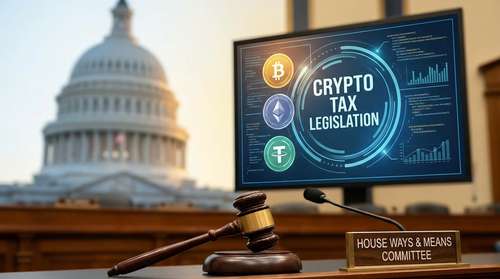
In a defining moment for cryptocurrency regulation US, the federal approach to digital asset taxation is finally getting a much-needed modernization. On June 9, 2026, the House Ways and Means Committee crypto panel held a pivotal legislative hearing to evaluate a comprehensive package of seven standalone tax proposals. Rather than attempting to push a single massive omnibus package, lawmakers strategically divided previous frameworks into targeted legislation to improve their chances of passage. The sweeping proposals aim to rectify some of the most frustrating ambiguities in the current federal tax code, introducing crucial clarity for everyday users, miners, and corporate entities alike.
Breaking Down the 2026 Legislative Strategy
The highly anticipated session drew significant attention from industry leaders, functioning as a high-profile coinbase tax hearing with representatives from major financial and blockchain firms participating in the dialogue. By breaking the previously unified Digital Asset PARITY Act into multiple focused bills, Congress hopes to pass non-controversial measures even if other elements face partisan gridlock.
White House crypto policy adviser Patrick Witt voiced strong support for the unbundled approach, praising the committee for prioritizing both market structure clarity and tax parity. However, the path forward isn't entirely clear of hurdles. While Republicans like Chairman Jason Smith have championed these reforms to maintain American leadership in the digital economy, some Democrats, including Ranking Member Richard Neal, urged caution. Neal emphasized the need to thoroughly evaluate the potential impact on the national tax gap before fast-tracking new exemptions.
Redefining Stablecoin Tax Rules
A central pillar of the newly debated legislation involves overhauling current stablecoin tax rules. Under existing Internal Revenue Service guidelines, spending a dollar-pegged stablecoin is treated as the disposal of property, meaning users technically owe capital gains taxes on minor price fluctuations. This treatment has severely hindered the utility of digital assets in standard commerce.
The revised provisions within the broader legislative framework would formally treat routine payments made with regulated stablecoins as digital cash rather than speculative property. If a regulated stablecoin trades within 1% of its fiat peg for 95% of the preceding year, using it to pay a vendor would no longer trigger capital gains reporting obligations. This shift effectively removes the punishing administrative overhead for merchants and consumers utilizing stablecoins for daily transfers.
Securing Staking Tax Deferral and Mining Relief
One of the most persistent controversies in the blockchain sector has been the taxation of network validation rewards. The newly introduced Tax Clarity for Mining and Staking Act takes direct aim at the industry's notorious phantom income problem. Currently, miners and stakers are frequently required to pay income taxes on newly minted tokens the moment they are received, based on their fair market value. During bear markets, this has led to devastating scenarios where investors owe taxes on tokens that have subsequently lost most of their value.
If enacted, this highly anticipated crypto tax bill 2026 would establish a long-awaited staking tax deferral. Taxpayers would be legally permitted to defer their tax obligations on block rewards and staking yields until the exact moment those assets are sold or converted into fiat currency. This aligns the taxation of digital asset generation more closely with traditional asset creation, shielding network validators from severe tax liabilities on unrealized gains.
The Less Tax Paperwork for Digital Asset Owners Act
Beyond network validation and stablecoins, everyday retail users stand to gain significant relief through H.R. 9178, formally titled the Less Tax Paperwork for Digital Asset Owners Act. Introduced by Representative Rudy Yakym, the bill is designed to drastically reduce the regulatory friction of using bitcoin and other cryptocurrencies for minor purchases.
Key features of this proposal include:
- De Minimis Exemptions: The legislation creates a tax exemption for small, routine cryptocurrency transactions. Buying a cup of coffee with digital assets would no longer require tracking cost basis and reporting fractional capital gains.
- Network Fee Relief: The bill clarifies that using digital assets to pay underlying network gas fees will not trigger a taxable event.
- Streamlined Compliance: By cutting red tape, the legislation aims to boost overall tax compliance while encouraging retail adoption of digital payment networks.
Addressing Wash-Sale Rules and Charitable Donations
While consumer protections and tax deferrals dominated the headlines, the committee also tackled complex institutional and philanthropic tax structures. The Providing Analogous Rules for Digital Assets Act and the Applying Existing Tax Anti-Abuse Rules to the Digital Assets Act aim to close existing loopholes that currently give digital asset traders an unintended advantage over traditional stock market investors. Most notably, the proposed legislation would officially extend traditional wash-sale rules to the cryptocurrency sector, preventing traders from selling assets at a loss for immediate tax benefits only to repurchase the same tokens moments later.
Simultaneously, the Charitable Deductions for Digital Asset Donations Act simplifies the appraisal and deduction process for philanthropic crypto transfers. By creating a standardized framework for digital giving, lawmakers hope to unlock a new wave of charitable contributions from crypto-wealthy individuals who have previously been deterred by IRS auditing fears.
As these proposals move through the legislative markup process, the outcome will fundamentally alter the operational landscape for American cryptocurrency investors. By delivering targeted tax relief and closing institutional loopholes, Congress is laying the groundwork for a mature, highly regulated, and globally competitive digital asset economy.