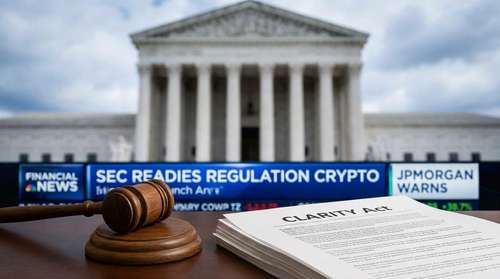
The United States cryptocurrency industry is bracing for a monumental shift this week. On July 15, 2026, the regulatory landscape is caught between a sweeping agency rulemaking push and a high-stakes legislative battle on Capitol Hill. Under the guidance of Chairman Paul Atkins, the Securities and Exchange Commission has fast-tracked a comprehensive regulatory package. The highly anticipated SEC Regulation Crypto July 2026 agenda has been scheduled for a formal Notice of Proposed Rulemaking this month. This rapid pivot toward establishing formal US cryptocurrency laws arrives just as the stalled CLARITY Act faces a defining, make-or-break moment in Congress.
For years, digital asset markets operated under a cloud of deep uncertainty, battered by what industry leaders routinely described as regulation-by-enforcement. The current SEC administration marks a profound departure from that hostile era. By prioritizing clear, proactive rules of the road over retroactive lawsuits, regulators are striving to position the United States as the undisputed global capital for digital assets and decentralized infrastructure.
The Dawn of Paul Atkins SEC Crypto Rules
The scope of the SEC's impending regulatory package is unprecedented. Currently under review by the White House Office of Information and Regulatory Affairs (OIRA), the proposed framework is expected to exceed 400 pages. The core philosophy driving the Paul Atkins SEC crypto rules is straightforward: encourage domestic capital formation while enforcing pragmatic investor protections. Rather than forcing modern blockchain startups to shoehorn their operations into decades-old securities frameworks, the agency is actively building new legal on-ramps.
Key provisions include a four-year startup exemption that permits early-stage crypto projects to raise up to $5 million annually using simplified whitepaper-style disclosures. For more mature networks that need deeper capital, a secondary fundraising exemption would allow issuers to raise up to $75 million within any 12-month period, provided they supply audited financials and semiannual reports. This tiered approach effectively lowers the barrier to entry for innovation, ensuring that blockchain developers are no longer driven to offshore jurisdictions by insurmountable legal and compliance costs.
The Crucial DeFi Safe Harbor SEC Framework
Perhaps the most anticipated element of the July package is the investment contract safe harbor. Decentralized Finance (DeFi) developers and altcoin creators have long argued that tokens should not be treated as perpetual securities if their underlying networks achieve true, distributed decentralization. The proposed DeFi safe harbor SEC initiative addresses this exact friction point directly. It offers a defined, rules-based pathway for digital assets to legally shed their securities classification once active, issuer-led managerial efforts permanently cease.
This structural off-ramp acknowledges the unique lifecycle of tokenized ecosystems. If adopted, it would shield decentralized protocols from enforcement actions while they transition from centralized, founder-led startup operations to fully community-governed networks. Industry advocates view this safe harbor as the missing link required to legitimize the broader Web3 economy.
Upgrading Tokenized Securities Custody Rules
The regulatory overhaul extends well beyond early-stage capital raising. The SEC’s Division of Trading and Markets, working alongside the Division of Investment Management, is preparing essential updates to broker-dealer financial responsibility and recordkeeping standards. These targeted amendments are designed to modernize tokenized securities custody rules, bridging the remaining gap between traditional Wall Street finance and on-chain asset management.
By modifying foundational regulations—such as Rules 15c3-1 and 15c3-3—the agency plans to establish exact parameters for how registered broker-dealers must hold and protect customer crypto assets. Institutional adoption has historically stalled at the custody layer due to crippling regulatory ambiguity. These new rules will provide Wall Street heavyweights, banks, and registered investment advisors the legal certainty necessary to manage tokenized funds, collateral, and spot crypto assets at a global scale.
The CLARITY Act Senate Hearing and the July 17 Showdown
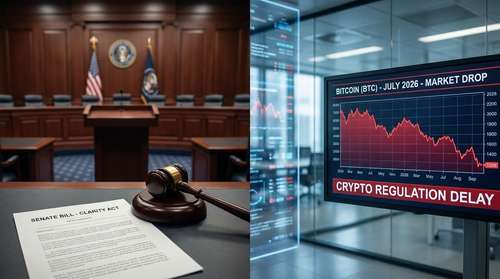
While the SEC smoothly advances its rulemaking pipeline, the legislative track remains highly volatile. The Digital Asset Market Clarity (CLARITY) Act, which overwhelmingly passed the House last year and cleared the Senate Banking Committee this past May, is rapidly losing its momentum. As the dreaded August congressional recess looms, prediction markets estimate the bill's chances of securing the required 60-vote Senate floor threshold have plummeted to roughly 43 percent.
The broader CLARITY Act Senate hearing processes and floor debates have stalled over stubborn partisan disagreements involving stablecoin yields, anti-money laundering provisions, and shifting political dynamics. In a highly unusual maneuver designed to force a breakthrough, the House Financial Services Committee is hosting a pivotal field hearing in New York on July 17. Titled "Building the Future of Finance," this critical showdown will compel lawmakers, ETF issuers, and regulatory holdouts to publicly lay their cards on the table before time runs out.
Shaping the 2026 Crypto Regulatory Agenda
The convergence of decisive SEC rulemaking and congressional gridlock sets the stage for a dramatic third quarter. If the CLARITY Act fails to pass before the August recess, the crypto regulatory agenda 2026 will rely almost entirely on the SEC's administrative output. Chair Atkins’ Regulation Crypto is functionally serving as both a powerful complement to the pending legislation and an essential contingency plan if Congress ultimately falters.
Market participants, institutional investors, and retail traders are aggressively watching the clock. Whether achieved through a sweeping legislative victory or a meticulous 400-page agency rulebook, July 2026 is poised to be remembered as the month the United States finally codified its complex relationship with digital assets. The exhaustive days of legal gray zones are rapidly closing, giving way to a structured, highly regulated future for American crypto markets.