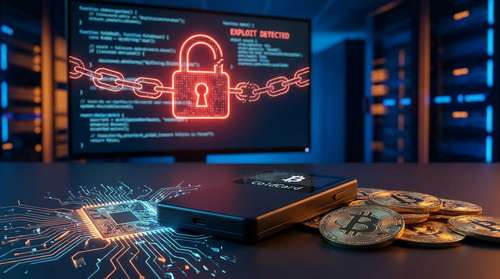
A devastating Coldcard wallet hack has sent shockwaves through the cryptocurrency industry, resulting in the theft of approximately 1,367 Bitcoin worth nearly $89 million. Security analysts confirmed that attackers drained over 4,500 addresses in a sophisticated sweep that exploited a long-dormant vulnerability in the device's code. Unlike traditional crypto thefts involving phishing or malware, this breach did not require the attackers to have physical access to the wallets.
Instead, the hackers leveraged a critical Bitcoin seed phrase vulnerability introduced more than three years ago. The speed and scale of the attack have sparked intense debates about crypto hardware wallet security and whether self-custody solutions are as impenetrable as the industry previously believed.
The Mechanics of the Coinkite Hardware Exploit
The root cause of the crisis traces back to a firmware integration error deployed in March 2021 by Coinkite, the Canadian manufacturer behind the Coldcard wallet series. Specifically, a coding flaw in version 4.0.1 of the Mk3 firmware caused affected devices to skip their secure hardware random number generator.
When users set up their wallets, the firmware defaulted to a deterministic software pseudo-random number generator. This fallback relied on non-secret chip data, such as the serial number and internal clock registers, to create the wallet's master key. The error drastically reduced the device's cryptographic entropy from a robust 128 bits down to just 40 bits.
Because the randomness was so severely constrained, bad actors could reconstruct candidate private keys offline using automated brute-force computations. Once the attackers derived a possible seed, they simply matched the resulting addresses against public blockchain data to see if they held any funds. When a match occurred, the Bitcoin was immediately swept into a consolidation address.
Galaxy Research Tracks the Ongoing Exploits
The systematic draining of funds did not happen all at once. According to the Galaxy Research Bitcoin hack incident report, the theft unfolded across three distinct, highly organized attack waves.
Alex Thorn, Head of Research at Galaxy, noted that the first wave struck on July 30, draining roughly 1,082 BTC from high-value addresses in just 41 minutes. Subsequent waves targeted mid-sized and smaller balances. Thorn warned that the crisis is evolving into a third and potentially fourth wave, as smaller copycat attackers scramble to exploit the remaining vulnerable key space.
The ZachXBT Coldcard Investigation Standoff
As victims pleaded for help tracking the stolen funds, a prominent figure in the on-chain sleuthing community explicitly declined to intervene. A ZachXBT Coldcard investigation will not be happening. The blockchain investigator stated he has no plans to trace the $89 million heist, arguing that Bitcoin maximalists have offered him little financial support for his extensive pro-bono work in the past.
The refusal adds another layer of controversy to the incident. ZachXBT recently drew ire from the community when he criticized the state of hardware storage, dismissing current devices as "garbage" and advising users to store their assets on a dedicated, offline iPhone instead.
Market Reaction and Self-Custody Risks
The market reaction has been swift, with fear creeping back into Bitcoin sentiment. On-chain data platforms like CryptoQuant reported that the panic led to the highest surge in small Bitcoin transfers since the FTX collapse in 2022, as users frantically moved funds to safety. Even former Binance CEO Changpeng Zhao (CZ) weighed in on the incident, highlighting the inherent risks of self-custody. CZ pointed out that when hardware developers patch a bug, they have no direct way to contact users who keep their devices isolated and offline.
What Coldcard Owners Must Do Immediately
Coinkite has released an emergency firmware patch, but cybersecurity experts warn that updating your device is only the first step.
If your wallet was generated on an affected Coldcard Mk3 running firmware 4.0.1 or later, the underlying seed material is already compromised. Updating the software will not magically secure a weak key. To protect your assets from automated draining scripts, you need to take proactive measures.
Here is the recommended protocol for securing exposed funds:
- Generate a completely new seed phrase on a fully updated device or an entirely different, secure wallet.
- Transfer all holdings immediately to the newly generated addresses before attackers sweep the remaining vulnerable keys.
- Stop using the old seed phrase for any future transactions or storage.
The fallout from this vulnerability serves as a harsh reminder that even cold storage requires vigilant oversight. As automated threats become more sophisticated, the hardware custody sector will face immense pressure to overhaul how devices manage underlying cryptographic security.