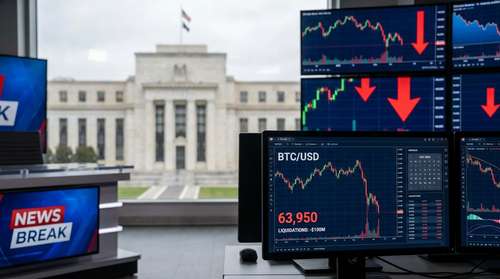

The cryptocurrency market is waving a massive red flag as the Coinbase Bitcoin premium enters unprecedented territory. In a definitive sign of faltering US institutional interest, the closely watched index has logged a historic 76 consecutive days in the negative. Beginning on May 19, this persistent Bitcoin premium index negative streak has shattered previous records, underscoring a notable shift in domestic buying pressure.
The extended negative reading essentially means that Bitcoin is consistently trading at a discount on the US-based exchange compared to offshore competitors like Binance. This prolonged Coinbase discount BTC scenario has applied severe downward pressure on the market, dragging the leading digital asset's valuation from its previous highs down to the $63,000 range. As Wall Street retreats from the spot market, traders are left wondering if this is a temporary lull or the beginning of a deeper structural correction.
Decoding the Institutional Pullback
Understanding the mechanics behind the index is crucial for deciphering current market behavior. The premium specifically tracks the price difference between Bitcoin traded on Coinbase and the global average. Because Coinbase serves as the primary conduit and custodian for American institutional investors and spot buyers, an elevated premium traditionally reflects aggressive domestic accumulation.
Conversely, the current 76-day negative stretch—which nearly doubles the previous 40-day record set between January 16 and February 24 of this year—paints a stark picture for US crypto institutional demand. As domestic buyers pull back, the persistent lack of buying pressure has stripped the broader crypto market of one of its most reliable bullish catalysts.
Capital Shifts to Alternative Markets
The drop in demand isn't happening in a vacuum. Recent market data indicates that institutional capital is rotating away from pure spot crypto exposure and shifting toward tokenized traditional finance (TradFi) perpetual futures. During the first five months of 2026, crypto exchanges processed $1.32 trillion in stock, index, and commodity perpetuals, drawing liquidity directly away from core crypto assets. This migration of capital explains why US buyers are uncharacteristically absent, leaving Bitcoin exposed to offshore volatility.
Spot Bitcoin ETF Outflows Confirm the Bearish Trend
The weakness observed in the spot markets aligns perfectly with the latest data emerging from institutional investment vehicles. Over the past week, spot Bitcoin ETF outflows have confirmed the pessimistic narrative telegraphed by the on-chain metrics.
Recent SoSoValue data reveals that US spot Bitcoin ETFs experienced net outflows of $265.4 million in a single Friday trading session, culminating in negative weekly flows of over $61.5 million. Heavyweight funds, including BlackRock's IBIT, Fidelity's FBTC, and Grayscale's GBTC, all recorded simultaneous single-day drawdowns. This mass exodus of capital suggests that traditional finance participants are taking a risk-off approach amid broader macroeconomic uncertainty.
While total net assets across Bitcoin spot ETFs still maintain a respectable $76.29 billion, the sudden reversal in daily flows acts as a heavy anchor on market sentiment. It demonstrates that institutional investors are currently more inclined to reduce their exposure than to buy the dip, exacerbating the negative premium on Coinbase.
Navigating a Bitcoin Price Under 63k
This perfect storm of vanishing institutional bids and aggressive ETF redemptions has dramatically impacted price action. With the Bitcoin price under 63k, market participants are anxiously watching key support levels to see if the asset can establish a definitive bottom.
Since mid-May, the asset has dropped from the $76,000 level down to the low $60,000s, correlating directly with the widening gap on Coinbase. The continuous sell-side pressure implies that US-based entities are either absorbing offshore supply or actively dumping their holdings. Retail sentiment on platforms like Stocktwits remains firmly in the "bearish" zone, with overall chatter dropping to unusually low levels over the past day.
For a sustainable recovery to materialize, market analysts emphasize that the structural gap must flip back into positive territory. Until the index prints green, indicating that American institutions are ready to deploy capital and pay a premium for liquidity, resistance overhead will likely remain formidable.
Crypto Market News August 2026: What's Next?
As we digest the most critical crypto market news August 2026 has to offer, the primary focus remains on domestic macroeconomic triggers that could revitalize demand. While the 76-day negative streak is historically unprecedented and unnerving for immediate term traders, prolonged periods of negative premiums often precede major market reversals once seller exhaustion finally sets in.
For now, defensive positioning remains the dominant theme across the sector. Traders should monitor daily ETF flows and the readings of the Coinbase gap to front-run any potential change in institutional appetite. Until US buyers step back into the arena to close the valuation discount, the flagship cryptocurrency will continue to face short-term downside risks, testing the resilience of long-term holders in an increasingly fractured global market.