
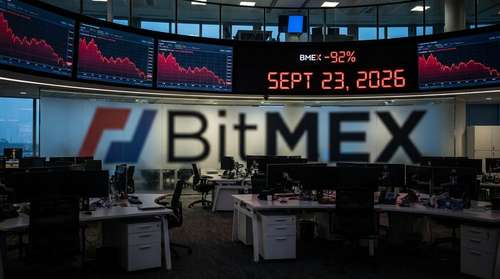
The cryptocurrency landscape is experiencing a seismic shift following the announcement that BitMEX, the pioneering platform that fundamentally changed digital asset trading, is permanently closing its doors. The official news of the BitMEX shutdown 2026 has sent shockwaves through the digital asset market, marking the end of a pivotal 11-year run for the exchange.
On July 23, 2026, executives announced that the platform will cease operations entirely. This major crypto derivatives exchange shutdown highlights the intense consolidation currently sweeping the digital asset industry, as veteran platforms struggle against decentralized competitors and heavily regulated giants.
Behind the HDR Global Trading BitMEX Decision
The choice to wind down operations was not sudden. According to an official statement, the board of HDR Global Trading BitMEX's owner and operator, arrived at the difficult conclusion following a comprehensive strategic review of both the business and the broader cryptocurrency environment. The broader market context provides crucial clues regarding the closure.
Bitcoin prices have faltered significantly throughout 2026, plunging to roughly $65,000—a steep drop from the all-time highs surpassing $126,000 witnessed late last year. Heightened market volatility, sluggish legislative progress in the United States, and persistent ETF outflows have severely impacted exchange volumes. While competitors like Coinbase and Kraken continued to capture spot market share, decentralized platforms like Hyperliquid eroded BitMEX's dominance in the derivatives sector.
Furthermore, the Arthur Hayes BitMEX closure storyline carries historical weight. Co-founders Arthur Hayes, Benjamin Delo, and Samuel Reed pleaded guilty in 2022 to failing to implement an adequate anti-money laundering program. Though they were officially pardoned by U.S. President Donald Trump last year amid his administration's shift toward looser digital asset regulations, the platform never fully recovered its former market dominance. Kaiko data recently indicated the exchange's market share had dwindled to less than 0.01%, managing only around $400,000 in daily trading volumes prior to the announcement.
The Devastating BMEX Token Crash
The immediate market reaction to the closure news was brutal. Within hours of the announcement, a catastrophic BMEX token crash wiped out the vast majority of the asset's value. The exchange's native utility token plummeted by more than 90%, dragging its total market capitalization down to an astonishingly low $497,000.
In preparation for the shutdown, developers completely unstaked all user holdings of the BMEX token and deposited the balances directly back into customer accounts. The sheer velocity of the sell-off reflects retail sentiment on platforms like Stocktwits, where traders realized the utility token would hold absolutely zero value once the exchange's matching engine goes offline.
How to Withdraw Funds from BitMEX Safely
With BitMEX closing September 23 at exactly 04:00 UTC, users are operating on a strict timeline. The company has already halted all new account registrations. If you currently hold assets on the platform, navigating the wind-down protocol requires careful attention to specific dates and changing account permissions.
The Wind-Down Timeline
The operational shutdown will occur in distinct phases to maintain market order:
- August 26, 2026 (04:00 UTC): The exchange will transition into a "reduce-only" mode. Users will be entirely blocked from opening new trades and can only scale back existing positions.
- September 23, 2026 (04:00 UTC): Total closure. Any positions still open at this exact moment will be forcefully liquidated by the matching engine.
Traders must withdraw funds from BitMEX as soon as possible. The company has assured clients that all assets remain completely safe, fully reserved, and under customer control during this transition. However, withdrawal processing times may experience significant delays due to surging demand and blockchain confirmation lags.
A critical penalty awaits those who leave capital on the platform. After the closure date, KYC-verified customers who fail to secure their assets will face severe account maintenance fees. The company will automatically deduct $50 per month, or 1% annually of the remaining balance—whichever figure is greater. Security experts also advise users to remain vigilant against phishing scams, as malicious actors are already promising fake "priority withdrawal" services.
An 11-Year Legacy Comes to a Close
Despite its regulatory hurdles and unceremonious end, the exchange's contribution to digital asset market structure cannot be ignored. Founded in 2014, the platform revolutionized trading by inventing the 100x leverage perpetual swap. This innovative derivative product fundamentally transformed cryptocurrency liquidity, ultimately becoming the most heavily traded financial instrument in the digital asset sector.
The platform also leaves behind a pristine security record. Unlike several of its high-profile competitors that collapsed under the weight of catastrophic cyberattacks, BitMEX famously experienced zero funds lost to hacks throughout its entire operating history. While the landscape of modern finance has evolved past the need for this specific venue, its underlying mechanics will continue powering global cryptocurrency markets for decades to come.