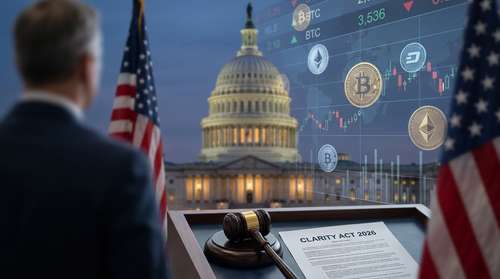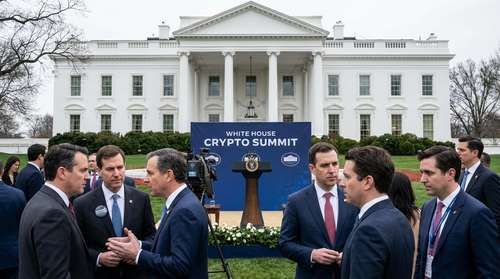
WASHINGTON, D.C. – The White House is the center of a financial firestorm today as administration officials convene a high-stakes summit between top banking executives and crypto industry leaders. The goal: to break the legislative deadlock crippling the CLARITY Act of 2026, a critical market structure bill now stalled in the Senate. At the heart of the standoff is a fierce debate over stablecoin yield regulation—specifically, whether third-party crypto platforms should be allowed to offer interest-like rewards on digital dollar holdings.
The 'GENIUS Act' Loophole: A $6.6 Trillion Battleground
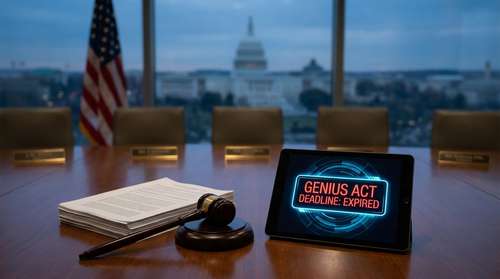
The conflict stems from the unintended consequences of the GENIUS Act, signed into law in July 2025. While that legislation explicitly banned stablecoin issuers from paying interest to users, it left a regulatory gray area that exchanges like Coinbase and Kraken have utilized to offer "rewards" programs. These programs, which effectively pass yield from reserve assets to consumers, have become a massive draw for retail investors.
Traditional financial institutions argue this creates an uneven playing field. Lobbying groups, including the American Bankers Association, are pushing for the CLARITY Act to close this so-called loophole. Their primary concern is the risk of massive deposit migration. A recent Treasury Department report estimated that up to $6.6 trillion in bank deposits could be at risk of flight if stablecoins are permitted to offer competitive yields unchecked, potentially destabilizing the community banking sector that relies on low-cost deposits to fund small business loans.
Banks vs. Crypto: The Arguments Intensify
Inside the Roosevelt Room today, the tension is palpable. Representing the banking sector, executives warn that yield-bearing stablecoins function as shadow banking products—taking deposits and paying interest without the regulatory burdens of FDIC insurance or community reinvestment requirements. They contend that if crypto platforms want to act like banks, they should be regulated like them.
"We are looking at a structural arbitrage that threatens the solvency of regional lenders," noted a senior policy analyst briefed on the bank lobby's strategy. "You cannot have unregulated tech firms offering 4% or 5% APY on what is essentially a checking account proxy while stripping the regulated banking system of its capital base."
The Crypto Industry's 'Red Line'
On the other side of the table, crypto advocates view the proposed ban on rewards as an existential threat to American financial innovation. Brian Armstrong, CEO of Coinbase, has reportedly drawn a "red line" on the issue, arguing that consumer rewards are a marketing expense, not interest, and are vital for driving adoption. Industry leaders warn that a draconian crackdown in the CLARITY Act will simply drive users to offshore platforms where U.S. regulators have zero oversight.
"Banning rewards doesn't stop people from seeking yield; it just sends them to risky offshore jurisdictions," argued a spokesperson for the Crypto Council for Innovation ahead of the summit. "The U.S. risks ceding the future of digital money to Europe and Asia, where regulations like MiCA have already provided clear frameworks that balance innovation with stability."
Political Stakes and the Path Forward
The political pressure to resolve this standoff is mounting. With the 2026 midterm elections on the horizon, neither party wants to be seen as stifling a high-growth industry or, conversely, triggering a banking crisis. Senate Banking Committee negotiations have ground to a halt as members wait for a signal from the White House on how to bridge the gap between safety and innovation.
Administration officials are reportedly floating a compromise: allowing stablecoin rewards but capping them or requiring platforms offering them to obtain a special purpose banking charter. However, finding a middle ground that satisfies both the safety-first mandate of the banking lobby and the pro-growth stance of the crypto sector remains a formidable challenge.
As the summit continues into the evening, the fate of the US crypto regulation update hangs in the balance. A failure to reach a consensus could leave the CLARITY Act in limbo indefinitely, perpetuating the regulatory uncertainty that has plagued the American crypto market for years.