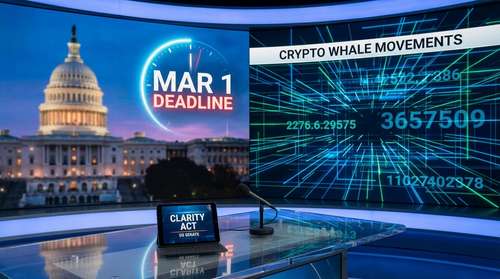
Washington, D.C. — The informal March 1, 2026, deadline for the Digital Asset Market CLARITY Act has arrived, and the tension in Washington is matched only by the volatility on the blockchain. As Senate negotiators race to resolve the final sticking points regarding stablecoin yield regulation and agency jurisdiction, on-chain data reveals a massive surge in whale transaction alerts. Institutional investors are positioning billions in assets, signaling that the market expects a decisive shift in the U.S. regulatory landscape within hours.
The March 1 Deadline: A Make-or-Break Moment?
While not a statutory cliff, today’s March 1 target was set by Senate leaders in coordination with the Trump administration to force a compromise on the stalled legislation. The CLARITY Act (short for the Digital Asset Market Clarity Act) represents the most significant attempt yet to modernize crypto regulation 2026. Following the passage of the "GENIUS Act" (Guiding and Establishing National Innovation for U.S. Stablecoins) in 2025, the CLARITY Act aims to finish the job by establishing a comprehensive market structure.
Sources close to the negotiations report that the White House, led by Treasury Secretary Scott Bessent, is applying immense pressure to break the deadlock. The goal is to provide US crypto legislation updates that finally offer regulatory certainty, allowing American firms to compete with regulated hubs in Europe and Asia. However, despite the "fever pitch" of weekend talks, a final text has not yet been released, keeping the market on a razor's edge.
The 'Yield' War: Banks vs. Stablecoins
The primary obstacle derailing a swift agreement is the contentious issue of stablecoin rewards. The debate centers on whether non-bank stablecoin issuers and exchanges should be permitted to pass yield—generated from reserve assets like Treasury bills—back to users. This stablecoin yield regulation dispute has pitted the traditional banking lobby against the crypto industry.
Traditional banks argue that allowing high-yield stablecoins would create an uneven playing field, potentially draining deposits from community banks into digital wallets that face fewer compliance overheads. Conversely, crypto advocates argue that banning yields stifles innovation and hurts consumers by denying them a share of the interest income generated by their own assets. As of this morning, insiders suggest a compromise might be on the table: a tiered system where only fully regulated, bank-chartered entities can offer direct yield, while others face stricter caps.
Why 'Whales' Are Moving Billions
The uncertainty has triggered whale transaction alerts across major tracking platforms. In the last 48 hours, analytics firms have recorded unprecedented movement of Bitcoin and stablecoins moving between cold wallets and exchange addresses. This "whale" activity—referring to investors holding massive amounts of crypto—suggests two potential strategies:
- Hedging Risk: Some large holders may be moving assets to exchanges to sell quickly if the talks collapse or if the final bill text is unfavorable to DeFi protocols.
- Pre-Positioning for Approval: Others appear to be accumulating positions in assets likely to benefit from the act, specifically "digital commodities" that would fall under a lighter regulatory regime.
SEC vs. CFTC: Ending the Turf War
Beyond stablecoins, the core promise of the bill is resolving the SEC vs CFTC jurisdiction dispute that has plagued the industry for a decade. The CLARITY Act seeks to draw a bright line: digital assets that function as functional commodities (decentralized, used for utility) would be under the exclusive oversight of the Commodity Futures Trading Commission (CFTC), while the Securities and Exchange Commission (SEC) would retain authority over capital-raising "investment contracts."
SEC Chairman Paul Atkins has publicly supported the move, describing the legislation as a necessary modernization that replaces "regulation by enforcement" with statutory clarity. If passed, this would likely classify major assets like Bitcoin and Ethereum unequivocally as commodities, removing the threat of securities lawsuits that hung over the market in previous years.
What Happens Next?
As the clock ticks down on CLARITY Act Deadline Day, the market remains in a holding pattern. If a deal is announced tonight, it could trigger a relief rally and pave the way for a Senate vote as early as April. However, if the deadline passes with no resolution on the yield debate, volatility is expected to spike as traders price in a longer delay. For now, all eyes are on the Senate Banking Committee—and the whales who seem to know that the stakes have never been higher.