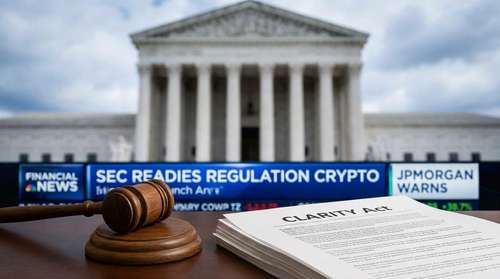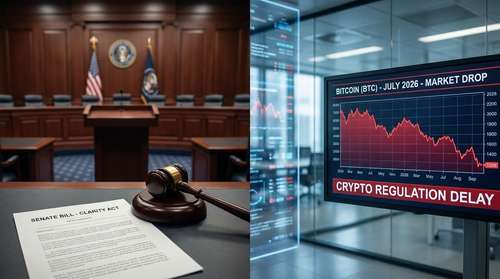
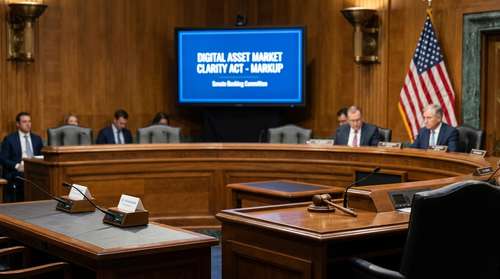
Thursday morning in Washington feels uncharacteristically tense for the digital asset sector. At 10:30 a.m. ET on May 14, 2026, lawmakers convene in Room 538 of the Dirksen Senate Office Building for a high-stakes Senate Banking Committee markup. Their target: the Digital Asset Market CLARITY Act (H.R. 3633). Passing the House in a decisive 294-134 bipartisan vote back on July 17, 2025, the landmark crypto market structure bill stalled out amid heated lobbying and protracted negotiations. Now, armed with a 309-page rewrite reflecting ten months of bipartisan work, industry leaders view today's session as a do-or-die scenario for U.S. crypto legislation 2026.
Defining Boundaries: SEC vs CFTC Jurisdiction
For years, digital asset companies operated under a dark cloud of regulatory ambiguity. Overlapping claims led to enforcement-by-lawsuit rather than proactive policy. The Digital Asset Market CLARITY Act directly addresses the SEC vs CFTC jurisdiction turf war by classifying assets based on their functional behavior rather than arbitrary labels.
Under the proposed framework, the Commodity Futures Trading Commission (CFTC) oversees Digital Commodities, while the Securities and Exchange Commission (SEC) regulates Investment Contract Assets. Crucially, the legislation introduces a novel legal pathway known as blockchain maturity. If a token network begins as a centralized project but achieves sufficient decentralization over time, it can legally graduate from SEC oversight to CFTC jurisdiction. This dynamic classification system offers a clear roadmap for projects to launch, decentralize, and achieve compliance.
Beyond jurisdictional lines, the legislation mandates stringent consumer protections. Digital asset exchanges would be required to maintain strict fund segregation, serving as a direct anti-FTX protection mechanism. Customer deposits must be kept in separate accounts from corporate operating funds, ensuring users remain whole even if a platform faces insolvency.
The Compromise on Stablecoin Yield Regulation
While exchange compliance drew broad consensus, stablecoin provisions were intensely contested. The traditional banking sector aggressively lobbied to shape stablecoin yield regulation, viewing interest-bearing stablecoins as a direct threat to the billions they collect in traditional account fees.
However, a significant breakthrough emerged when Senators Tillis and Alsobrooks reached a compromise. The updated rewrite allows for activity-based rewards but officially bans passive yield on idle stablecoin balances. This targeted adjustment was enough to sway major industry critics. Coinbase CEO Brian Armstrong, who opposed earlier versions, publicly announced his support for the updated draft just hours before the markup, citing healthy compromises that make the legislation workable.
Section 604: Developer Protections Face Backlash
Lawmakers are also bracing for a fierce showdown over Section 604, a vital provision buried inside the sweeping bill. The section shields open-source developers, node operators, and transaction validators from being classified as money transmitters under federal law, provided they never actually take custody of customer funds. Historically, the gray area surrounding money transmission definitions meant regulators could theoretically threaten software developers with severe penalties simply for writing code.
The Fraternal Order of Police Intervenes
However, this exemption drew immediate fire from law enforcement advocates. The Fraternal Order of Police voiced strong opposition, warning that exempting non-controlling developers severely limits prosecutors' ability to track illicit transactions moving across blockchains. Members of the committee will undoubtedly debate amendments targeting this exact carve-out.
What to Expect from the H.R. 3633 Vote
Committee members filed more than 100 proposed amendments ahead of today's Senate Banking Committee markup, underscoring the complexity of transitioning a parallel financial system into the traditional regulatory fold. Prediction markets currently price the odds of the bill becoming law by the end of 2026 at roughly 76%.
Political analysts note that pushing the bill out of committee via a fractured party-line vote would severely cripple its momentum. A comfortable path to the President's desk demands a bipartisan H.R. 3633 vote today. With the White House reportedly targeting July 4, 2026, as the deadline for signing the legislation, the industry has never been closer to actionable legal clarity. If lawmakers can successfully thread the needle, the legislation will establish a robust, regulated foundation for the next major era of American finance.