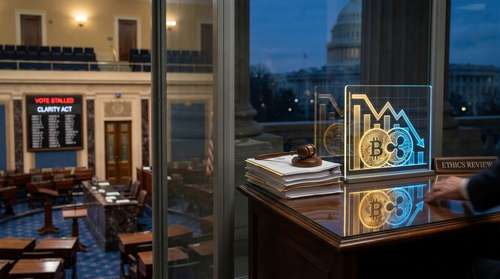

Bitcoin has staged a remarkable recovery to the $66,000 level this Monday morning, March 2, 2026, bouncing back from a sharp weekend sell-off triggered by escalating military conflict in the Middle East. As reports confirm coordinated U.S. and Israeli airstrikes on Iranian targets—rumored to have impacted top leadership—global markets have been thrown into disarray. While oil prices surged 13% and traditional equities faltered, the crypto market's Bitcoin price rebound 2026 narrative is facing its stiffest test yet. Is the premier cryptocurrency serving as a safe haven, or merely a high-beta risk asset?
Geopolitical Shock: Bitcoin Rebounds Amid US-Iran War
The US-Iran war crypto impact was felt immediately over the weekend. As news broke of the strikes, Bitcoin plummeted to a low of approximately $63,000, triggering roughly $300 million in long liquidations across major exchanges. However, unlike previous geopolitical capitulations, the dip was short-lived. By early Monday, buyers stepped in to defend the BTC $66,000 support level, signaling resilience that has surprised bearish analysts.
Trading firm QCP Capital noted that while the initial reaction was a classic "flight to safety"—driving capital into gold and US Treasuries—the swift recovery in crypto suggests that institutional investors are treating the dip as a buying opportunity. "The market absorbed the shock of the conflict escalation surprisingly well," a QCP analyst wrote. "While oil is pricing in a worst-case scenario, Bitcoin's return to the mid-$60k range indicates a market looking beyond the immediate panic."
'Digital Gold' Tested: Bitcoin vs. Traditional Safe Havens
The renewed crypto market geopolitical volatility has reignited the debate over Bitcoin as digital gold. Critics point out that while physical gold and silver hit new multi-month highs immediately following the strikes, Bitcoin initially correlated more closely with the Nasdaq 100, which faced heavy pre-market selling pressure. The divergence raises questions about Bitcoin's maturity as a non-correlated hedge during moments of extreme global instability.
However, proponents argue that the speed of the rebound tells a different story. Unlike stocks, which remain depressed in futures trading, Bitcoin has erased most of its weekend losses. Institutional flows into spot ETFs have remained mixed, but on-chain data suggests long-term holders are not selling. The resilience at $66,000 is seen by many as a validation of Bitcoin's store-of-value thesis, even if its short-term price action remains volatile.
Michael Saylor's 'Strategy' Buys the Dip
Amid the chaos, one corporate giant remains undeterred. Michael Saylor Bitcoin holdings 2026 continue to grow, with his company—now rebranded as Strategy Inc. (formerly MicroStrategy)—executing another massive purchase. According to recent filings, Strategy acquired an additional 3,015 BTC between February 23 and March 1 for approximately $204.1 million, bringing its total treasury to a staggering 720,737 BTC.
Saylor took to X (formerly Twitter) to celebrate the milestone, posting a chart titled "The Turn of the Century." Despite Strategy (MSTR) becoming the most-shorted stock in its class due to its leveraged exposure, Saylor's conviction remains unshaken. His firm's ability to continue accumulating Bitcoin while sitting on unrealized losses demonstrates a high-stakes commitment to the asset class, serving as a psychological backstop for the broader market.
Regulatory Horizon: CLARITY Act Gains Momentum
Beyond the geopolitical headlines, positive regulatory tailwinds are quietly building. JPMorgan analysts released a note this morning suggesting that the U.S. CLARITY Act crypto news could provide a major catalyst later this year. The "Digital Asset Market Clarity Act," which passed the House in 2025, is currently advancing through the Senate Banking Committee.
If passed, the legislation would finally settle the jurisdictional turf war between the SEC and CFTC, classifying Bitcoin and stablecoins clearly as commodities. Analysts predict the bill could be signed into law by mid-2026, potentially unlocking a new wave of institutional capital that has been sidelined by regulatory uncertainty. This looming clarity may be providing a floor for prices, counteracting the bearish geopolitical sentiment.
Technical Outlook: Key Levels to Watch
As the week unfolds, traders are watching two critical zones. The immediate resistance lies at $67,650; a breakout above this could open the path to $70,000. On the downside, if the conflict escalates further and the BTC $66,000 support level fails, the next major line of defense is the weekend low of $63,000, followed by the psychological $60,000 mark. For now, the bulls are holding the line, betting that digital scarcity will ultimately trump geopolitical fear.