
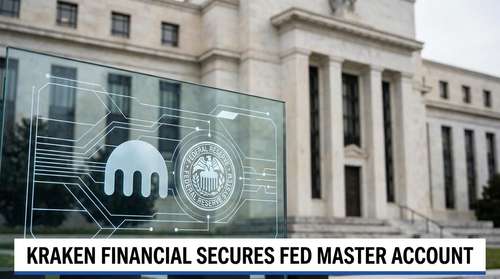
In a watershed moment for the digital asset industry, Kraken Financial has officially become the first crypto-native bank to secure a Federal Reserve master account. Announced on Wednesday, March 4, 2026, this historic approval grants the Wyoming-chartered institution direct access to the U.S. central bank's payment systems, effectively bridging the long-standing divide between traditional finance and the digital asset economy. This milestone eliminates the need for intermediary commercial banks, allowing Kraken to settle transactions directly on core rails like Fedwire.
Breaking Down the Historic Approval
The Federal Reserve Bank of Kansas City confirmed the approval of a "limited purpose" master account for Kraken Financial, operating under the Wyoming SPDI (Special Purpose Depository Institution) charter. This designation is critical, as it allows Kraken to operate as a fully reserved bank—holding 100% of client fiat deposits in liquid assets—while accessing the same settlement infrastructure used by the nation's largest traditional banks.
For years, crypto firms have operated on the periphery of the banking system, relying on third-party correspondent banks to process U.S. dollar transactions. This dependency often created bottlenecks, increased costs, and exposed crypto companies to "de-banking" risks. With this new status, Kraken Financial can now execute wire transfers and settlements with the speed and finality of a central bank member.
What Is a "Skinny" Master Account?
It is important to note that this is not a standard commercial banking license. The Fed has approved what industry insiders often call a "skinny" master account under its Tier 3 framework, which is designed for non-federally insured institutions. While Kraken gains access to payment rails, it will not receive interest on reserves held at the Fed, nor will it have access to the discount window for emergency lending. This tailored approach reflects a shift in crypto banking regulation, moving from total exclusion toward risk-managed integration.
Direct Access to Fedwire Settlement
The most immediate impact of this development is Fedwire settlement access. Fedwire is the backbone of the U.S. financial system, processing trillions of dollars in transactions daily. By plugging directly into this network, Kraken Financial can offer institutional clients near-instant settlement capabilities for fiat currencies, bypassing the delays inherent in multi-hop correspondent banking networks.
"With a Federal Reserve master account, we can operate not as a peripheral participant in the U.S. banking system, but as a directly connected financial institution," stated Arjun Sethi, co-CEO of Kraken. He emphasized that this direct connectivity effectively integrates regulated fiat liquidity into digital asset infrastructure, creating a more resilient foundation for the market.
The rollout will be phased, prioritizing institutional crypto adoption. Initial services will focus on facilitating high-volume fiat activity for institutional partners, ensuring operational stability before potentially expanding to broader market segments.
A New Era for Crypto Banking Regulation
This approval signals a significant thaw in the icy relationship between U.S. regulators and the crypto sector. Just a few years ago, similar applications, such as that from Custodia Bank, faced rejection. The approval of Kraken Financial suggests that the Federal Reserve is now willing to bring qualified digital asset infrastructure providers inside the regulatory perimeter, provided they meet stringent compliance and risk management standards.
Jeff Schmid, President of the Kansas City Fed, noted that while the payments landscape is evolving, the integrity of the system remains paramount. The approval includes specific restrictions tailored to Kraken's business model, ensuring that the unique risks associated with digital assets do not bleed into the broader financial system. This "containment and observation" strategy could serve as a blueprint for future approvals.
Implications for Institutional Adoption
The arrival of a crypto-native bank with a Fed master account removes a major psychological and operational barrier for institutional investors. Hedge funds, asset managers, and corporate treasuries have long cited counterparty risk and inefficient fiat on-ramps as hurdles to entering the crypto market. Kraken Financial's new status offers a level of legitimacy and operational efficiency that was previously unavailable.
By securing this account, Kraken has established a competitive moat, positioning itself as the premier gateway for large-scale capital entering the digital asset space. As the first domino to fall, this event will likely accelerate the race among other major crypto exchanges to secure similar banking charters, fundamentally maturing the market structure of the entire industry.