
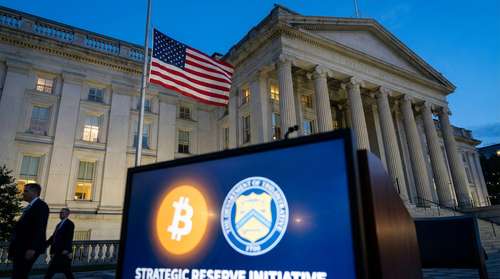
The global financial landscape is undergoing a monumental transformation this week. Following months of speculation and executive maneuvering, the U.S. government has officially moved to codify a Bitcoin strategic reserve into federal law. This landmark policy shift—spearheaded by the introduction of the American Reserve Modernization Act of 2026 (ARMA)—signals the ultimate sovereign endorsement of digital assets. The unprecedented move has prompted a massive surge in market participation from global financial hubs and fueled expectations of a new era for decentralized currency as a core treasury asset.
The American Reserve Modernization Act of 2026
On May 21, 2026, a bipartisan coalition led by Representative Nick Begich (R-AK) and Representative Jared Golden (D-ME) introduced ARMA, effectively formalizing the US crypto reserve policy first outlined in a March 2025 executive order. The legislation establishes a formal vault within the U.S. Treasury, mandating a strict 20-year lock-up period for all government-held Bitcoin. Currently, the United States is the largest known state holder of the cryptocurrency, possessing roughly 328,372 BTC valued at over $25 billion, primarily acquired through law enforcement seizures.
Building on previous legislative efforts, the ARMA bill authorizes the Treasury to acquire up to 200,000 BTC per year for five years, targeting an eventual stockpile of 1 million coins under federal custody. Crucially, the bill strictly prohibits the sale, auction, or mortgaging of these strategic assets for two decades. When that period finally expires, the Treasury may only liquidate limited percentages of the reserve, with proceeds explicitly directed toward reducing the national debt.
Ensuring Transparency and Security
To alleviate concerns regarding federal custody of sovereign digital assets, the legislation implements rigorous oversight mechanisms. The bill requires quarterly public proof-of-reserve disclosures, independent third-party audits, and importantly, bans any federal impairment of personal Bitcoin self-custody. White House crypto advisor Patrick Witt recently described the interagency process as a breakthrough, confirming that the framework is now legally sound and fully capable of safeguarding the nation's digital wealth. The codification guarantees that no future administration can arbitrarily liquidate the stockpile with a simple stroke of a pen.
Triggering Institutional Bitcoin Investment
The formal integration of cryptocurrency into the U.S. balance sheet has entirely redefined crypto market trends 2026. Traditional finance entities are rapidly adjusting their portfolios to account for a shrinking available supply and a newly legitimized asset class. With the 30-year Treasury yield recently climbing above 5 percent—the highest levels seen in years—investors are increasingly looking at hard-money alternatives to absorb the impact of debt-financed monetary pressure.
This statutory permanence provides a foundation of trust that institutional players have long demanded. As a result, institutional Bitcoin investment is accelerating rapidly. Asset managers, corporate treasuries, and pension funds, previously hesitant due to regulatory ambiguity, now have a clear, undeniable signal from Washington. The establishment of a permanent government stockpile validates the long-term thesis that decentralized currencies can and will function alongside traditional fiat reserves.
Market analysts note that removing hundreds of thousands of coins from circulation for twenty years severely constricts the circulating supply. When combined with steady institutional demand, the resulting supply shock paints a bullish picture for the asset's trajectory throughout the remainder of the decade.
BTC Sovereign Adoption and the Global Economy
The geopolitical implications of Washington's actions extend far beyond domestic markets. By cementing its position as a dominant holder of digital wealth, the United States is creating immense game-theory pressure on other central banks. The narrative surrounding the Bitcoin global economy has shifted violently from speculative retail trading to a high-stakes race for sovereign accumulation.
We are already witnessing a ripple effect across the globe. As the U.S. sets the blueprint for acquiring and securing a digital asset stockpile, allied nations and competing economic powers are forced to reevaluate their own treasury strategies. The concept of BTC sovereign adoption is no longer theoretical; it is an active defense mechanism against inflation, currency debasement, and shifting geopolitical power dynamics. If the world's largest economy views digital scarcity as a critical component of its 21st-century financial security, other nations simply cannot afford to be left behind.
The passage of ARMA permanently alters the relationship between decentralized financial networks and sovereign governments. By locking away billions of dollars in digital gold, the United States has firmly embraced the future of money, ensuring its foundational role in the next era of global finance.