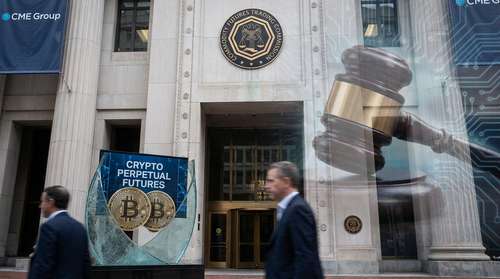
In an unprecedented collision between Wall Street incumbents and the digital asset sector, the world's largest derivatives exchange has fired a massive legal salvo at federal regulators. The high-stakes CME Group CFTC lawsuit, filed on June 18, 2026, challenges the agency's landmark decision to allow prediction market platform Kalshi and digital asset exchange Coinbase to offer regulated crypto perpetual futures to American retail investors. This court battle—lodged in Washington D.C. federal court against the Commodity Futures Trading Commission and Chair Michael Selig—represents a defining moment for domestic market structure.
The Core Dispute: Dodd Frank Act Swaps vs Futures
At the heart of CME's federal complaint is a highly technical but crucial classification debate. The Chicago Mercantile Exchange argues that the newly approved derivative products do not meet the statutory definition of a futures contract under the Commodity Exchange Act. Instead, the exchange insists this structure falls squarely into the category of swaps. The Dodd Frank Act swaps vs futures distinction is far from mere semantics; it dictates entirely different rulebooks. Swaps face significantly tighter oversight, distinct margin requirements, and a more strenuous approval process to protect market stability.
Understanding the Mechanics of "Perps"
To grasp the legal friction, one must look at how these instruments function. Traditional futures contracts inevitably expire on a set date, forcing final settlement or physical delivery of an asset like crude oil or wheat. Perpetuals, by contrast, never expire. They roll over continuously, maintaining price parity with the underlying spot market via an automated funding rate mechanism. Because a perpetual contract fundamentally lacks a delivery obligation, CME asserts the CFTC acted arbitrarily and capriciously by classifying it as a future.
Outgoing CME CEO Terry Duffy didn't mince words during a recent CNBC appearance, labeling the rollout of retail-facing perpetuals a "disaster waiting to happen". The legal filing doubles down on this sentiment, criticizing the commission for rushing its approval orders without adequate public comment or reasoned decision-making.
Unleashing Kalshi Bitcoin Perpetual Futures and Coinbase
The controversy ignited late last month when the regulatory body officially cleared the runway for Kalshi bitcoin perpetual futures, trading under the ticker BTCPERP. Regulators also issued a sweeping policy statement that effectively opened the door for other exchanges to self-certify similar products. Almost immediately, the CFTC provided a no-action position that greenlit foreign perpetual products for American investors through the Coinbase Financial Markets platform.
For years, non-expiring contracts have been the dominant vehicle in offshore digital asset trading, generating a staggering $61.7 trillion in global volume last year alone. Bringing Coinbase perpetual futures US operations online marks a seismic shift, finally onshoring one of the most popular, high-leverage tools in the industry. However, CME argues that handing these novel products directly to the retail public circumvents established clearing and risk standards, effectively granting competitors a free pass around rules that legacy exchanges spend millions adhering to.
A Bitter Turf War: Traditional Finance vs Crypto
The immediate pushback from regulators and the digital asset industry has been fierce, setting the stage for a bitter proxy war of traditional finance vs crypto. A spokesperson for the CFTC swiftly dismissed the complaint as "frivolous," characterizing the legal maneuvering as incumbent lawfare designed to stall a pro-innovation agenda championed by the current administration.
The sentiment is mirrored across the digital asset ecosystem. Kalshi's leadership fired back publicly, stating the litigation isn't actually about the law, but rather the fear of emerging competition. Meanwhile, Coinbase executives framed the regulatory approvals as a long-overdue victory for American investors who previously had to navigate murky offshore waters to access modern contract structures. Wall Street reacted immediately to the escalating tension. By the Thursday afternoon close following the announcement, both CME and Coinbase saw their stock prices slide by 2.1 percent.
Shaping Crypto Derivatives Regulation 2026 and Beyond
As we look ahead, the resolution of this federal complaint will dramatically shape crypto derivatives regulation 2026. If the district court sides with CME and reclassifies these instruments as swaps, it could abruptly halt the domestic expansion of perpetuals, forcing platforms to undergo massive compliance overhauls. Rival platforms like Polymarket, which have signaled intentions to list perpetual contracts soon, would find their roadmaps severely compromised.
Conversely, a victory for the CFTC would firmly establish a new regulatory baseline. It would likely prompt a flood of traditional exchanges to reluctantly launch their own never-ending contracts to retain retail market share against aggressive crypto-native upstarts. The stakes for retail traders are equally high. While proponents argue that regulated perpetuals offer unmatched hedging efficiency and capital flexibility, critics warn that the embedded leverage can trigger cascading liquidations during volatile market swings. Whatever the judge decides, the outcome of this clash between Wall Street's old guard and Silicon Valley's financial innovators will echo through trading desks for years to come.