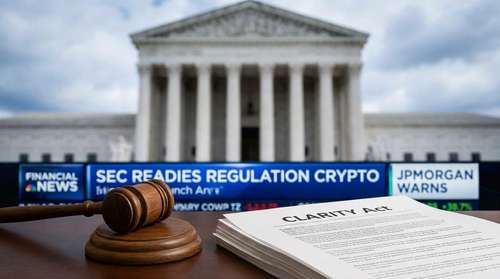
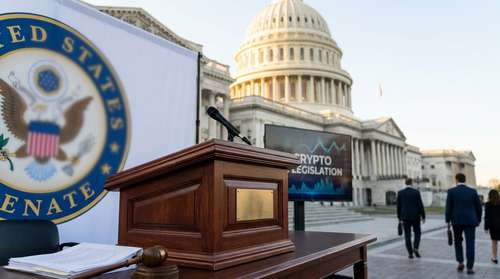
The long-awaited Clarity Act Senate vote is officially on the horizon, signaling a watershed moment for digital finance. As of early June 2026, the landmark US crypto regulation bill 2026 has been placed on the Senate Legislative Calendar, clearing a major procedural hurdle. With mounting bipartisan support and industry anticipation peaking, Treasury Secretary Scott Bessent has directly urged lawmakers for a swift summer passage. For investors, developers, and institutions alike, the successful enactment of this legislation would provide desperately needed rules of the road for the rapidly maturing digital economy.
The Digital Asset Market Clarity Act Reaches a Critical Milestone
The Digital Asset Market Clarity Act (H.R. 3633) is arguably the most consequential regulatory framework ever proposed for the digital asset industry. After passing the House last year, the Senate Banking Committee advanced the measure in a decisive 15-9 vote in mid-May 2026. Now formally sitting on the legislative calendar, the US Senate crypto bill is one step closer to a full floor debate.
For years, digital asset companies have operated under a cloud of regulatory ambiguity. Lawmakers designed this comprehensive cryptocurrency market structure legislation to modernize financial regulations and foster domestic innovation. The bill formally classifies different types of digital assets, aiming to unlock institutional capital that has remained sidelined due to legal uncertainty. Senator Cynthia Lummis, who chairs the Senate Banking Subcommittee on Digital Assets, recently noted that the country is closer to a functioning digital asset market structure than ever before, urging the industry to maintain its focus during this critical final push. Lummis, who is retiring at the end of 2026, faces a limited window to cement her legislative legacy.
Treasury Secretary Pushes for Swift Action
During a June 3, 2026, Senate Finance Committee hearing discussing the 2027 fiscal budget, Treasury Secretary Scott Bessent delivered a clear directive to lawmakers: pass the Clarity Act before the August recess. Bessent emphasized that enacting the legislation is essential to bringing best practices onshore and ensuring the United States remains the undisputed global innovation capital.
The Scott Bessent Bitcoin Reserve Progress
In addition to his push for regulatory certainty, the hearing provided a major update on the highly anticipated Scott Bessent Bitcoin reserve. Addressing questions from committee members, Bessent confirmed that the Treasury Department is actively working to establish a strategic US Bitcoin reserve and a broader digital asset stockpile, a directive stemming from a 2025 presidential executive order.
Bessent noted that the Treasury is "proceeding with all deliberate speed" to build the reserve, emphasizing the need to employ robust best practices for this unprecedented technological integration. Currently, the US government holds roughly 328,000 seized Bitcoin, worth over $215 billion, but the strategic reserve would formalize the management, auditability, and potential future acquisition of these digital assets. This dual approach—establishing a national balance-sheet stockpile alongside structural regulatory frameworks—highlights the administration's aggressive two-track crypto agenda for 2026.
Settling the SEC CFTC Crypto Jurisdiction Battle
Perhaps the most crucial component of the new framework is its potential to end the prolonged SEC CFTC crypto jurisdiction dispute. Under current conditions, digital asset firms have struggled to navigate overlapping and often conflicting enforcement actions from both federal agencies.
The Clarity Act establishes a definitive bright line. It outlines exactly when a digital asset should be treated as a security subject to the Securities and Exchange Commission (SEC) and when it qualifies as a digital commodity governed by the Commodity Futures Trading Commission (CFTC). Specifically, the legislation introduces a maturity and decentralization metric. Once the underlying blockchain network of a token becomes sufficiently decentralized, the asset shifts to commodity status under exclusive CFTC oversight. The SEC would retain authority over primary market token offerings and registered alternative trading systems.
For cryptocurrency platforms, this distinction is transformative. It dictates compliance costs, listing decisions, and strict disclosure rules. Furthermore, the bill introduces "Regulation Crypto," an exemption allowing companies to raise capital without the burdensome requirements historically applied to traditional public equities.
The Road Ahead for the Senate Crypto Bill
While the placement of the bill on the Senate Legislative Calendar is a massive victory, the clock is ticking. Congress has roughly eight weeks before the traditional August break, and election-year politics are already dominating the schedule. To survive, the measure will need 60 votes to overcome a potential filibuster on the Senate floor, requiring a coalition of both Republican and Democratic support.
Several sticking points, including stablecoin yield provisions, software developer protections, and ethics clauses, still require delicate negotiation. However, with heavyweights advocating for summer passage and strong bipartisan committee votes already secured, the momentum is undeniable.
If the Senate manages to pass the Clarity Act this summer, it will fundamentally reshape the global financial landscape. As the administration coordinates its push for structural legislation with the formal establishment of a federal Bitcoin reserve, 2026 is shaping up to be the year the United States finally embraces the future of decentralized finance.