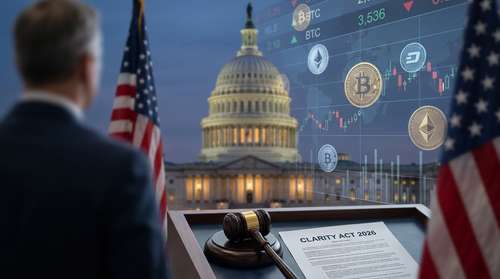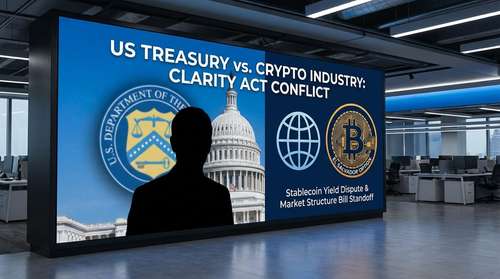
U.S. Treasury Secretary Scott Bessent has delivered his starkest warning yet to the cryptocurrency industry, issuing a public ultimatum to firms stalling the landmark CLARITY Act 2026. In a heated Senate Banking Committee hearing on Thursday, Bessent suggested that digital asset companies unwilling to compromise on new federal regulations should pack their bags. "If you don't want the safety and soundness of the U.S. financial system, move to El Salvador," Bessent told lawmakers, directly targeting a faction of the industry he labeled "nihilists" for obstructing the comprehensive US crypto market structure bill.
The 'Nihilist' Faction and the Legislative Deadlock
The Treasury Secretary's aggressive stance comes at a critical moment for the Digital Asset Market Clarity Act (CLARITY Act), which has been languishing in legislative limbo for weeks. The bill, designed to provide a comprehensive regulatory framework for digital assets, hit a wall last month when industry giant Coinbase abruptly withdrew its support. The reversal derailed a scheduled vote and exposed a widening rift between crypto innovators and the traditional banking sector.
Bessent's testimony made it clear that the administration's patience is wearing thin. By characterizing the holdouts as "nihilists" who prefer chaos to order, he is signaling that the White House is ready to move forward with or without the full consensus of the crypto lobby. "We have to get this CLARITY Act across the finish line," Bessent urged, emphasizing that the bill is essential for integrating digital assets into the broader economy safely.
The Core Dispute: Stablecoin Yield Regulation
At the heart of the standoff is a fierce debate over stablecoin yield regulation. The friction points trace back to provisions in the proposed legislation that would effectively ban non-bank entities from offering interest or "rewards" on stablecoin deposits. The banking lobby, represented powerfully by trade groups in Washington, argues that allowing crypto platforms to pass on yield from Treasury-backed reserves poses an existential threat to traditional bank deposits.
Banks fear that if a crypto wallet can offer a risk-free 4-5% yield on digital dollars—while checking accounts offer near zero—consumers will move their money en masse, destabilizing the community banking system. Coinbase and other major crypto players argue that banning yield stifles innovation and hands banks an unfair monopoly over interest-bearing products.
This dispute has turned the Coinbase regulatory standoff into a proxy war over the future of money. "They are trying to entrench a competitive advantage," a Coinbase executive reportedly stated, arguing that the bill in its current form would relegate crypto firms to second-class citizens in the financial hierarchy.
GENIUS Act Implementation and Unfinished Business
The current battle is essentially a fight to finish what started last year. The GENIUS Act (Guidance for Emerging New Innovation and Underlying Stablecoins), signed into law by President Trump in July 2025, established the initial federal definition for payment stablecoins. However, while the GENIUS Act legalized the issuance of stablecoins, it left critical "market structure" questions—like the legality of third-party yield—unanswered.
GENIUS Act implementation has been proceeding at the Treasury, with Bessent noting that "safe, sound, and smart" stablecoins could actually support U.S. debt markets by creating demand for Treasuries. However, he stressed that the CLARITY Act is the necessary "Phase 2" to close the loopholes that the GENIUS Act left open. Without it, regulators warn of a fragmented landscape where consumer protections vary wildly between platforms.
A Compromise on the Horizon?
Despite the fiery rhetoric, there are signs that crypto banking regulation talks are thawing. Following a tense meeting at the White House earlier this week, rumors are circulating about a potential compromise. One proposal gaining traction would allow crypto platforms to offer yield only if they partner with community banks to hold a portion of their reserves, effectively cutting the banking sector in on the deal.
With a late February deadline looming for the Senate Banking Committee to reschedule the markup, the pressure is on. Bessent's "El Salvador" comment serves as a final notice: the window for negotiation is closing, and the U.S. government is determined to bring order to the crypto markets, with or without the industry's blessing.