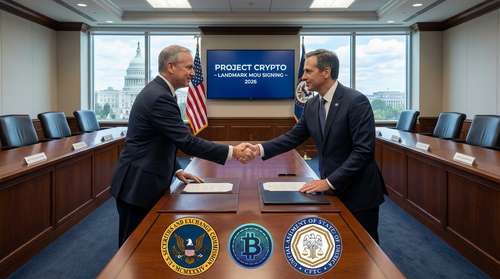
The era of federal agencies battling over cryptocurrency oversight is officially over. In a watershed moment for the digital asset industry, the Securities and Exchange Commission and the Commodity Futures Trading Commission have signed a historic SEC CFTC MOU. Announced on March 11, the agreement formally ends years of bruising jurisdictional conflicts and establishes a unified framework for overseeing the blockchain sector. Spearheaded by SEC Chair Paul Atkins and CFTC Chair Michael Selig, this landmark pact marks a profound shift toward regulatory clarity and sets the stage for a new golden age of American financial innovation.
What the SEC CFTC MOU Means for Digital Asset Jurisdiction
For years, the U.S. cryptocurrency market operated in a frustrating "no man's land". Digital assets frequently exhibit characteristics of both securities and commodities, blurring the lines of digital asset jurisdiction. Under the leadership of former Chair Gary Gensler, the SEC asserted authority over nearly the entire crypto ecosystem through aggressive enforcement actions and broad interpretations of the Howey test. This approach starkly contrasted with the CFTC's view of core assets like Bitcoin and Ethereum as commodities, leading to a fragmented system where companies were routinely caught in the crossfire.
Previously, these aggressive regulation-by-enforcement tactics forced many projects offshore, leaving domestic markets at a severe competitive disadvantage. This newly minted memorandum of understanding fundamentally rewrites the playbook. While it does not alter underlying statutory laws, it binds the two agencies to a shared set of operational protocols. The end goal is a "fit-for-purpose" regulatory environment that accommodates the unique technological realities of blockchain networks without compromising investor protection.
Inside the Joint 'Project Crypto' Initiative
At the heart of this week's agreement is the formalization of the Project Crypto initiative. Originally launched as a standalone effort, the program has now evolved into a massive interagency campaign. The initiative establishes a Joint Harmonization Initiative designed to tackle the most complex structural questions facing the market today.
The core objectives of the initiative include:
- Unified Taxonomy: Establishing clear, shared definitions for various categories of digital assets to eliminate classification guesswork.
- Coordinated Enforcement: Conferring on potential charges, sequencing of filings, and litigation strategies to prevent duplicate penalties.
- Streamlined Registration: Creating a unified compliance pathway for platforms operating across both securities and derivatives markets.
Regulators are actively building a comprehensive taxonomy to clarify exactly where SEC oversight ends and CFTC authority begins. Furthermore, the framework creates mechanisms for real-time data sharing and cross-market surveillance. As a cornerstone of US crypto regulation 2026, this collaborative approach signals that federal agencies are finally prioritizing market structure over turf wars.
Paul Atkins SEC Chair and the Push for Crypto Regulatory Harmony
The driving force behind this unprecedented coordination is the new leadership at the SEC. Paul Atkins SEC Chair has been highly critical of the agency's past approach, candidly acknowledging the "fisticuffs" and adversarial dynamics that previously defined the SEC-CFTC relationship.
During the signing event, Atkins did not mince words about the damage caused by prior administrations. He noted that decades of overlapping mandates and differing rulebooks had stifled technological progress and pushed market participants to other jurisdictions. By partnering with Chairman Selig, Atkins is aggressively pursuing crypto regulatory harmony. Together, they are championing an environment where builders can request coordinated discussions with staff from both agencies simultaneously, effectively eliminating the contradiction and confusion that once plagued the industry.
Clearing the Path: Tokenized Securities Innovation Exemption
Beyond resolving the immediate administrative chaos, the MOU paves the way for advanced financial products to legally launch on domestic platforms. A major focus moving forward is the anticipated rollout of a tokenized securities innovation exemption. This highly anticipated safe harbor will allow market participants to experiment with tokenized traditional assets, smart contract-based clearing, and new margin standards without the immediate threat of punitive enforcement.
Regulators are actively seeking to facilitate alternative compliance paths. This includes potential frameworks for appropriately regulated "super apps" that handle everything from the spot trading of digital commodities to the complex settlement of tokenized equities, all within a single user interface. By removing the friction of duplicative collateral standards and modernizing clearing rules, the agencies are unlocking vital balance sheet capacity.
Looking Ahead for US Markets
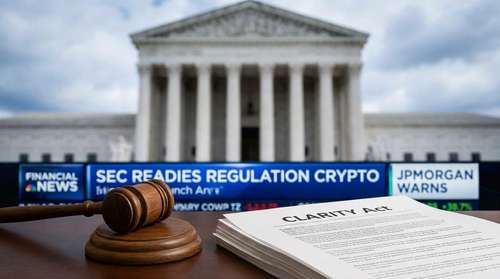
The execution of this memorandum is a clear signal that the United States is serious about maintaining its financial supremacy. While comprehensive legislation like the Digital Asset Market CLARITY Act remains stalled in Congress, regulators are no longer waiting for lawmakers to provide a lifeline. They are using their existing authorities to build a cohesive, forward-looking system.
Market participants should prepare for a wave of joint rulemaking and interpretive guidance in the coming months. For the first time in the history of the industry, founders, investors, and institutions can operate with the confidence that their primary regulators are actually on the same page. The jurisdictional war is over, and the era of building can finally begin.