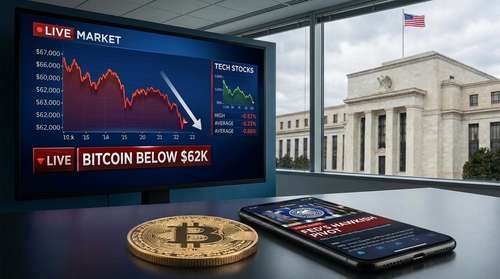
Bitcoin tested a two-week low near the $62,000 mark this Tuesday, shedding roughly 3% over a 24-hour window as a wave of risk-off sentiment swept through global markets. The steep Bitcoin price drop arrives as institutional investors and retail traders digest the harsh reality of a newly aggressive central bank strategy. At the helm of this macro shift is Kevin Warsh, Fed Chair, whose debut leadership at the June 2026 FOMC meeting triggered widespread liquidations across both traditional equities and digital asset ecosystems.
The Warsh Effect and a Hawkish Reset
Market participants had largely priced in the Federal Reserve's decision to hold its benchmark interest rate steady at the 3.50% to 3.75% range. However, the real shockwave came from the accompanying rhetoric and structural shifts in communication. Warsh executed a drastic pivot, stripping traditional forward guidance from the central bank's official statement and signaling a strict, uncompromising focus on price stability.
The updated hawkish Fed dot plot caught Wall Street entirely off guard. Policymakers unexpectedly signaled the potential for rate hikes through the remainder of 2026, pushing their headline Personal Consumption Expenditures (PCE) inflation estimate up to 3.6% from 2.7%. By refusing to coddle the markets with promises of imminent rate cuts, Warsh essentially evaporated the liquidity optimism that had buoyed risk assets earlier in the year. The new chair made it clear he will not yield to political pressure, stating plainly that the calm is temporary and the inflation bill has yet to be paid.
Yields Spike as Forward Guidance Fades
Financial analysts are already drawing comparisons to the infamous 2013 taper tantrum. Without predictable forward guidance, Treasury yields have destabilized and surged, instantly drawing capital away from risk-on asset classes. When risk-free government bonds offer higher yields, holding non-yielding digital assets becomes a substantially tougher sell for macro fund managers. As Grayscale research noted this week, Bitcoin's underperformance is directly tied to these rising rate-hike expectations.
Collateral Damage: Tech Stock Selloff Fuels Crypto Pain
The current crypto market correction cannot be analyzed in a vacuum. Bitcoin's slide mirrors a brutal tech stock selloff that erased hundreds of billions in market capitalization from major indices globally. The Nasdaq Composite tumbled 2.2% on June 23, while the S&P 500 gave up 1.4%. Overseas, the contagion was even more severe, with South Korea's KOSPI plunging nearly 10% as semiconductor heavyweights collapsed under regulatory and valuation anxieties.
This correlation highlights how deeply intertwined digital gold has become with Silicon Valley equities. As multi-asset funds rushed to derisk their portfolios amid fears of higher Federal Reserve interest rates, they aggressively rotated capital out of high-beta tech and Bitcoin simultaneously. The market is currently demanding immediate profitability over future promises, placing intense pressure on high-valuation growth sectors.
- ETF Exhaustion: The institutional demand structure for Bitcoin has fractured over the past month. The U.S. spot Bitcoin ETF complex has now recorded six consecutive weeks of net withdrawals, draining over $6 billion in aggregate as traditional finance managers pull back.
- AI and Tech Carnage: Artificial intelligence darlings and semiconductor giants led the equity decline, pulling broad market sentiment into "Extreme Fear" territory on the Crypto Fear and Greed Index. Nvidia shares slipped 4%, while Micron plummeted over 13%.
- Currency Pressures: A strengthening U.S. dollar, propped up by the threat of sustained high rates, continues to create fierce headwinds for global liquidity and dollar-denominated assets like Bitcoin and gold.
Will the Crypto Market Correction Deepen?
While the immediate technical picture appears grim—with dense derivative liquidation zones clustered around the $60,500 support level—underlying on-chain data presents a nuanced divergence. The oldest cohort of Bitcoin holders, often referred to as "OG wallets," have completely throttled their selling. Current metrics show distribution volume from these veteran addresses hitting a 19-month low. This foundational holding behavior suggests that long-term believers remain unfazed by the immediate macroeconomic turbulence.
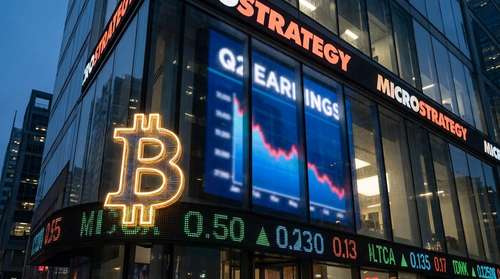
Corporate adoption also continues quietly in the background. Despite the massive ETF outflows, entities like MicroStrategy recently acquired an additional 520 BTC for roughly $35 million, demonstrating conviction in the asset's long-term value proposition.
Looking Ahead to July
Institutional appetite relies heavily on macro conditions. Until the market receives clarity on whether the Fed will actually pull the trigger on a rate hike at the upcoming September meeting, high-duration assets will likely experience intense volatility. Investors are now hyper-focused on Warsh's scheduled July 14 congressional testimony. Any softening of his inflation stance could provide the exact catalyst needed to reverse the current downtrend and spark a catch-up rally. Conversely, if the new chair doubles down on the hawkish narrative, both equities and digital assets could face a prolonged summer consolidation.