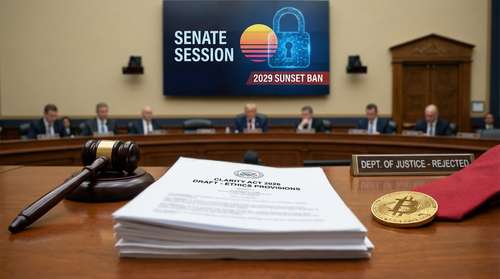
In a significant regulatory breakthrough for the digital asset industry, the U.S. Securities and Exchange Commission (SEC) has officially granted conditional no-action relief to providers of crypto user interfaces. Issued on April 13, 2026, by the SEC's Division of Trading and Markets, the guidance exempts developers of self-custodial wallets and decentralized finance (DeFi) frontends from traditional broker-dealer registration, provided they maintain strict neutrality. This SEC crypto interface relief marks a profound shift in oversight strategy, arriving just as the bipartisan Digital Asset Market Clarity Act (CLARITY Act) nears the finish line in the U.S. Senate.
For years, technology providers have operated in a legal gray area, fearing that simply providing software to interact with blockchains could trigger enforcement actions. The new staff statement effectively clears the immediate path for these tools. By acknowledging that front-end interfaces serve as technological infrastructure rather than traditional financial intermediaries, regulators are laying the groundwork for a more cohesive DeFi regulatory framework.
Unpacking the SEC Crypto Interface Relief and Broker-Dealer Exemption
Under the new interim guidance, valid for five years, "Covered User Interface Providers" can facilitate user-initiated digital asset transactions without violating Section 15 of the Securities Exchange Act of 1934. To qualify for this crypto broker-dealer exemption, platforms must adhere to rigid operational boundaries. The core requirement is the absolute absence of platform discretion.
Developers can offer a web portal or mobile application that connects a user to automated market makers (AMMs) or liquidity pools, but they cannot influence the trade. The SEC mandates that interface providers rely exclusively on pre-disclosed, objective criteria—such as latency, security, and liquidity—when presenting routing options. If the interface begins acting like an active participant, the protections instantly vanish. This creates an interesting dynamic for aggregator protocols that actively find counterparties or optimize execution paths, which may now require more rigorous compliance checks to stay within the safe harbor.
Boundaries of Self-Custodial Wallet Regulation
The SEC drew a hard line between permissible software provision and regulated financial activity. To maintain compliance under the new self-custodial wallet regulation standards, providers are strictly prohibited from holding or managing user funds. They cannot negotiate transaction terms, arrange financing, or solicit specific investments.
While the industry has widely praised the development, some regulators believe it is merely a stepping stone. SEC Commissioner Hester M. Peirce issued a corresponding statement commending the staff's efforts but highlighting the conceptual tensions of a temporary fix. She called for the agency to confront its broader regulatory challenges and adopt a permanent, formalized approach to digital asset supervision rather than relying on time-limited no-action letters.
The CLARITY Act 2026 Surge and Shifting US Digital Asset Laws
This SEC crypto policy shift does not exist in a vacuum. It coincides with massive legislative momentum on Capitol Hill surrounding the Digital Asset Market CLARITY Act of 2025 (H.R. 3633). After passing the House in July 2025 with robust bipartisan backing, the bill has been the subject of intense closed-door Senate negotiations throughout early 2026.
According to a recent mid-April client note from JPMorgan analysts, the CLARITY Act 2026 negotiations have rapidly narrowed down to just a few manageable sticking points. A long-standing dispute over whether platforms could offer rewards on passive stablecoin balances—an issue that had stalled talks for months due to traditional banking sector concerns—has reportedly reached a compromise. While passive stablecoin yield will be restricted, activity-based rewards tied to transfers and platform usage will be permitted. If passed, the legislation will permanently redefine US digital asset laws by formally splitting jurisdiction between the SEC and the Commodity Futures Trading Commission (CFTC), ending years of bureaucratic turf wars.
Bridging the Divide: SEC and CFTC Coordination
The architecture of a unified American crypto market structure is finally coming into focus. The SEC's latest move closely mirrors parallel developments at the CFTC. Just last month, on March 17, 2026, the CFTC issued No-Action Letter No. 26-09 to Phantom Technologies, granting the wallet provider similar relief to facilitate access to regulated derivatives without registering as an introducing broker.
Together, these coordinated actions reflect a concerted push by federal agencies to establish a dual-framework system ahead of the CLARITY Act's expected passage. Digital commodities that operate on mature, decentralized networks will fall under the CFTC's primary purview, while tokenized debt, equities, and investment contract assets will remain under the SEC's watchful eye. Legal experts note that while the conditions imposed by the two agencies differ materially—especially regarding the need for individualized relief—the overarching message is clear. For businesses building the next generation of financial technology, this dual-agency alignment offers the clearest operational roadmap seen in over a decade.
As institutional investors prepare for a heavily regulated but legally certain environment, the era of regulation by enforcement appears to be sunsetting. The landmark software exemption, paired with impending federal legislation, ensures that the United States is finally ready to embrace decentralized infrastructure on its own regulatory terms.