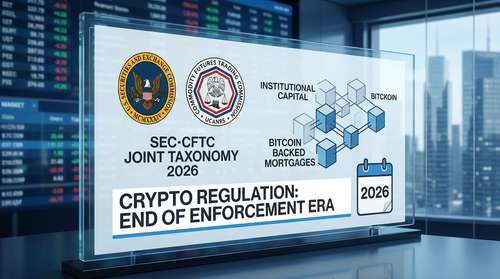
The landscape of American digital finance has fundamentally shifted. Following years of unpredictable legal battles and fragmented oversight, federal regulators have officially launched a unified framework that replaces litigation with definitive clarity. Anchored by the highly anticipated SEC CFTC joint taxonomy 2026, this landmark regulatory initiative categorizes most blockchain-native tokens, stablecoins, and network airdrops as non-securities. Under a comprehensive strategy dubbed ACT—Advance, Clarify, and Transform—institutional capital is finally positioned to enter the digital asset market without the looming threat of sudden enforcement actions.
The Paul Atkins SEC Crypto Strategy and the 'ACT' Framework
The decisive turning point arrived with the publication of a 68-page joint explanatory document outlining the SEC CFTC joint taxonomy 2026. Spearheaded by Securities and Exchange Commission (SEC) Chair Paul Atkins and Commodity Futures Trading Commission (CFTC) Chair Michael Selig, this interagency effort ends the historically hostile approach to blockchain oversight. Speaking at the DC Blockchain Summit, Atkins crystallized the new direction, famously declaring that the agency is no longer the "Securities and Everything Commission".
The core of the Paul Atkins SEC crypto strategy relies on definitive non-security token classification. By providing a five-category token taxonomy, the agencies have established that digital commodities, functional network tokens, and stablecoins are fundamentally exempt from the restrictive securities laws designed for traditional equities. This structural shift prevents the agencies from launching overlapping investigations and offers market participants immediate, actionable guidance.
Protecting Innovation: The Crypto Regulatory Safe Harbor
To further foster domestic technological growth, Atkins formally introduced a robust crypto regulatory safe harbor. Inspired by earlier industry proposals, this legal buffer features three distinct exemption pathways tailored for emerging blockchain networks. The most prominent is the startup exemption, which grants decentralized projects a four-year runway to achieve network maturity and full decentralization. During this grace period, developers can raise up to $5 million without triggering the costly compliance burdens typically reserved for publicly traded corporations. This allows innovation to thrive on American soil without immediately running afoul of federal laws.
Unlocking Mainstream Capital: Bitcoin Backed Mortgages 2026
With legal barriers finally dismantled, unprecedented institutional products are quickly moving from concept to reality. Because financial institutions no longer fear retroactive enforcement, they are actively integrating digital assets into foundational traditional finance structures. The most prominent example of this mainstream adoption is the rapid introduction of Bitcoin backed mortgages 2026.
Pioneering this monumental shift, government-sponsored enterprise Fannie Mae recently announced plans to accept crypto-collateralized home loans. This marks the first formal integration of digital assets into the federal housing finance system. Acting swiftly on the new guidance, major real estate lenders and crypto exchanges, including Better and Coinbase, launched mortgage products allowing buyers to pledge Bitcoin and USDC directly as collateral.
The consumer benefits are substantial. Borrowers can leverage their digital wealth to secure housing without liquidating their portfolios, effectively bypassing immediate capital gains taxes. Furthermore, the loans align with strict Fannie Mae standards, ensuring that lenders only liquidate pledged assets if payment delinquency exceeds 60 days, rather than issuing immediate margin calls during standard market volatility. Beyond the real estate sector, this newfound regulatory clarity is paving the way for advanced institutional instruments, including the first rated municipal bonds tied to blockchain architecture.
Legislative Bridges: The Digital Asset Market Clarity Act
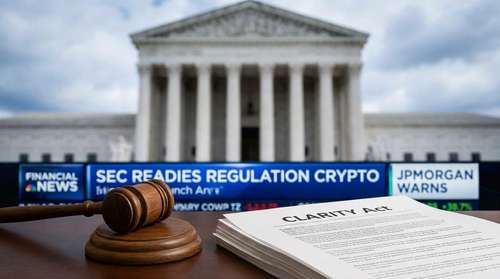
While the joint agency guidelines provide immediate operational relief, federal lawmakers are working aggressively to codify these principles into permanent law. The agencies have explicitly positioned the SEC CFTC joint taxonomy 2026 as an interim bridge to maintain market stability while Congress finalizes the Digital Asset Market Clarity Act.
This sweeping legislation, which passed the House with overwhelming bipartisan support and is currently navigating the Senate Banking Committee, aims to permanently cement the jurisdictional boundaries between the SEC and the CFTC. Atkins has forcefully urged lawmakers to pass the legislation to "future-proof" regulatory oversight. By permanently eliminating the whiplash of regulation by enforcement, the bill will prevent future administrations from arbitrarily reclassifying assets and derailing technological progress.
The Future of US Crypto Regulation Updates
The successful execution of the ACT strategy underscores a massive policy pivot, signaling that the United States intends to reclaim its leadership position in global financial technology. For retail investors, software developers, and Wall Street institutions alike, the latest US crypto regulation updates provide the exact legal bedrock requested by the industry for nearly a decade. As the new taxonomy takes effect and capital flows into regulated, crypto-backed financial products, the era of paralyzing uncertainty is officially over, giving way to a period of unprecedented market clarity.