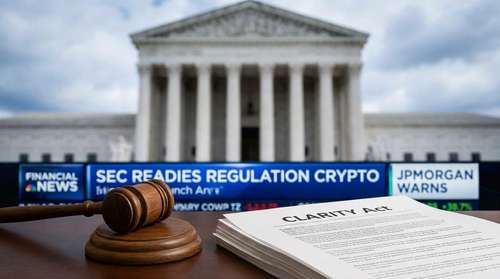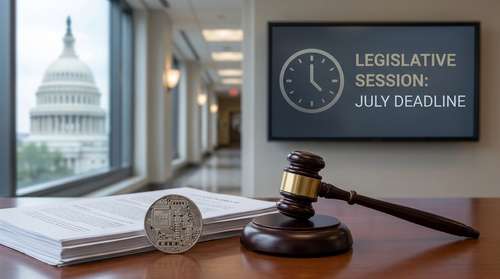
The U.S. Senate is currently locked in high-stakes negotiations as lawmakers race to advance the Digital Asset Market Clarity Act—widely known as the CLARITY Act—for a critical floor vote this July. With the legislative window rapidly closing before the August recess begins on August 10, 2026, proponents of the landmark U.S. crypto regulation face a daunting challenge. A congested congressional agenda, exacerbated by ongoing disputes over national defense spending and a stalled major housing bill, threatens to completely derail the timeline. If negotiators cannot resolve lingering conflicts surrounding decentralized finance (DeFi) liability and executive ethics provisions, the most comprehensive Senate cryptocurrency bill to date could face years of delays, potentially pushing any final resolution to 2027 or beyond.
The Race Against the August Recess
For years, the digital asset industry has pleaded with Washington for a dedicated, coherent regulatory framework. Now, the CLARITY Act represents the closest Congress has come to finally answering that call. The legislation, formally known as H.R. 3633, successfully cleared the House of Representatives in July 2025 with an impressive 294-134 bipartisan mandate. Following its subsequent passage through the Senate Banking Committee on May 14, 2026, by a 15-9 margin, Republican champions like Senator Cynthia Lummis (R-Wyo.) and Senator Tim Scott (R-S.C.) have been pushing relentlessly to bring the bill to the floor.
Lummis, viewing the digital asset sector as crucial while U.S. debt exceeds 100% of GDP, recently indicated that an updated draft text could be released as early as July 4. She confirmed that lawmakers hope to get a bill to the Senate floor in July, emphasizing that the current alignment between the House, Senate, and the White House offers a rare, fleeting opportunity. However, clearing the upper chamber requires 60 votes to bypass a legislative filibuster. With Republicans currently holding 53 seats, they must secure the backing of at least seven Democrats in a highly polarized midterm election year. Missing the mid-August deadline could mean tabling the discussion until after the November elections, potentially forcing the industry to start from scratch with a new Congress next January.
Resolving the SEC vs CFTC Turf War
At the heart of this legislation is an ambitious plan to completely overhaul digital asset market structure in the United States. The industry has long suffered from overlapping mandates, but the CLARITY Act draws distinct jurisdictional lines. Under the current draft, the Commodity Futures Trading Commission (CFTC) would gain exclusive authority over spot markets for digital commodities. Meanwhile, the Securities and Exchange Commission (SEC) would retain its oversight of investment contract assets.
By formally codifying the SEC vs CFTC divide, the bill creates a mature blockchain test that allows tokens to officially transition from securities to commodities once their underlying network becomes sufficiently decentralized. This shift effectively ends the era of regulation-by-enforcement, providing digital asset exchanges and non-custodial developers with a viable, long-term path to compliance.
DeFi Liability and Ethics Provisions Threaten Progress
Despite the bipartisan momentum that initially carried the bill out of committee, daily Senate meetings have highlighted severe ideological fractures. Lawmakers are struggling to find a sustainable compromise on Section 604, a contentious provision that creates a federal safe harbor for non-custodial software developers and DeFi protocols. While the industry views this protection as vital for technological innovation, law enforcement agencies have warned that it could hinder investigations into crypto mixers and illicit finance networks. Senator Angela Alsobrooks and others have strongly emphasized the need for robust illicit finance provisions before any final vote takes place.
Furthermore, strict ethics provisions restricting senior government officials and the President from holding or profiting from digital assets remain a major sticking point. These internal crypto policy debates are simultaneously colliding with broader macroeconomic and political headwinds in Washington. A stalled housing bill—which faces resistance from the White House—and fierce disagreements over national defense appropriations are aggressively eating up valuable floor time. Senate Majority Leader John Thune acknowledged the tight schedule, noting that while a path exists, lawmakers are quickly running out of time. Democratic Senator Mark Warner offered a blunter assessment of the ongoing negotiations, expressing deep disappointment over the lack of progress.
Will Crypto Legislation 2026 Survive?
As the July deadline fast approaches, the future of crypto legislation 2026 hangs delicately in the balance. Industry analysts at Galaxy Research currently place the odds of the bill passing before the recess at roughly 60%, a downgrade from their previous 75% estimate, reflecting a cautious sense of optimism mixed with political reality. Meanwhile, heavyweights like the Blockchain Association and the Digital Chamber remain confident that a July floor vote is still achievable despite the heavily crowded legislative calendar.
Crypto industry leaders continue to lobby aggressively, viewing this shrinking legislative window as the ultimate opportunity to establish U.S. dominance in the global digital asset sector. If the Senate fails to act by August 10, capital and technological talent will likely continue migrating to overseas jurisdictions that have already established clearer regulatory rulebooks. The coming weeks will definitively reveal whether the United States is ready to embrace a cohesive, forward-looking regulatory strategy, or if the CLARITY Act will become yet another casualty of Washington's notorious partisan gridlock.