The U.S. Securities and Exchange Commission has delivered a landmark regulatory proposal to the White House, initiating a profound shift in the federal government's approach to cryptocurrency. Submitted to the Office of Information and Regulatory Affairs (OIRA) on March 3, 2026, the comprehensive SEC Token Taxonomy framework establishes a formal system to classify digital assets. Driven by SEC Chairman Paul Atkins 2026 initiatives, this pivotal document aims to resolve years of legal ambiguity for the finance sector. By establishing clear regulatory boundaries, the agency is providing the digital asset market clarity necessary for crypto firms to operate, register, and innovate legally within the United States.
Decoding the Four-Part Token Taxonomy
At the core of the agency's submission is a document titled "Commission Interpretation on Application of the Federal Securities Laws to Certain Types of Crypto Assets and Certain Transactions Involving Crypto Assets." Rather than treating the entire crypto market as a monolithic entity, the new taxonomy categorizes tokens into four distinct buckets.
First, it identifies network tokens or digital commodities—functional assets whose value relies on decentralized programming logic rather than the managerial efforts of third parties. Second, the framework outlines digital collectibles, encompassing non-fungible tokens (NFTs), trading cards, and gaming assets. Third, it defines digital tools, which include blockchain-based memberships, tickets, and identity certificates.
Crucially, the SEC indicates that these first three categories do not constitute securities. The fourth category, tokenized securities, represents traditional financial instruments recorded on a blockchain. This rigorous crypto securities classification ensures that only assets truly representing an interest in a traditional financial enterprise remain under strict SEC supervision, allowing other tokens to trade freely on state-regulated or Commodity Futures Trading Commission (CFTC) platforms.
The Power of a Commission Interpretation
The decision to utilize a Commission Interpretation is a strategic maneuver by the current administration. Unlike formal rulemaking—which necessitates lengthy public notice and comment periods—this guidance immediately clarifies how existing laws apply to digital assets. More importantly, it carries significantly more legal weight and enforcement authority than the informal, staff-level statements frequently utilized during the previous administration.
Because this SEC interpretive guidance crypto document does not require a formal commission vote, it can be implemented swiftly following the prerule interagency review. For funds, custodian banks, and trading platforms, this means actionable rules regarding which digital assets they can list and offer to clients. Legal analysts note that this mechanism is highly effective for transitioning the industry out of an era defined by regulation-by-enforcement into a period of predictable compliance.
White House Mediation and the Legislative Bridge
The SEC's framework is currently undergoing standard interagency review at OIRA, a crucial step in broader White House crypto regulation. However, the regulatory maneuvers extend beyond the SEC. On March 2, the CFTC, led by Chairman Mike Selig, submitted its own regulatory measure regarding prediction markets to OIRA.
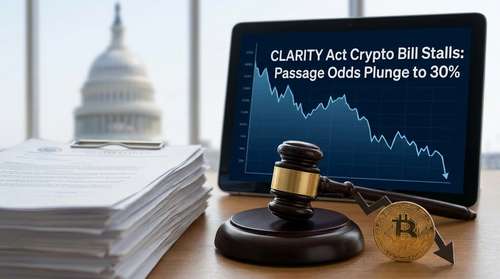
Together, these agencies are constructing a regulatory bridge while comprehensive legislative efforts remain bogged down on Capitol Hill. A sweeping market structure bill is currently stalled in the Senate. The primary legislative roadblock stems from intense disputes between traditional banking executives and crypto firms regarding stablecoin yields and rewards. Trump administration officials have hosted multiple mediation meetings to break the deadlock. Until lawmakers can pass a definitive US crypto policy update, the SEC's taxonomy will serve as the de facto law of the land for digital asset markets.
A Regulatory Pivot for Financial Innovation
The introduction of this taxonomy underscores a dramatic ideological shift at the regulator. During the Gary Gensler era, aggressive enforcement actions stymied domestic blockchain development, with the SEC launching 33 major cryptocurrency investigations in 2024 alone. Since Chairman Atkins assumed office, new prosecutions have plummeted by 60 percent, and high-profile lawsuits against major exchanges have been dismissed or withdrawn.
By establishing bright-line rules, the SEC is paving the way for integrated financial platforms where retail and institutional investors can seamlessly manage traditional tokenized bonds, network tokens, and digital collectibles in a single compliant environment. As the White House finalizes its review, the United States is positioning itself to reclaim its status as a global hub for financial innovation.