
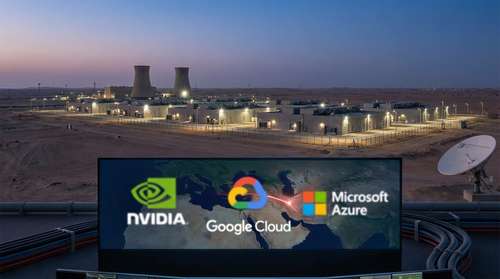
The rapidly expanding conflict in the Middle East has taken an unprecedented digital turn. In a stark escalation from traditional military engagements, a direct Iran tech infrastructure threat has explicitly targeted the digital and physical assets of global technology giants. According to statements published this week on March 11, 2026, by Iran's state-affiliated Tasnim news agency, military forces have drawn up a hit list of regional facilities belonging to U.S. technology leaders. With unmanned aerial vehicles already striking operational cloud facilities in the Gulf, billions in hyperscaler and artificial intelligence development projects are now caught in the crosshairs.
The Shift to Infrastructure Warfare
The concept of infrastructure warfare officially entered the geopolitical lexicon this week when the Islamic Revolutionary Guard Corps (IRGC) pinpointed 29 specific locations across the United Arab Emirates, Bahrain, Qatar, and Israel. Labeled Iran's New Targets, the hit list heavily features Middle East data centers and regional research offices belonging to Amazon, IBM, Palantir, and Oracle.
This rhetoric follows real-world kinetic action. Over the past week, retaliatory drone strikes hit three Amazon Web Services (AWS) data centers in the UAE and Bahrain. The attacks triggered fires, forced emergency shutdowns, and caused widespread outages across dozens of enterprise, banking, and consumer services. By deliberately targeting commercial data infrastructure, Iranian forces aim to cripple U.S. and Israeli corporate interests, claiming these commercial technology hubs secretly support adversarial military ecosystems.
Nvidia Regional Security and the Target List
Among the most critical concerns for the global technology sector is Nvidia regional security. Nvidia, the undisputed leader in hardware design, operates a massive research and development footprint in the Middle East. The IRGC's list explicitly names Nvidia's primary and largest R&D center in Haifa, Israel, as a legitimate target.
Because advanced hardware components are notoriously expensive and difficult to replace, physical damage to Nvidia's regional operations could send shockwaves through the global supply chain. Protecting these assets is no longer just about robust cybersecurity firewalls; it demands military-grade physical defense. Institutional investors are pressing for immediate answers on how hardware developers plan to shield their engineers and physical infrastructure from aerial bombardments. This escalation fundamentally alters the risk profile of operating in the region.
Google Cloud Infrastructure Risk and Microsoft Azure Security
The hyperscale cloud market is equally vulnerable to these developments. The Iranian threat explicitly identified Google and Microsoft properties, plunging cloud operators into crisis management mode. The Google Cloud infrastructure risk spans several critical nodes, including its regional Dubai office—which manages advertising and search operations—and its specialized cloud support services hub in Qatar.
Simultaneously, Microsoft Azure security teams are scrambling to harden their physical and digital defenses. Microsoft recently committed to a multi-billion dollar data center network expansion across Saudi Arabia and the UAE. With the IRGC widening its definition of legitimate targets, Microsoft's massive regional investments face a severe stress test. Standard corporate insurance policies rarely cover damages resulting from acts of war. Consequently, any physical destruction to these multi-billion-dollar hyperscale facilities will be borne directly by the tech giants themselves.
Geopolitical Tech Volatility Threatens the AI Dream
For the past three years, the Gulf region has been aggressively pitching itself as the next global hub for artificial intelligence, fueled by sovereign wealth initiatives and abundant, cheap electricity. However, this escalating geopolitical tech volatility threatens to derail the region's trillion-dollar digital ambitions.
Major capital allocations are now under intense, high-risk scrutiny. For example, AWS's planned $5.3 billion data center region in Saudi Arabia is facing mandatory security reassessments in light of the recent drone strikes. Furthermore, a spokesperson for the Khatam al-Anbiya Headquarters recently warned civilians to stay at least one kilometer away from U.S. and Israeli-linked banks and economic centers, expanding the threat landscape following a reported strike on Tehran's Bank Sepah. While some institutional capital remains steadfast—such as Brookfield Asset Management's confirmed $20 billion data center partnership in Qatar—the broader market is highly anxious. Enterprises are quickly realizing that proximity to conflict zones introduces unavoidable vulnerabilities, regardless of a facility's digital security posture.
Emergency Cloud Workload Migration and Next Steps
In response to the immediate physical danger, operators are executing emergency continuity protocols. IT leaders across the Gulf are accelerating cloud workload migration, shifting critical data and applications out of threatened facilities and into geographically isolated availability zones in Europe and the United States.
Following the structural damage to its facilities, AWS actively advised its affected Middle East customers to failover their workloads to different regions. This forced migration highlights a permanent paradigm shift: enterprise disaster recovery plans must now account for direct military strikes on commercial hubs. As hyperscalers reassess their physical footprints, the era of treating the Middle East as just another frictionless expansion market has abruptly ended. The intersection of regional conflict and global digital resilience will dictate the future of international technology strategy for years to come.