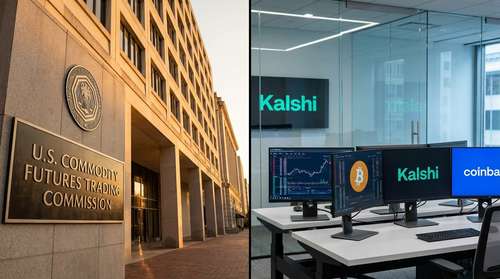
On Friday, May 29, 2026, the digital asset industry experienced a monumental regulatory shift. The U.S. Commodity Futures Trading Commission (CFTC) formally authorized the first onshore perpetual contracts, dismantling a longstanding barrier for American traders. This landmark Coinbase Kalshi CFTC approval effectively ends the era where domestic investors were sidelined from the world's most heavily traded cryptocurrency derivative. By giving the green light to CFTC crypto perpetual futures, regulators have officially established a compliant pathway that aligns the United States with global market standards.
The Launch of the Kalshi BTCPERP Contract
At the center of Friday's announcement is KalshiEX LLC. The CFTC officially granted the federally registered designated contract market an approval order to list a perpetual futures contract tied directly to the spot price of Bitcoin. Known officially as the Kalshi BTCPERP contract, the product functions much like standard futures but entirely lacks an expiration date.
Traders can hold their leveraged positions indefinitely, with gains and losses settled through a continuous funding rate mechanism. Until now, this format was strictly the domain of offshore, largely unregulated exchanges that commanded upward of $90 trillion in annual trading volume.
Kalshi Chief Executive Officer Tarek Mansour framed the approval as a transformative moment for the firm. "This marks Kalshi's evolution from prediction market leader to next-gen derivatives exchange," Mansour stated. He emphasized that establishing regulated crypto perps USA will drastically improve capital allocation and risk management for countless American businesses. Following the successful Bitcoin launch, the company intends to seek regulatory clearance for perpetual contracts tied to more than a dozen other digital assets.
Coinbase Financial Markets, Deribit, and the No-Action Letter
While Kalshi focuses on building a domestic liquidity pool, the CFTC executed a parallel move that immediately plugs American institutions into the global market. The agency issued a targeted no-action letter to Coinbase Financial Markets (CFM), the derivatives subsidiary of the US-based crypto exchange.
This ruling specifically permits the Coinbase Financial Markets Deribit pipeline. US customers can now legally access perpetual futures and options through Deribit, the Dubai-based derivatives powerhouse that routinely generates around $1 billion in daily trading volume. Prior to this ruling, the absence of a regulated domestic pathway forced heavy capital fragmentation. Institutional trading desks often had to establish elaborate offshore corporate entities simply to tap into global liquidity pools, increasing counterparty risk and operational overhead.
A Massive Win for US Crypto Derivatives Regulation
Coinbase Chief Legal Officer Paul Grewal characterized the agency's decision as a "massive first for the industry". By allowing a CFTC-regulated futures commission merchant to route clients to an offshore venue, regulators have effectively neutralized the dependence on unregulated gray-market channels.
The CFTC also used the opportunity to address the unique market structure of digital assets. In a supplementary notice, the agency distinguished cryptocurrency markets from traditional agricultural commodities. Regulators explicitly noted that the digital infrastructure and global reach of digital assets make them perfectly suited for continuous 24/7 trading, clearing, and settlement. CFTC Chairman Michael Selig described the collective approvals as a major step forward in delivering on the goal of cementing the country as a primary hub for digital asset innovation.
Bridging the Gap: Retail vs. Institutional Access
The coordinated rollout of these approvals strategically caters to both ends of the market spectrum. On one side, Kalshi's native offering aims to democratize access for the sophisticated domestic trader. Retail and institutional participants, who have long watched offshore counterparts leverage the flexibility of perpetuals, can now execute similar strategies under the watchful eye of a designated contract market. Stringent leverage controls, mandated reporting obligations, and robust investor protection standards are baked directly into the framework.
Conversely, the institutional side of the ledger benefits immensely from the Coinbase ruling. High-frequency trading firms, hedge funds, and family offices require deep, established order books to execute large block trades without experiencing extreme slippage. Unlocking existing global liquidity for American entities removes a massive friction point that has bottlenecked institutional adoption for years. These dual approvals essentially solve the liquidity problem from both the grassroots and institutional levels simultaneously.
What This Means for the Future of Bitcoin Perpetual Contracts US
The immediate financial reaction to the regulatory pivot was decisive. Shares of Coinbase (COIN) and Robinhood (HOOD)—the latter widely expected to pursue similar offerings shortly—jumped 4% and 11% respectively on Friday following the news. Market participants are already pricing in the massive revenue potential of onshore perpetuals.
Traditional financial institutions are moving quickly to adapt to this new environment. CME Group announced it would drop its weekend barriers for institutional crypto futures and options, ending the notorious weekend liquidity gaps that routinely caused violent Monday morning price swings for Bitcoin.
Bringing Bitcoin perpetual contracts US trading into the light represents a profound maturation of the domestic crypto ecosystem. As liquidity begins to migrate from offshore shadows into strictly monitored, federally compliant venues, American traders finally have the tools they need to execute complex hedging strategies without crossing regulatory red lines.