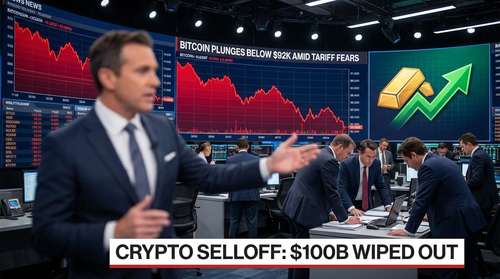
The cryptocurrency market faced a severe downturn early this week, with Bitcoin plunging below the critical $92,000 mark in a sharp correction that wiped over $110 billion from the global crypto market capitalization. The sudden selloff, which began late Monday, January 19, and extended into Tuesday, was triggered by President Donald Trump’s announcement of impending tariffs on key European nations. As geopolitical tensions flared over the U.S. administration's renewed interest in purchasing Greenland, investors rapidly pivoted away from risk-on assets like crypto, seeking refuge in traditional safe havens.
Trump’s European Tariff Threat Sparks Global Selloff
The catalyst for the market-wide crash was President Trump’s declaration on social media that the United States would impose a 10% tariff on goods from eight European countries starting February 1, 2026. The targeted nations include staunch U.S. allies such as the United Kingdom, France, Germany, Denmark, Norway, Sweden, Finland, and the Netherlands. Trump further escalated the threat by stating that these duties would rise to 25% by June if a deal regarding the purchase of Greenland is not reached.
This aggressive trade policy maneuver sent immediate shockwaves through global financial markets. European leaders condemned the move as "economic blackmail," with the European Union announcing an emergency summit for January 22 to discuss retaliatory measures, potentially including their so-called "trade bazooka" instrument. The prospect of a renewed transatlantic trade war spooked institutional investors, leading to a swift de-risking event that hit the high-beta cryptocurrency sector particularly hard.
Bitcoin and Solana Lead Major Price Corrections
Bitcoin (BTC), the market leader, slid approximately 3.6% to trade as low as $91,500, erasing gains from the previous week. The selloff was even more brutal for altcoins. Solana (SOL) experienced a precipitous drop, plummeting 8.6% to trade near the $130 level. Ethereum also suffered, shedding nearly 5% of its value as the bearish sentiment broadened.
Massive Liquidations Hit Leveraged Traders
The violent price action triggered a cascade of liquidations across major exchanges. According to data from Coinglass, over $870 million in leveraged positions were wiped out in a single 24-hour period. The vast majority of these—roughly 90%—were long positions held by traders betting on a continued early-year rally. This "long squeeze" exacerbated the downward pressure, forcing cascading sells as automated stop-losses were triggered in rapid succession.
Gold Hits Record Highs as Safe Haven Assets Soar
While the crypto market selloff today left digital asset investors reeling, traditional safe-haven assets surged. Gold prices rocketed to a new all-time high, approaching $4,700 per ounce, as capital fled speculative markets in favor of stability. Silver followed suit, rallying alongside sovereign bonds.
This divergence between Bitcoin and gold challenges the narrative of Bitcoin as "digital gold" or a non-correlated safe haven during times of geopolitical strife. In this instance, Bitcoin behaved strictly like a risk asset, correlating more closely with tech stocks than with precious metals. Analysts suggest that until the uncertainty regarding the U.S.-European trade relationship is resolved, crypto markets may remain volatile and sensitive to further political headlines.
What Investors Should Watch Next
As the February 1 deadline for the new tariffs approaches, market participants are bracing for continued volatility. The upcoming EU emergency summit on January 22 will be a critical event; any concrete announcement of retaliatory sanctions could further dampen risk appetite. Conversely, any signs of diplomatic de-escalation could provide the spark needed for a relief rally. For now, the crypto market remains in a precarious position, with traders eyeing the $90,000 support level for Bitcoin as a key line in the sand.