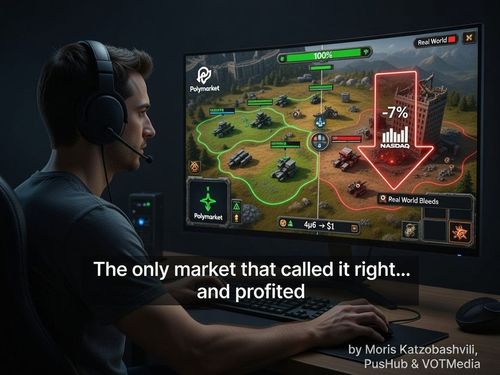
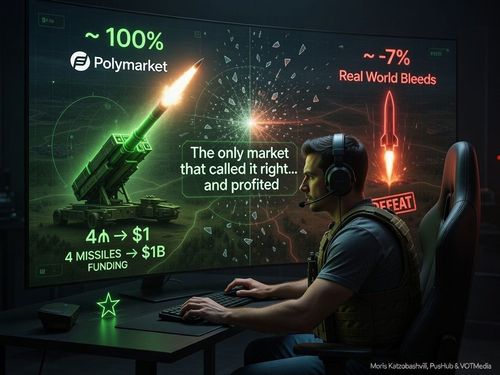
This morning, while fighter jets returned from Tehran and news networks were still trying to figure out who attacked whom, Polymarket was already counting the cash. The contract on "Direct US Involvement in Iran" officially locked at 100%. For most of the world, this is a morning of global anxiety; for a handful of hedge funds, algorithmic traders, and insiders, it was the fastest and most ruthless exit of the year.
When a historic security event becomes a fait accompli, the decentralized trading arena doesn't wait for pundits. It simply closes the register and distributes the loot. The story of the last few hours isn't just military; it's a story about information gaps, algorithms that never stop to breathe, and the way smart money hedges against the collapse of real markets.
Here is the anatomy of a perfect financial ambush:
The 4% Exit: Who Bought the Bottom of the War?
Just last night, the contract for an American strike in Iran was trading around 4 to 6 cents (reflecting a roughly 5% probability). This means that whoever bought this position yesterday—whether human traders with access to intelligence leaks from Washington, or algorithms that spotted anomalies in CENTCOM troop movements—made an insane Return on Investment (ROI) of nearly 20x the moment the contract locked at a full dollar (100%).
Millions of dollars changed hands within a two-hour window. By the time the official statements from Trump and the Pentagon hit mainstream media, it was already too late. The "dumb money" that tried to jump on the bandwagon at 80% or 90% only collected the crumbs left behind by the early adopters.
Bots of War: The Resilience Test of the AI Era
The rapid surge to 100% exposes the true engine of Polymarket: machines. A significant portion of the massive volume that swept the pot overnight came from AI-based trading systems operating on mechanisms identical to advanced AdTech and real-time bidding (RTB) programmatic media buying.
These systems don't read the news; they scrape networks of publishers, analyze sentiment on Telegram, and identify triggers like cyber network shutdowns or diplomatic evacuation orders in fractions of a second. The ability of these models to process geopolitical chaos and turn it into an automated buy order is the ultimate resilience test of information networks in the AI era. While humans were arguing on X, algorithms drained liquidity from the market and locked in profits.
Bleeding on Wall Street, Cashing Out in Crypto
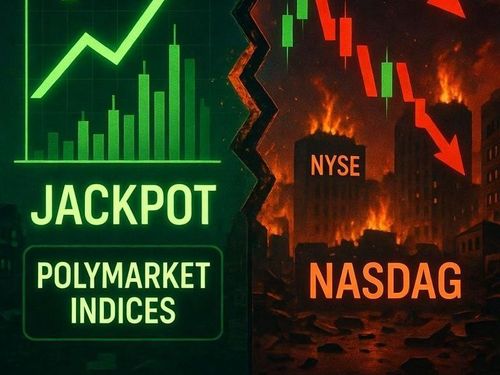
The crushing victory of the 100% contract holders on Polymarket stands in stark contrast to the bloodbath now beginning in traditional markets. Investors holding heavy portfolios of major ETFs like VOO are watching the panic seep in. Giant tech companies—from Google and Amazon, which are sensitive to global advertising budget freezes, to Tesla, which suffers from any threat to maritime supply chains, and all the way to macro-sensitive auto-tech firms like Mobileye—are all currently absorbing the shockwaves of uncertainty.
This is exactly where Polymarket's true role for the big players is revealed. They didn't bet on the war for the adrenaline; they used these contracts as the only real-time functioning hedging tool. The massive profits raked in this morning in stablecoins (USDC) on Polymarket are designed to offset the heavy losses that will batter real stock portfolios the moment the exchanges open and meet the reality of a burning Middle East.
The Bottom Line
The contract on the American strike is already closed, the money has been distributed, and the facts are bleeding on the ground. But the casino of geopolitics never closes. While news networks will continue to chew on yesterday's events, smart money is already pouring tens of millions into the next contracts: Will the Strait of Hormuz be blocked by Monday? And will the regime in Tehran survive until the end of the year?