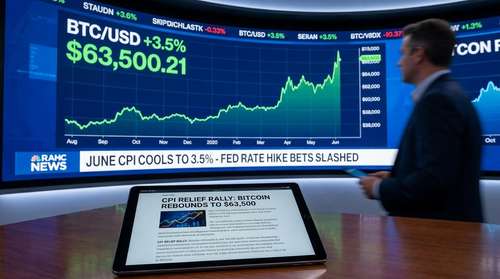
Bitcoin staged a dramatic recovery on July 14, 2026, defying weeks of geopolitical anxiety to reclaim crucial resistance levels. The catalyst wasn't a sudden regulatory shift or technical breakout, but a macroeconomic lifeline. As the June CPI report 2026 revealed inflation cooling significantly faster than anticipated, digital asset markets ignited a widespread Bitcoin CPI relief rally. The flagship cryptocurrency jumped nearly $1,000 in a matter of hours, delivering a much-anticipated Bitcoin price rebound $63500. This sudden burst of bullish momentum underscores how deeply intertwined legacy financial metrics and modern digital assets have become, shifting the narrative away from macroeconomic doom toward a potential easing cycle.
A Cool Surprise: Unpacking the US Consumer Price Index June Data
The latest economic data provided exactly what battered cryptocurrency investors needed. The US consumer price index June reading cooled to an annualized rate of 3.5%, comfortably beating the 3.8% consensus forecast. Even more striking was the month-over-month decline of 0.4%, a decisive metric that officially broke a grueling three-month streak of consecutive inflationary increases.
For the broader financial sector, this represents a massive sigh of relief. The crypto market inflation reaction was immediate and visceral. Before the data dropped, spot market buying momentum had been notably sluggish, with traders remaining firmly on the sidelines amid heightened uncertainty. The moment the Bureau of Labor Statistics published the downside surprise, algorithms and retail traders alike flooded the order books, squeezing short positions and pushing Bitcoin back toward local highs.
During the same trading window, Ethereum (ETH) stabilized near $1,800 after weeks of downward pressure, signaling that the relief rally was not isolated solely to Bitcoin. Altcoins across the top 50 by market capitalization also posted low single-digit gains, underscoring a uniform, positive reaction across the ecosystem. This synchronization highlights how intensely the sector responds to fiat liquidity conditions rather than purely crypto-native developments.
Slashed Bets on Federal Reserve Interest Rates July 2026
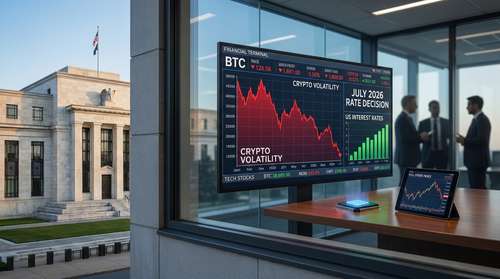
Perhaps the most significant development stemming from the cooler CPI data is the dramatic repricing of future monetary policy. Just 48 hours ago, futures markets were pricing in a stubborn 40% probability of another rate hike at the upcoming Federal Open Market Committee (FOMC) meeting. Today, the likelihood of an increase in Federal Reserve interest rates July 2026 has collapsed to a mere 12%.
This pivot fundamentally alters the backdrop for risk assets. When borrowing costs stabilize or fall, liquidity historically flows back into high-growth, speculative sectors like cryptocurrency.
ETF Inflows and Evaporating Spot Selling
Underneath the headline price action, underlying on-chain metrics point to a structural shift in market behavior. According to recent data from Glassnode, the average daily net selling volume in the spot market plummeted from a heavy 2,000 BTC in June down to a mere 53 BTC entering mid-July. Coupled with U.S. spot Bitcoin ETFs flipping to net inflows of $197.4 million—breaking an eight-week drought of outflows—the foundation for the current recovery appears remarkably solid. Institutional buyers are clearly interpreting the disinflationary trend as a signal to accumulate.
The Persistent Threat of BTC Macro Volatility
Despite the undeniable optimism surrounding the relief rally, seasoned analysts urge caution. The digital asset space remains highly sensitive to external shocks, and BTC macro volatility is far from eradicated. While domestic inflation may be trending in the right direction, international headwinds continue to pose substantial downside risks.
Rising geopolitical tensions, specifically surrounding the Strait of Hormuz and broader Middle Eastern conflicts, are keeping commodity traders highly defensive. Volatile international oil prices have the potential to aggressively re-accelerate inflation if supply chains face prolonged disruptions. Should energy costs spike, the Federal Reserve could easily abandon its currently dovish trajectory, forcing risk assets back into a precarious posture.
Looking Ahead: Can the Rally Sustain?
The critical question for traders now is whether the swift rebound represents a genuine macro bottom or merely a temporary liquidity squeeze. Technical analysts note that Bitcoin has been trading within a contracting triangle on the 4-hour charts, with crucial support historically found around the $61,150 and $62,500 levels. Breaking the psychological barrier at $65,000 is necessary to confirm a definitive trend reversal.
Institutional strategists remain divided on the mid-term outlook. Some view the recent cooling as the opening bell for a broader risk-on environment that could carry well into the autumn months. Others maintain that the macroeconomic landscape is too fragile, advocating for strict risk management. For retail investors and swing traders, the next few weeks demand vigilance. Monitoring key technical levels while keeping a close eye on global energy markets will be essential for navigating the complex web of inflation data, monetary policy, and digital asset valuations.
In the immediate term, market participants will be laser-focused on upcoming commentary from Federal Reserve officials. Any acknowledgment from Fed Chair Jerome Powell that inflation is sustainably retreating toward the 2% target could provide the fundamental fuel needed to push Bitcoin toward new summer highs. However, until the geopolitical energy landscape stabilizes, the crypto market will likely remain a high-stakes arena where macroeconomic triumphs constantly battle against global uncertainties.