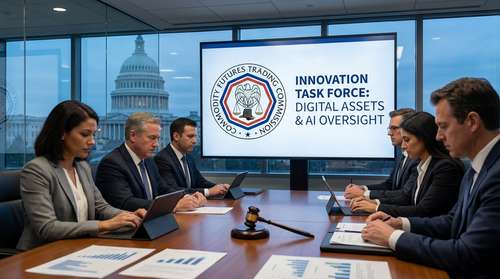
The era of regulation by enforcement in American digital finance is officially coming to a close. On March 24, 2026, the Commodity Futures Trading Commission took a monumental step toward regulatory clarity by officially launching its highly anticipated CFTC Innovation Task Force. Unveiled by recently appointed CFTC Chairman Michael S. Selig, the specialized unit is designed to establish permanent, clear-cut rules for emerging technologies in U.S. derivatives markets. The sweeping initiative targets three core pillars: crypto assets, artificial intelligence, and prediction markets. This marks a definitive shift in how the federal government approaches decentralized finance, replacing an environment of uncertainty with structured, proactive dialogue.
For years, institutional traders, blockchain developers, and financial engineers have operated in a gray area, consistently pleading for a unified digital asset legal framework. This newly inaugurated task force represents the most aggressive push to date to codify those essential standards. Led by Michael J. Passalacqua, a senior advisor to Chairman Selig, the group's primary objective is to ensure that the next frontier of finance is built firmly on American soil rather than fleeing to friendlier offshore jurisdictions. "By establishing a clear regulatory framework for innovators building on the new frontier of finance, we can foster responsible innovation at home," Selig noted during the announcement at the Digital Asset Summit in New York City.
Bridging the Divide: The End of the CFTC vs SEC Crypto Turf War
One of the most significant and market-moving aspects of this development is the unprecedented collaboration between federal watchdogs. The historical CFTC vs SEC crypto debate—often characterized by conflicting jurisdictional claims, disjointed enforcement actions, and a lack of clear guidance for token issuers—is finally being resolved. Earlier this month, the two agencies signed a historic Memorandum of Understanding (MOU) specifically crafted to harmonize their oversight of digital markets.
Under the leadership of Selig and SEC Chair Paul Atkins, the agencies have introduced a formal, unified "token taxonomy". This joint guidance explicitly clarifies that the vast majority of digital assets, including stablecoins, base-layer network tokens, and digital commodities, are not classified as securities. Moving forward, traditional securities laws will be strictly reserved for blockchain-based assets that genuinely resemble equities or debt instruments. By aligning the newly formed CFTC Innovation Task Force directly alongside the SEC’s existing Crypto Task Force, regulators are presenting a united front. This sets a powerful, cohesive precedent for US crypto regulation 2026, pivoting away from duplicative rules and establishing a predictable, investor-first environment.
Shaping the Future of Bitcoin Derivatives Rules
Institutional capital heavily relies on market certainty. Historically, the lack of concrete Bitcoin derivatives rules has pushed major liquidity providers toward less-regulated, offshore trading venues. The task force is actively working to reverse this capital flight by modernizing the playbook for digital asset clearing, margin requirements, and intermediary trade reporting.
To ensure these new rules are both practical and effective, the task force is coordinating closely with the CFTC's Innovation Advisory Committee. This recently formed panel boasts over 30 top executives from traditional finance powerhouses and fintech disruptors, including leadership from Nasdaq and prediction market platform Kalshi. By bringing these industry titans to the table, regulators are getting direct, unfiltered input from the builders themselves. For market participants, this means the process for launching complex crypto derivatives will soon occur under a heavily vetted, transparent, and federally recognized safety net, vastly reducing counterparty risk for institutional investors.
Pioneering AI Financial Oversight in U.S. Markets
While digital currencies capture the bulk of retail attention, the commission is equally focused on the systemic impact of machine learning algorithms. The rapid integration of autonomous trading systems has prompted the CFTC to prioritize AI financial oversight on an equal footing with digital assets. Regulators are deeply engaged in assessing how algorithmic execution models, generative AI tools, and autonomous smart contracts interact with traditional commodities and derivatives markets.
The task force aims to draft guidelines that prevent market manipulation via AI while ensuring that autonomous trading systems do not pose a systemic risk to the broader financial grid. Simultaneously, the agency is tackling the exploding sector of prediction markets and event contracts. Following recent controversies involving state-level gaming laws and unregulated sports-related contracts, the CFTC is stepping in to assert definitive federal authority. The task force is drawing a distinct regulatory line between legally compliant financial event contracts and illicit betting. Their goal is to construct a robust compliance architecture that protects retail investors while allowing these highly popular predictive models to flourish legally within regulated parameters.
What This Means for Cryptovot Trending News Readers
The official launch of the CFTC Innovation Task Force is far more than a simple bureaucratic reshuffling; it is a clear, actionable signal to global financial markets. Washington is fully ready to embrace digital assets, AI-driven trading, and autonomous finance. By creating an open, collaborative environment for innovators to engage directly with regulatory staff, the U.S. is aggressively positioning itself as the premier, regulated hub for the next generation of financial technology.
As we continue tracking the latest cryptovot trending news, it is evident that this cooperative alliance between the SEC and CFTC will serve as the legislative cornerstone for the rest of the decade. Market participants can expect a rapid succession of proposed rulemakings over the coming months as Passalacqua’s team begins its comprehensive review. For investors, blockchain builders, and institutional traders alike, the regulatory fog that has hindered American crypto innovation is finally lifting, paving the way for unprecedented growth and institutional adoption.