
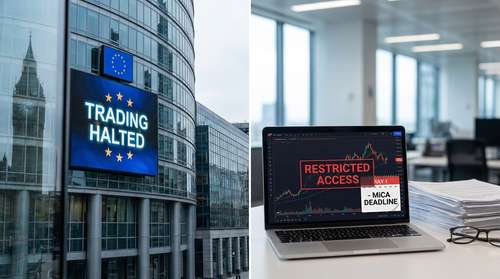
The upcoming Binance EU trading halt marks a seismic shift for the European cryptocurrency landscape. Millions of users across the European Union have received urgent notifications this week outlining severe restrictions to their exchange accounts starting next week. The sweeping changes are a direct result of the world's largest cryptocurrency exchange failing to secure proper authorization ahead of a strict regulatory cutoff.
Behind this disruption is the much-anticipated MiCA license deadline July 2026. The Markets in Crypto-Assets (MiCA) regulation officially transitions out of its grace period on July 1, replacing the fragmented system of 27 individual national regimes with a single, unified rulebook. Under this framework, companies that secure a license in one member state gain an EU passport, allowing them to operate freely across the entire bloc. Conversely, platforms without this authorization must wind down operations. For Binance, the countdown accelerated dramatically on June 24, when the company abruptly withdrew its license application with Greece's Hellenic Capital Market Commission to avoid an expected rejection.
Navigating the Binance Europe Restrictions
Investors are currently scrambling to understand exactly how the new compliance rules will affect their portfolios. Starting July 1, the immediate Binance Europe restrictions will block the onboarding of any new users residing within the EU. Existing users will face a hard stop on all buying and selling activities, effectively freezing standard trading operations. Yield-generating services like staking and Binance Earn will also be heavily restricted or paused entirely for European accounts.
The platform is limiting user capabilities strictly to position management. If you currently hold open spot or derivatives positions, you will only be permitted to close them. Despite these massive operational hurdles, the company has heavily emphasized that all digital assets remain secure. In public statements responding to concerned users on social media, representatives clarified that withdrawals will remain fully accessible, ensuring that investors are never locked out of their underlying funds.
The Strategic Shift to France
While the Greek application has been abandoned, Binance executives maintain that Europe remains a critical component of their global strategy. The exchange is now pivoting its regulatory efforts toward France, hoping to secure approval through the Autorité des Marchés Financiers (AMF). The company has previously established a registered digital asset service provider (DASP) status there, but upgrading to a full MiCA license is proving difficult. Even if successful, processing times guarantee that any potential French license will arrive well after the July 1 cutoff, leaving the exchange legally unable to serve EU residents in the interim.
How to Transfer Funds From Binance Europe
With standard trading functionality vanishing in a matter of days, finding a secure alternative is the immediate priority for EU-based crypto holders. To securely transfer funds from Binance Europe, users have two primary pathways: hardware self-custody or fully licensed platforms.
Moving assets to hardware wallets like Ledger or Trezor ensures direct, decentralized ownership of your private keys, insulating your portfolio from third-party regulatory risks. The withdrawal process on Binance remains unchanged; users simply need to generate a receiving address on their personal wallet, select the correct blockchain network on the exchange, and initiate the transfer.
For those who rely on active daily trading, migrating to authorized competitors is the most practical route. Fully licensed platforms like Bitpanda, Revolut, OKX, and newer entrants like Neverless have aggressively ramped up their recruitment of displaced EU traders ahead of the deadline. These platforms already hold the necessary MiCA authorizations, meaning your trading activities will face no disruption as the new rules take effect.
The Broader Impact on Crypto Exchange Compliance EU
The situation unfolding with Binance is just the most visible consequence of a rapidly maturing regulatory environment. The stringent requirements for crypto exchange compliance EU have triggered a massive, continent-wide market shakeout. To obtain a MiCA license, companies must meet rigorous standards regarding capital reserves, transparent corporate governance, robust consumer protection, and strict money laundering prevention protocols.
Regulators are setting the bar incredibly high. Recent data from the European Securities and Markets Authority (ESMA) reveals a stark reality: out of more than 1,200 crypto service providers previously operating across the continent, only around 250 currently hold full authorization. This staggering figure means roughly 80% of the market is either shutting down or severely restructuring their European footprint.
As the cryptocurrency industry crosses this regulatory threshold, the era of fragmented and largely unchecked European crypto trading is definitively over. The immediate growing pains for Binance users highlight a larger transition toward a heavily scrutinized financial sector. Moving forward, retail and institutional investors alike must prioritize a platform's legal standing just as much as its liquidity or fee structure.