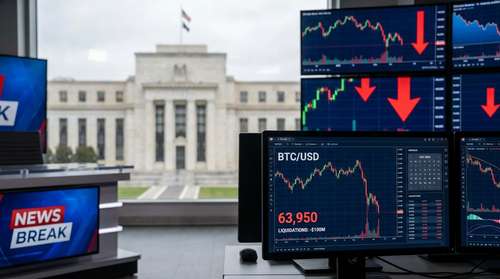
Bitcoin is staging a resilient recovery toward the $63,000 mark after plunging to a 21-month low of $57,950 on July 1, 2026. This recent price action has illuminated a historically significant structural divergence in the market. While retail investors and traditional institutions panicked, deep-pocketed 'smart money' quietly stepped in to buy the dip in massive quantities. For traders attempting to formulate a reliable Bitcoin price prediction July 2026, the conflicting actions between spot ETF holders and long-term crypto whales provide the ultimate roadmap for navigating the second half of the year.
The $16.7B Divergence: ETFs Dump While Whales Accumulate
June 2026 went down as a month of glaring contradictions for digital assets. United States spot Bitcoin ETFs experienced their absolute worst month since inception, bleeding over $4.06 billion in cumulative outflows. The intense sell-off completely erased the positive fund flows for the year, painting a bleak picture on the surface. Yet, beneath the retail panic and negative media headlines, a vastly different story was unfolding on-chain.
According to recent blockchain data, large-wallet holders aggressively absorbed this institutional selling pressure. In just two weeks, these deep-pocketed investors executed a massive BTC whale accumulation phase, scooping up roughly 270,000 BTC. At prevailing market prices during the dip, this translates to a staggering $16.7 billion capital injection. This immense transfer of wealth indicates that over-the-counter entities and direct wallet buyers—who remain largely unbothered by short-term volatility—viewed the sub-$60,000 drop as a prime entry opportunity rather than a reason to capitulate.
Triggering a Classic Crypto Market Bottom
This type of structural split has happened before. In fact, it is exactly the behavioral pattern you expect to see when looking for a true cycle reversal. Historically, major price recoveries are born from capitulation events where weak hands sell at a loss to high-conviction holders. The simultaneous reality of record Bitcoin ETF outflows and heavy institutional-grade whale buying has marked nearly every prior macro crypto market bottom.
By absorbing the surplus coins dumped by retreating spot funds, these long-term holders are actively tightening the available supply matrix. Once the exhaustion of ETF redemptions becomes fully apparent, the dramatically reduced circulating supply sets the stage for rapid upward price mobility. Market analysts closely watching this familiar pattern argue that this $16.7 billion absorption effectively forms an unbreakable floor, insulating the flagship cryptocurrency from further catastrophic declines.
Shifting Momentum and the Crypto Sentiment Index
Heading deeper into July, the tide is already beginning to visibly turn. The relentless daily outflows have stalled, and spot ETFs just recorded their first net positive days in weeks, signaling a potential shift in institutional posture. Simultaneously, the broader crypto sentiment index is beginning to inch away from 'extreme fear' toward a more neutral stance. This behavioral shift reflects growing confidence among market participants who track foundational on-chain metrics rather than just reacting to daily price fluctuations.
Macro Winds: Cooling Job Data and Interest Rates
Beyond the technical on-chain indicators, macroeconomic tailwinds are aligning perfectly for a sustained Bitcoin rebound 2026. The latest United States nonfarm payroll data released in early July revealed a sharp slowdown in employment growth, coming in notably lower than economists' expectations. This softening labor market has sent immediate ripples across the global financial sector, forcing policymakers to reassess their hawkish trajectories.
Weakening economic data has dramatically reduced the likelihood of sustained high borrowing costs, breathing fresh life into risk-on assets. Traders are now actively pricing in an aggressive timeline for monetary easing, with CME FedWatch metrics indicating a high probability of a rate pivot by September. The prospect of Fed rate cuts crypto investors have long anticipated is fundamentally altering the broader liquidity environment. Lower interest rates intrinsically reduce the opportunity cost of holding non-yielding alternative assets, strongly incentivizing capital deployment back into digital markets.
Positioning for the Rest of 2026
The resolution of this epic standoff between panicked ETF sellers and calculated whale accumulators will undoubtedly dictate the next major market trend. With $16.7 billion in fresh whale capital acting as a structural anchor, the downside risk appears substantially mitigated. As global liquidity conditions ease and the dust settles from June's historic sell-off, the path of least resistance points decisively upward.
For now, all eyes remain focused on the $62,500 to $63,000 resistance zone. Breaking this barrier with conviction—backed by the resumption of sustained ETF inflows and a favorable macroeconomic backdrop—will confirm that the local cycle low is definitively in the rearview mirror. If history is any guide, the institutional whales who boldly stepped into the abyss in early July are about to be heavily rewarded.