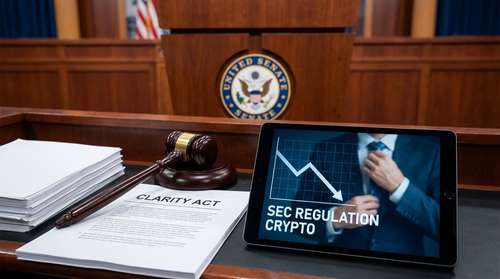
The digital asset ecosystem is facing a severe reality check today. With the markets reeling from a sudden downturn, the intersection of geopolitical turmoil and sweeping U.S. regulatory shifts has left investors bracing for volatility. Escalating military tensions in the Middle East have driven oil prices above $100 per barrel, triggering a massive 'risk-off' cascade across global equities and cryptocurrencies. Yet, amidst the market chaos, the U.S. Senate is quietly accelerating the historic Digital Asset Market CLARITY Act 2026, a legislative framework that promises long-term stability for the industry.
Bitcoin Price Crash April 2026: Macro Fears Trigger Massive Sell-Off
The recent Bitcoin price crash April 2026 was heavily catalyzed by mounting geopolitical anxiety. As the conflict in Iran intensifies following recent presidential addresses, Brent crude oil surged past $109. This sudden spike in energy costs sent shockwaves through risk assets, prompting investors to flee toward traditional safe havens. The crypto ecosystem felt the macroeconomic burn instantly, as Bitcoin slipped below the critical $66,000 threshold and the broader market followed suit.
Within hours, over-leveraged traders were caught off guard. Panicked selling overpowered early-month optimism, driving the total crypto market liquidations today past a staggering $420 million. Long positions took the brunt of the damage, wiping out traders who had bet on a swift April recovery. This immediate reduction in market leverage highlights just how sensitive digital assets remain to global macroeconomic shocks and energy sector fluctuations.
Institutional Retreat and Spot ETF Reversals
The retail sector wasn't the only casualty of the geopolitical tension. Institutional players are also pulling back from their aggressive accumulation strategies. Recent data highlights substantial Bitcoin institutional outflows, with U.S.-listed spot Exchange Traded Funds (ETFs) recording over $173 million in net outflows on Wednesday alone. This decisive reversal breaks a multi-day streak of inflows and underscores a broader institutional pivot toward capital preservation. Even corporate heavyweights are reassessing their digital asset reserves. Companies managing a Ripple XRP enterprise treasury are reportedly adopting a more defensive posture, liquidating portions of their cross-border payment reserves into fiat to hedge against mounting global volatility.
Spotting the Bottom: Ethereum Support Levels $2000
As the broader market navigates the sell-off, technical analysts are closely monitoring key psychological thresholds. Ethereum, the second-largest digital asset by market capitalization, is retreating toward critical defensive zones. Traders are keeping a close eye on Ethereum support levels $2000 to gauge whether the smart-contract giant can establish a floor. A sustained drop below this level could signal further capitulation across the altcoin ecosystem.
Market watchers emphasize that Ethereum's ability to maintain its $2000 support is intrinsically tied to network activity and decentralized finance (DeFi) liquidations. If the macroeconomic pressure persists and institutional buyers remain sidelined, Ethereum may test deeper support bands. However, some contrarian investors view these localized dips as high-conviction buying opportunities, banking on the network's long-term utility to outweigh short-term geopolitical panics.
Senate Fast-Tracks the Digital Asset Market CLARITY Act 2026
While traders navigate the short-term bloodbath, lawmakers in Washington are finalizing a legislative framework that could permanently reshape the industry's trajectory. The Digital Asset Market CLARITY Act 2026 is rapidly moving toward a critical Senate markup. Building on the foundation of the 2025 GENIUS Act, this landmark legislation aims to decisively resolve the ongoing jurisdictional turf war between the Securities and Exchange Commission (SEC) and the Commodity Futures Trading Commission (CFTC).
By defining exactly when a token transitions from an investment contract to a digital commodity based on network decentralization, the CLARITY Act offers the legal certainty that institutional capital has demanded for years. Bipartisan momentum is building, as both regulators and industry advocates recognize the urgent need to integrate digital asset firms into the mainstream financial system safely. If passed, this regulatory clarity could act as a massive bullish catalyst, counteracting current macroeconomic fears.
Stablecoin Regulation News: The Battle Over Digital Yields
At the heart of the current Senate discussions is the highly contested debate over digital currency yields. The latest stablecoin regulation news suggests a fierce lobbying battle between crypto advocates and traditional banking institutions. While the earlier GENIUS Act barred certain yields on stablecoins to prevent consumer deposit flight from traditional savings accounts, the House version of the CLARITY Act attempts to close lingering loopholes.
Banks remain deeply concerned that unconstrained rewards on stablecoins could disrupt traditional lending models. Conversely, cryptocurrency developers argue that restricting these yields stifles decentralized innovation and unfairly protects legacy banking monopolies. As lawmakers rush to finalize the CLARITY Act's final provisions, the outcome will dictate how dollar-pegged assets operate within the U.S. economy for decades to come.
Ultimately, the current market environment presents a stark duality. On one side, geopolitical conflict and oil price surges are driving brutal liquidations and testing major support levels. On the other, the steady march toward comprehensive federal regulation via the CLARITY Act promises to legitimize the crypto sector on a global scale. Investors must now navigate the short-term pain of global risk-off events while keeping their eyes focused on the long-term structural maturation of the digital asset market.