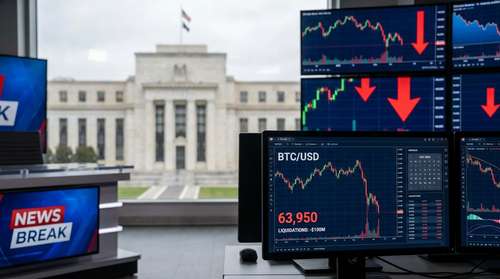
Bitcoin is currently trading near the $71,000 mark on March 12, 2026, setting the stage for what could be a historic period of crypto market deleveraging. After navigating weeks of macro-induced volatility that dragged the asset down to the $60,000 range in late February, the digital currency has recovered sharply. This resurgence is largely driven by aggressive institutional purchasing and renewed retail interest. If current upward momentum persists, a massive Bitcoin short squeeze March 2026 could trigger a violent price discovery phase. Market data points to a highly concentrated pool of leveraged bearish bets sitting just above current levels, meaning a sustained push past the $72,000 threshold could force the liquidation of billions in short positions and initiate a rapid ascent toward $75,000.
The $4.3 Billion Trap: Fueling the Bitcoin Short Squeeze March 2026
Behind the recent price action lies a tightly coiled and overheated derivatives market. Traders who bet heavily against the asset during February's severe downturn are now trapped underwater as spot prices rally against their positions. Order book data reveals that a sustained breakout above the critical Bitcoin resistance $72k level threatens to wipe out an estimated $4.34 billion in leveraged short contracts.
When over-leveraged bears are forced to cover their positions, they are automatically triggered to buy back the underlying asset at market price. This creates a powerful feedback loop of intense buying pressure, often resulting in vertical price action. This structural mechanic makes the current technical setup incredibly volatile. The sheer volume of concentrated liquidity resting near the $72,000 to $73,000 zone suggests that if bears lose control of the narrative, the resulting liquidation cascade will rapidly bypass intermediate resistance zones.
Shifting Cryptocurrency Market Liquidity Trends
Recent on-chain and exchange data confirms that taker buy volume has consistently exceeded $1 billion per hour during peak trading sessions earlier this week. This surge in derivatives activity perfectly aligns with broader cryptocurrency market liquidity trends, where large-scale capital rapidly rotates back into risk-on assets following periods of extreme macroeconomic fear. The market has effectively absorbed the panic-selling pressure from early March, leaving short sellers with limited overhead defense and setting the trap for a potential squeeze.
Institutional Bitcoin ETF Inflows Fuel the Rebound
The impressive recovery from last month's localized lows is not merely a speculative retail bounce; it is fundamentally supported by deep Wall Street capital. Institutional Bitcoin ETF inflows have witnessed a massive, sustained comeback over the last 48 hours, signaling profound confidence among traditional finance players. On Tuesday, March 10, U.S. spot Bitcoin ETFs registered an impressive $251 million in net inflows, immediately following a robust $167 million capital injection the day prior.
BlackRock's iShares Bitcoin Trust (IBIT) continues to dominate the competitive landscape, drawing the lion's share of this institutional wealth. By the second week of the month, total March net inflows for spot ETFs have already eclipsed $1.56 billion, pushing lifetime Bitcoin ETF inflows beyond the staggering $55.7 billion mark. This relentless spot buying actively absorbs the supply previously dumped by panicked short-term holders, effectively putting a hard floor under the market. Financial institutions are treating the recent geopolitical dips not as a warning sign, but as a strategic, discounted accumulation zone.
Macro-Induced Volatility and the Easing Global Backdrop
To thoroughly understand BTC price analysis today, investors must examine the broader macroeconomic picture shaping traditional and digital markets. The opening days of March saw risk assets plummet across the board as geopolitical tensions escalated unexpectedly in the Middle East. This conflict briefly drove oil prices nearly 7% higher, triggering localized inflationary fears and pushing the crypto Fear and Greed Index deep into "Extreme Fear" territory at a reading of 19.
However, the geopolitical narrative has shifted dramatically over the last two days. Diplomatic signaling has prompted a significant drop in energy prices, reducing the immediate threat of a prolonged conflict. Consequently, global capital is aggressively migrating back out of traditional safe havens and into digital assets. The surprisingly swift resolution of these localized macro threats caught overly pessimistic traders completely off guard, accelerating the very price action that now threatens to liquidate their portfolios.
Bitcoin Price Forecast 2026: The Path to a $75K Breakout
Looking ahead toward the end of the month, the technical structure firmly supports a bullish continuation scenario, provided that key institutional support levels hold steady. The asset has established a formidable foundational base between $64,500 and $66,000 over the past two weeks. As long as daily closes remain comfortably above this stabilization zone, the primary trajectory points upward.
Ultimately, any reliable Bitcoin price forecast 2026 hinges on how the market interacts with the immediate overhead supply in the coming days. If bulls successfully breach the $72,000 barrier and trigger the anticipated Bitcoin short squeeze March 2026, technical indicators firmly point to $75,000 as the next logical resting point. Conversely, a failure to clear this psychological hurdle could result in temporary sideways consolidation, forcing the market to digest its recent gains before launching another coordinated assault on all-time highs. For now, all eyes remain transfixed on the derivatives data, as billions of dollars hang precariously in the balance.