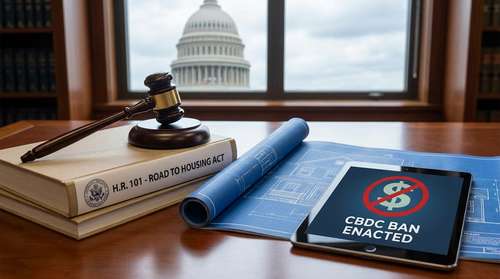

The White House has officially reached its critical self-imposed deadline of March 1, 2026, to finalize the text for the Digital Asset Market Clarity Act (CLARITY Act). Following a tense week of closed-door negotiations between administration officials, Senate leaders, and executives from major players like Coinbase and Ripple, the long-awaited bill is poised to move to a Senate vote. At the heart of the final deal is a landmark compromise on stablecoin yields and a definitive split of regulatory authority between the SEC and CFTC, setting the stage for a massive wave of institutional adoption in Q2 2026.
Closing the "Yield Loophole": The Final Hurdle
The primary sticking point in the final hours of negotiation has been the controversial "yield loophole" left open by the GENIUS Act of 2025. While that legislation banned stablecoin issuers from paying interest directly to users, it inadvertently allowed third-party exchanges and affiliates to offer "rewards" on idle balances. This practice has drawn sharp ire from traditional banking lobbyists, who warned it could trigger a deposit flight comparable to the 2023 regional banking crisis.
Under the finalized CLARITY Act framework, insiders report a strict prohibition on "passive income" products for stablecoins. However, a key concession was reportedly won by the crypto industry: "activity-based" rewards—such as staking yields for securing proof-of-stake networks—will remain legal. This nuance is critical for DeFi protocols and exchanges, preventing a total freeze on crypto-native yield generation while satisfying the Treasury's concerns about shadow banking risks.
SEC vs. CFTC: ending the Turf War
For institutional investors, the most significant component of the CLARITY Act is the formal codification of the SEC vs. CFTC jurisdictional split. After years of "regulation by enforcement," the bill establishes a clear statutory test for token classification:
- Digital Commodities: Assets associated with "mature blockchain systems"—defined as decentralized networks where no single entity owns more than 20% of the supply—will fall exclusively under CFTC oversight. This is expected to immediately reclassify assets like Solana and Cardano alongside Bitcoin and Ethereum.
- Restricted Digital Assets: Tokens that function as investment contracts during their initial fundraising phases will remain under SEC jurisdiction until they achieve decentralization metrics certified by the CFTC.
This clarity is the "green light" Wall Street has been waiting for. With the threat of retroactive SEC lawsuits removed for compliant assets, major asset managers are reportedly preparing to launch diversified spot crypto ETFs and tokenized money market funds as early as May 2026.
Whales and Institutions Position for the Breakout
Market data suggests that smart money is already front-running the legislative victory. On-chain analytics providers recorded a massive surge in "whale" transactions—transfers exceeding $100,000—in the final days of February. Notably, institutional desks like Jane Street have been increasingly active, signaling confidence that the March 1 deadline will yield a passable bill.
Ripple CEO Brad Garlinghouse, freshly emerged from the White House meetings, expressed optimism, stating there is now a "90% chance" the legislation passes the Senate by late April. The market seems to agree; Bitcoin and major altcoins have shown resilience in the face of the regulatory news, pricing in the benefits of a regulated, transparent US market structure.
What Happens Next?
With the White House's deadline met, the bill now moves to the Senate Banking Committee for a final markup. While minor amendments are possible, the core framework—CFTC oversight for commodities and a ban on idle stablecoin yield—appears locked in. For the US crypto industry, March 2026 marks the end of the "Wild West" era and the beginning of the institutional age.