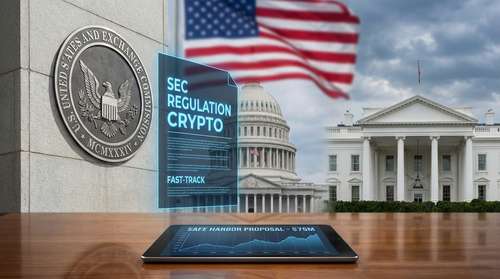

The era of regulatory ambiguity in the digital asset sector has officially come to a close. On March 17, 2026, federal regulators issued the highly anticipated SEC crypto guidance 2026, a landmark joint interpretive release that definitively reshapes the financial landscape. Partnering with the Commodity Futures Trading Commission, the SEC formally classified 16 major digital assets—including Bitcoin, Ethereum, and Solana—as digital commodities rather than securities. For Wall Street asset managers and retail investors alike, this joint framework (Release Nos. 33-11412; 34-105020) signals the definitive end of the "regulation by enforcement" strategy that dominated the last decade.
Decoding the CFTC Digital Commodity Classification
The centerpiece of this historic policy shift is the unified CFTC digital commodity classification. For years, token issuers, exchanges, and blockchain developers operated in a gray zone, unsure of which side of the regulatory divide their underlying assets fell. The new interpretive release introduces a clear, five-category token taxonomy: digital commodities, digital collectibles, digital tools, stablecoins, and digital securities.
By placing top-tier network tokens securely in the commodity bucket, the agencies have established a practical baseline for compliance. The guidance specifically names 16 cryptocurrencies as digital commodities. The comprehensive list includes heavyweights like Cardano, XRP, Chainlink, Avalanche, and Polkadot, alongside Bitcoin, Ether, and Solana. Consequently, secondary market trading for these specific utility assets is officially cleared of the burdensome securities registration requirements that stifle innovation.
The Investment Contract Nuance
While the underlying assets themselves are not securities, regulators maintained a critical distinction regarding initial fundraising. A non-security crypto asset can still trigger federal securities laws if the issuer makes specific marketing promises about essential managerial efforts that lead buyers to expect profits. This means that while trading the token on an exchange is a commodity transaction, the initial sale via a highly marketed Initial Coin Offering (ICO) might still be scrutinized under the traditional Howey test.
Cementing Bitcoin Commodity Status and Ether Commodity Regulation
While market participants broadly assumed the Bitcoin commodity status was secure due to previous informal statements, the explicit documentation in this joint release provides bulletproof legal certainty. Regulators affirmed that digital commodities are intrinsically linked to the programmatic operation of a functional crypto system. They derive their market value from standard supply and demand dynamics rather than the entrepreneurial efforts of a central corporate issuer.
Crucially, the framework also finalizes the long-standing debate over Ether commodity regulation. Despite Ethereum's highly publicized transition to a proof-of-stake consensus mechanism years ago, lingering questions remained about whether validator activities constituted an investment contract. The agencies clarified that core protocol staking, decentralized mining, and standard airdrops without consideration do not inherently involve securities transactions. This explicit carve-out protects network validators and ensures that securing a decentralized blockchain remains a legally protected activity.
Breaking Down the Solana SEC News and Market Impact
One of the most significant victories in this release involves high-throughput alternative layer-one networks. The latest Solana SEC news has sent ripples through the decentralized finance sector, as SOL was explicitly scrubbed of its previous security allegations. By recognizing Solana as a digital commodity, regulators have validated the network's decentralized architecture and utility-driven value proposition.
This determination heavily impacts how software engineers build on these chains. Because Solana, alongside similar networks like Avalanche and Aptos, is now recognized strictly under the commodity umbrella, developers face drastically reduced compliance risks when deploying smart contracts, creating liquidity pools, or participating in decentralized oracle networks. Exchanges can also list these assets without fear of retroactive enforcement actions or crippling regulatory fines.
Paving the Way for Institutional Crypto Adoption 2026
Unprecedented crypto regulatory clarity is the exact catalyst required for the next massive phase of market maturity. Asset managers who were previously sidelined by stringent compliance mandates now have the green light to integrate digital assets into traditional portfolios safely. SEC Chairman Paul S. Atkins recently discussed how this interpretive framework complements upcoming safe harbor exemptions, signaling a distinctly pro-innovation regulatory posture.
This structural breakthrough effectively paves the way for rapid institutional crypto adoption 2026. Financial analysts anticipate an immediate surge in exchange-traded products, particularly spot ETFs for newly classified commodities like Solana, XRP, and Chainlink. Because these underlying assets now share the same fundamental regulatory status as gold and oil, traditional financial institutions can deploy capital with confidence. The United States market structure is finally robust enough to handle trillion-dollar inflows securely, transforming digital assets from speculative fringe investments into foundational pillars of the modern global economy.
Beyond domestic markets, this coordinated move by U.S. regulatory bodies sets a powerful precedent for international financial jurisdictions. As the world's largest economy embraces a pragmatic approach to blockchain technology, other nations are likely to harmonize their frameworks to match the American standard. The regulation by enforcement chapter has officially closed, bringing forth an era of transparent, institutional-grade digital finance.