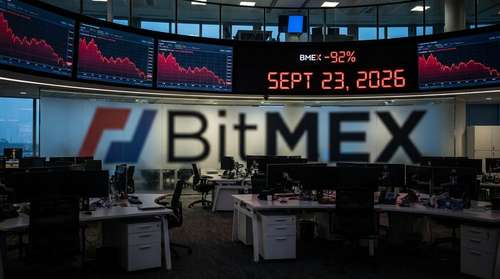
Bitcoin's dominance is facing its most existential test yet as institutional investors pull a record $3.8 billion from crypto ETFs in just four weeks. The market is reeling from a severe liquidity shock driven by mounting fears that emerging quantum computing power could compromise the blockchain's encryption sooner than anticipated. This "Bitcoin quantum computing threat" has sent prices tumbling toward $68,000, erasing months of gains and challenging the digital asset's "digital gold" narrative.
The $3.8 Billion Institutional Exodus
Data from CoinShares confirms that crypto investment products have bled approximately $3.8 billion over the last month, with the vast majority of outflows coming from U.S. spot Bitcoin ETFs. This represents the most significant capital flight since the April 2025 correction. The sell-off isn't driven by typical macroeconomic factors like inflation or interest rates, but by a specific, technical terror: Q-Day.
Institutional allocators, including major funds that previously championed the "store of value" thesis, are rapidly de-risking. The trigger appears to be a growing consensus that the timeline for "cryptographically relevant" quantum computers has accelerated. Jefferies' global strategist Christopher Wood recently removed Bitcoin from his flagship portfolio, citing the risk that quantum machines could erode the asset's security model. This loss of institutional confidence has created a "cryptocurrency liquidity shock," leaving the market vulnerable to cascading liquidations.
Willy Woo's Warning: 4 Million "Lost" Coins at Risk
Adding fuel to the fire, renowned on-chain analyst Willy Woo has issued a stark warning that has rattled long-term holders. Woo argues that the market is beginning to price in the probability that quantum computers could derive private keys from exposed public keys. His analysis focuses on the estimated 4 million "lost" Bitcoin—including the legendary Satoshi Nakamoto stash—which have been dormant for over a decade.
"If a quantum computer can reverse-engineer private keys, those 4 million coins aren't lost; they are essentially an unguarded vault," Woo explained in a widely circulated note. "That represents 25-30% of the supply suddenly re-entering circulation. It completely undermines the scarcity narrative." Woo estimates that the market is now applying a structural discount to Bitcoin relative to gold, a trend he calls the "quantum discount."
The Technical Battleground: Taproot vs. SegWit
The panic has reignited a fierce technical debate regarding quantum resistant blockchain technology. Willy Woo has advised investors to move their holdings into older SegWit (bc1q) addresses, arguing that they are safer than the newer Taproot (bc1p) addresses. The logic is that Taproot addresses can expose public keys on-chain, making them theoretically easier targets for Shor's algorithm, whereas SegWit addresses keep the public key hashed until a transaction is signed.
However, this "digital bunker" strategy is controversial. Charles Edwards of Capriole Investments has publicly countered Woo, calling SegWit "not a protection model" and warning that a passive defense is insufficient. "We need to upgrade the network ASAP," Edwards stated. "Relying on a seven-year buffer risks a total network collapse if quantum development outpaces our roadmap."
Enter BIP-360: A Ray of Hope?
Amidst the gloom, there is a glimmer of progress. Developers have recently merged BIP-360 into the official repository. This proposal introduces a new output type called "Pay-to-Merkle-Root" (P2MR). P2MR is designed to be a quantum-resistant evolution of Taproot, removing the key-path spend that exposes public keys. While it is a conservative first step toward post-quantum cryptography, it signals that the developer community is finally moving from theoretical debate to concrete protocol defense.
Market Correction and the Path Forward
The bitcoin price crash today reflects a market struggling to price in a binary risk: either Bitcoin upgrades successfully, or it faces obsolescence. Prices are hovering dangerously near the $68,000 support level, down from the euphoric highs of $126,000 seen in late 2025. The "liquidity shock" has been exacerbated by the unwinding of the popular "basis trade," where hedge funds have seen yields plummet from 17% to under 5%, forcing a mass exit.
For investors, the next few months are critical. The tension between institutional demand for immediate safety and the slow, deliberate pace of Bitcoin Core development is reaching a breaking point. With heavyweights like BlackRock potentially exerting pressure for faster upgrades, the governance of Bitcoin itself may be the next major casualty of the quantum age. As we move deeper into 2026, the question is no longer if Bitcoin needs to upgrade, but when—and whether it can do so before the quantum clock strikes midnight.