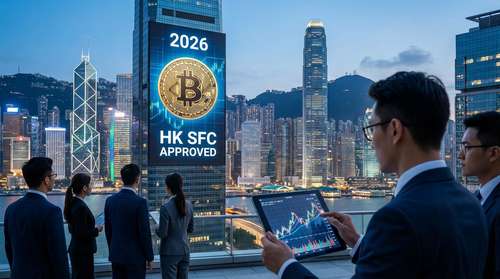
In a landmark move that signals a maturing digital asset market, the Hong Kong SFC crypto regulation framework has undergone a significant expansion. On February 11, 2026, during the highly anticipated Consensus Hong Kong 2026 conference, the Securities and Futures Commission (SFC) officially announced that licensed brokers can now offer margin financing for virtual assets. This pivotal development, coupled with a new pathway for crypto perpetual contracts, marks a decisive step toward integrating digital assets with traditional financial systems.
New Era for Bitcoin Margin Financing in 2026
The SFC’s latest directive is a game-changer for capital efficiency in the region. Under the new guidelines, licensed brokers are permitted to extend Bitcoin margin financing 2026 services to eligible clients. However, the regulator has adopted a prudent approach to risk management. Initially, only the two largest cryptocurrencies by market capitalization—Bitcoin (BTC) and Ether (ETH)—will be accepted as collateral.
SFC CEO Julia Leung emphasized that this initiative is designed to operate within the existing securities margin framework. This means that while leverage is now accessible, it comes with strict safeguards. Clients must demonstrate strong credit profiles, and brokers are required to enforce rigorous stress testing and concentration limits. By anchoring these new services to established TradFi rules, Hong Kong is effectively validating crypto assets as a legitimate form of collateral for sophisticated trading strategies.
Introducing Regulated Crypto Perpetual Contracts
Perhaps the most requested feature by institutional traders has finally been greenlit. The SFC introduced a high-level framework allowing licensed virtual asset trading platforms (VATPs) to offer crypto perpetual contracts. These derivative products, which allow traders to speculate on asset prices without an expiration date, have historically been the domain of offshore, unregulated exchanges.
Bringing these instruments onshore comes with a caveat: access is currently restricted to professional investors. This "pros-only" approach ensures that complex regulated crypto leverage products are in the hands of those with the expertise and capital buffers to manage the inherent volatility.
The Role of Market Makers
To ensure these new markets function smoothly, the SFC also relaxed restrictions on market making. Affiliates of licensed platforms can now act as market makers, provided they maintain strict operational independence and conflict-of-interest guardrails. This move is expected to significantly deepen liquidity, solving a "chicken and egg" problem that has previously hampered the growth of fully regulated exchanges.
Strategic Vision: Institutional Digital Asset Adoption
These announcements are part of the SFC’s broader "ASPIRe" roadmap—Access, Safeguards, Products, Infrastructure, and Relationships. Eric Yip, the SFC's Executive Director of Intermediaries, likened the developing ecosystem to a "shopping mall," where the regulator provides the safe infrastructure for high-quality "shops" (platforms) to operate. This metaphor underscores the government's commitment to institutional digital asset adoption by creating a safe, familiar environment for traditional wealth managers.
The timing is strategic. With the Hong Kong Monetary Authority (HKMA) expected to grant the first wave of stablecoin issuer licenses in March 2026, the infrastructure for a fully digital financial hub is falling into place. The ability to use leverage, trade derivatives, and settle in regulated stablecoins creates a closed-loop ecosystem that is highly attractive to global hedge funds and asset managers.
Global Impact and Future Outlook
For observers of crypto finance news today, Hong Kong's aggressive yet calculated regulatory updates stand in stark contrast to the uncertainty plaguing other jurisdictions. Julia Leung noted in her address that these measures are essential for financial institutions to remain relevant as a new generation of digital-first investors begins to dominate the wealth management landscape.
By sanctioning these advanced financial tools, Hong Kong is not just catching up to offshore markets; it is actively attempting to migrate that volume into a compliant, transparent framework. As 2026 progresses, the industry will be watching closely to see if this blend of innovation and regulation becomes the global standard for the next phase of the crypto economy.