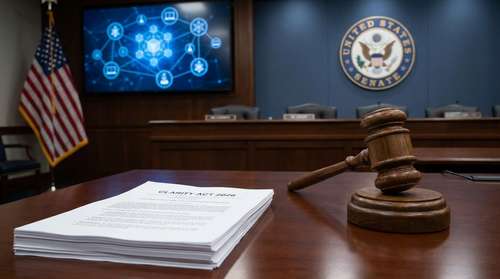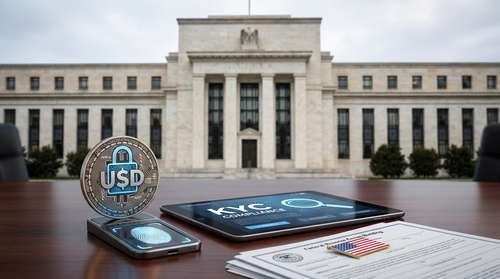
On June 18, 2026, the landscape of stablecoin regulation underwent a seismic shift as top U.S. financial watchdogs moved to enforce traditional banking rules on digital asset issuers. A powerful coalition—comprising the Federal Reserve, the Financial Crimes Enforcement Network (FinCEN), the Federal Deposit Insurance Corporation (FDIC), the Office of the Comptroller of the Currency (OCC), and the National Credit Union Administration (NCUA)—released a joint notice of proposed rulemaking. The directive mandates strict identity verification protocols for permitted payment stablecoin issuers, classifying these crypto-native firms as traditional financial institutions under the Bank Secrecy Act.
The Federal Reserve CIP Proposal
At the center of this regulatory overhaul is the Federal Reserve CIP proposal, which requires issuers to build, maintain, and enforce a robust Customer Identification Program (CIP). Under the newly drafted stablecoin KYC rules, digital asset issuers must verify the identity of any customer before an account is opened or a token is directly minted or redeemed.
The mandated data collection mirrors the onboarding processes of commercial banks. Firms must obtain a customer’s legal name, date of birth (or date of formation for corporate entities), residential or business address, and a government-issued identification number. This level of friction, while standard in traditional finance, represents a dramatic operational shift for an industry historically characterized by pseudonymous transactions. By enforcing rigorous FinCEN crypto compliance, regulators aim to permanently sever the ties between digital dollars and illicit finance.
Furthermore, issuers are required to check prospective clients against federal terrorist watchlists and maintain meticulous records of their verification methodologies. For stablecoin operators that function as subsidiaries of larger, insured depository institutions, the proposal offers a pragmatic compliance pathway. These subsidiaries may leverage their parent bank's existing CIP infrastructure, provided the program adequately addresses the unique risks associated with digital assets.
Enforcing the GENIUS Act Stablecoins Mandate
This sweeping joint rulemaking is the direct operationalization of the Guiding and Establishing National Innovation for U.S. Stablecoins (GENIUS) Act. Enacted in July 2025, the legislation laid the legal foundation for a federally supervised digital asset market. It authorized both bank and non-bank entities to issue USD-backed stablecoins under strict supervision, requiring one-to-one reserves comprising highly liquid assets.
Most crucially, the GENIUS Act stablecoins framework explicitly directed regulatory agencies to bring these issuers under the full umbrella of federal anti-money laundering (AML) laws. Now, nearly a year after the law’s passage, the Treasury Department and banking agencies are translating those legislative directives into actionable mandates. Treating stablecoin issuers as financial institutions under the Bank Secrecy Act ensures that the firms minting and burning these tokens shoulder the exact same national security obligations as traditional credit unions and regional banks.
The Secondary Market Loophole
While the proposed digital asset regulation establishes a formidable barrier against bad actors interacting directly with token issuers, it deliberately leaves secondary market trading largely untouched. According to a fact sheet released by FinCEN, the stringent CIP requirements apply exclusively to individuals or corporate entities maintaining a direct relationship with the issuer. Transfers executed between third parties via decentralized smart contracts or peer-to-peer non-custodial wallets fall outside the immediate scope of the customer identification rule.
Federal Reserve Governor Flags Concerns
This omission has generated immediate friction among policymakers. Following the proposal's release, Federal Reserve Governor Michael S. Barr issued a formal statement expressing unease with the framework's current boundaries.
"I remain concerned, however, that the GENIUS Act regulatory framework does not do enough so far to address the risks of illicit finance conducted through secondary market transactions in payment stablecoins," Barr warned. He emphasized that even if primary issuers maintain flawless compliance programs, illicit actors can still launder funds through secondary markets with limited oversight. As the public comment period opens, Barr indicated he would closely review feedback regarding whether the CIP rule should be extended to cover secondary market activities.
The Future of Digital Asset Compliance
The implications of this multi-agency proposal extend far beyond immediate compliance departments. By demanding bank-grade identity verification, U.S. authorities are signaling that stablecoins are officially transitioning from experimental financial technology to core pillars of the regulated banking system.
The GENIUS Act previously opened a pathway for non-bank financial firms to compete directly with traditional banks for payment services by obtaining specialized federal charters. However, this latest rulemaking ensures that this newly leveled playing field will not become a regulatory race to the bottom. Both fintech disruptors and legacy institutions will be bound by the exact same strict anti-money laundering standards.
Market participants, civil liberties advocates, and traditional banking associations now have a 60-day window to submit their comments and feedback to the Federal Register. As the Federal Reserve, FinCEN, and their partner agencies finalize these mandates, the digital finance sector faces an undeniable reality. The era of regulatory ambiguity has ended, replaced by a structured environment that prioritizes national security over seamless anonymity. How stablecoin issuers adapt to this stringent new framework will dictate the competitive landscape of the U.S. financial system for decades to come.