
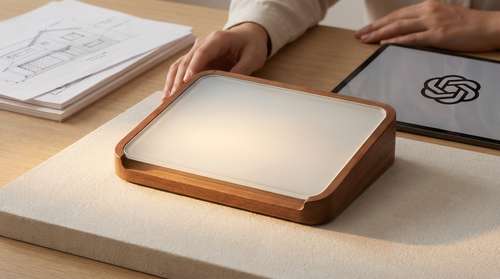
It is finally official: the long-rumored hardware collaboration between OpenAI and legendary designer Jony Ive is officially on track for a public reveal in late 2026. Speaking at the World Economic Forum in Davos this week, OpenAI’s Chief Global Affairs Officer Chris Lehane confirmed that the company is targeting the second half of the year to unveil its first-ever consumer device. Described by insiders as a "peaceful" and revolutionary piece of technology, this OpenAI Jony Ive AI device promises to liberate users from the tyranny of screens through advanced, voice-native agentic AI.
A New Era of 'Peaceful' Computing
For years, the tech world has speculated about what a Sam Altman Jony Ive collaboration would look like. Now, the vision is coming into focus. Unlike the attention-demanding smartphones of today, this new hardware is designed to be "shockingly simple" and less intrusive. Reports indicate the device will be screenless, relying entirely on voice commands, gestures, and contextual awareness to interact with the world.
The core philosophy driving this project is "peaceful AI technology." By removing the screen, the device aims to reduce "digital noise"—the constant barrage of notifications and visual stimuli that define modern computing. Instead, it leverages agentic AI hardware capabilities to act on your behalf, handling complex tasks in the background while you remain present in the real world.
The Powerhouse Behind the Project: LoveFrom and OpenAI
This isn't just another smart speaker. The project represents a massive strategic pivot for OpenAI, solidified by its reported $6.5 billion acquisition of Ive’s hardware startup, "Io," in 2025. This move brought a "supergroup" of former Apple talent under the OpenAI umbrella, including Tang Tan, the former VP of Product Design for the iPhone, and Evans Hankey, Ive’s successor at Apple. The LoveFrom OpenAI hardware team is essentially building a new computing paradigm from the ground up.
Jony Ive, the mind behind the iPhone, iPod, and iMac, has long expressed a desire to create technology that feels more organic and less dominating. This partnership allows him to marry his minimalist design ethos with OpenAI’s most advanced models, creating a device that feels less like a computer and more like an intelligent companion.
What We Know About the Design
While official renders are still under wraps, leaks and reports offer tantalizing clues. The device, potentially codenamed "Sweetpea," is rumored to be a wearable that could sit comfortably behind the ear or clip onto clothing. Unlike the ill-fated Humane AI Pin, this screenless AI phone competitor is expected to feature a significantly more sophisticated AI backend, capable of processing multimodal inputs (sight and sound) in real-time with near-zero latency.
Why 2026 is the Turning Point for AI Gadgets
The confirmed late 2026 debut aligns with a broader industry shift toward ambient computing. As we look toward the future of AI gadgets 2026, the focus is moving away from apps and toward agents—software that can autonomously execute multi-step workflows. This hardware is the physical vessel for that software.
Chris Lehane’s comments at Davos suggest that while a commercial release might slip into 2027, the reveal itself will demonstrate functionality that "shocks" the industry. The device is expected to bypass the need for traditional apps entirely, using an advanced voice interface to book appointments, summarize conversations, and answer complex queries instantly.
Will It Replace Your Smartphone?
The burning question remains: can a screenless device truly replace the smartphone? OpenAI seems to think it can at least replace the compulsion to check it. By offloading utility-based tasks to an AI agent, the device could relegate the smartphone to a secondary role—used only for media consumption or heavy visual tasks. This bold bet on a peaceful AI technology future could either redefine consumer electronics or become a niche luxury. One thing is certain: with Jony Ive and Sam Altman at the helm, the world will be watching closely this December.