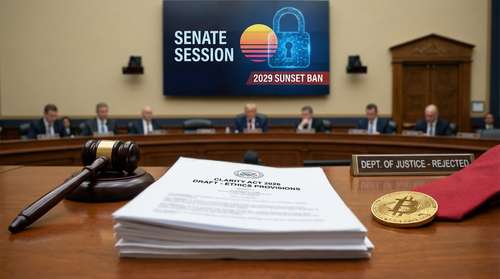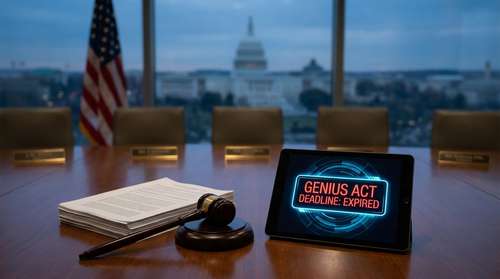

The landmark CLARITY Act crypto legislation is facing a critical deadlock in the Senate this week as a fierce lobbying battle erupts between the banking sector and the digital asset industry. Following the White House's missed March 1 deadline to broker a compromise, the conflict has intensified over the right to offer payment stablecoin rewards. While the Office of the Comptroller of the Currency (OCC) seeks to enforce a strict ban on yield under the newly implemented GENIUS Act, analysts at TD Cowen and JPMorgan warn that this 'yield war' could derail the entire federal regulatory framework for digital assets in 2026.
The "Yield War": Banks vs. Crypto Giants
At the heart of the stalemate is a fundamental disagreement over market structure and consumer incentives. Traditional banks, represented by powerful lobbyists in Washington, argue that allowing crypto platforms to offer high-yield rewards on stablecoins creates an uneven playing field. They cite concerns over massive "deposit flight," warning that up to $6.6 trillion in commercial bank deposits could be at risk if consumers shift funds to higher-yielding digital dollar equivalents.
Conversely, industry leaders like Coinbase and Circle contend that stablecoin yield regulation should not stifle innovation or consumer benefit. They argue that the rewards offered to users are distinct from the interest payments banned for issuers, framing them instead as loyalty incentives similar to credit card points. This distinction has become the central flashpoint of the US crypto market structure bill negotiations.
OCC’s GENIUS Act Proposal: A De Facto Ban?
Adding fuel to the fire, the OCC released a controversial proposal on February 25 to implement the GENIUS Act—the stablecoin law signed in mid-2025. The GENIUS Act OCC proposal introduces a "rebuttable presumption" that third-party reward programs are effectively prohibited yield. This move has been interpreted by legal experts as a significant victory for the banking lobby, potentially criminalizing the reward models currently used by major U.S. exchanges.
Under the proposed rule, any arrangement where an issuer coordinates with a platform to pass value to holders would be flagged as a violation. "The OCC is effectively closing the backdoor on stablecoin yield," notes a senior policy analyst. "If this rule stands, the 'rewards' loophole that platforms were banking on is gone."
Impact on Payment Stablecoin Rewards
For American crypto users, the implications are immediate. If the OCC's strict interpretation is codified, the 4-5% APY rewards currently enjoyed on assets like USDC or PYUSD could vanish overnight. This regulatory tightening aims to align crypto-native instruments with non-interest-bearing cash, stripping them of their primary competitive advantage over traditional savings accounts.
CLARITY Act Stalls: SEC vs. CFTC Jurisdiction in Limbo
The fallout from the stablecoin dispute is now threatening the broader CLARITY Act (Digital Asset Market Clarity Act of 2025). This comprehensive bill was designed to finally solve the SEC vs CFTC jurisdiction puzzle, classifying digital commodities and securities clearly. However, Senator Tim Scott and the Senate Banking Committee have been unable to advance the legislation due to the stablecoin impasse.
Without the CLARITY Act, the U.S. market remains in a state of regulatory limbo. The clarity that was promised for crypto regulation 2026 is slipping away, leaving the industry vulnerable to continued enforcement by assertion from the SEC. "We are holding the entire market structure hostage over the definition of 'yield'," remarked one frustrated Senate aide.
Market Outlook: Analysts Weigh In
Financial analysts are sounding the alarm on the potential collapse of the legislation. Jaret Seiberg of TD Cowen wrote in a note to clients that while banks may eventually lose the political argument against consumer choice, their current obstruction could successfully kill the CLARITY Act for this legislative session.
JPMorgan strategists agree, noting that while the GENIUS Act provided a framework for issuance, the lack of a comprehensive market structure bill leaves institutional capital on the sidelines. "The yield war is not just about interest rates," the bank's latest report states. "It is a proxy war for the future of money in the American financial system."