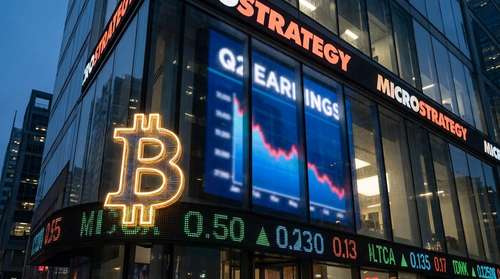
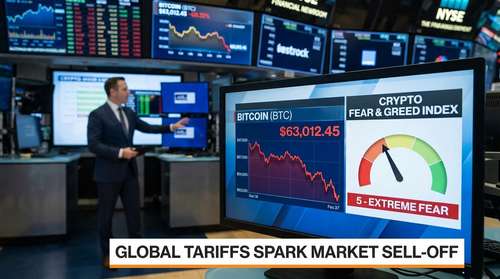
Bitcoin has plummeted to a critical support level of $63,000 today, marking a devastating 50% correction from its October 2025 all-time high of $126,000. The leading cryptocurrency is reeling under the weight of extreme fear as markets react violently to President Trump's implementation of a new 15% global tariff on U.S. imports. This macro-economic shock has triggered a massive risk-off environment, causing spot Bitcoin ETF outflows to accelerate and forcing over $2.3 billion in realized losses for holders in just the last week.
Global Tariffs Ignite Crypto Market Capitulation
The catalyst for this week's crypto market capitulation is the sudden escalation in U.S. trade policy. Following a Supreme Court ruling that struck down previous tariff measures, the administration invoked Section 122 of the Trade Act of 1974 to impose a blanket 15% tariff on global imports, effective immediately. This aggressive move has sent shockwaves through global finance, with investors fleeing risk assets like Bitcoin in anticipation of renewed inflation and delayed Federal Reserve rate cuts.
Analysts warn that the Trump global tariff crypto impact is two-fold: it strengthens the U.S. dollar, which historically correlates inversely with Bitcoin prices, and it crushes the liquidity appetite of institutional investors. "We are seeing a textbook flight to safety," notes one senior market strategist. "The tariff news has effectively invalidated the bullish thesis for Q1 2026, forcing a violent repricing of all digital assets."
ETF Outflows and 'Extreme Fear' Grip Sentiment
Institutional confidence appears shattered, evidenced by a relentless streak of spot Bitcoin ETF outflows. On Monday alone, U.S. ETFs saw over $203 million in withdrawals, extending a five-week trend of net selling. This institutional exodus has pushed the Crypto Fear and Greed Index to a reading of 5—signaling "Extreme Fear" and matching the lowest sentiment levels seen during the FTX collapse.
The psychological toll on the market is evident in on-chain data. Long-term holders have begun to capitulate, contributing to the $2.3 billion in realized losses recorded this week. With the Bitcoin 63k support level hanging by a thread, traders are anxiously watching the $60,000 psychological floor. A decisive break below this zone could open the door for a deeper Bitcoin price crash 2026, with bearish targets extending as low as $45,000.
SEC Stablecoin Rule Change: A Hidden Liquidity Lifeline?
Amid the gloom, a potentially bullish regulatory development has gone largely unnoticed. The SEC Division of Trading and Markets quietly issued new guidance allowing broker-dealers to apply a mere 2% haircut to qualifying stablecoin holdings, down from the prohibitive 100% deduction previously required. This SEC stablecoin rule change effectively treats top-tier stablecoins as high-quality liquid assets (HQLA), similar to money market funds.
While this policy shift hasn't arrested the current price slide, market experts believe it lays the groundwork for massive liquidity injections once macro conditions stabilize. By allowing broker-dealers to use stablecoins as regulatory capital, the SEC has inadvertently greased the wheels for faster institutional entry—a factor that could accelerate a recovery once the tariff-induced panic subsides.
Technical Outlook: Can $63,000 Hold?
From a technical perspective, Bitcoin is in a precarious position. The $63,000 level represents the last line of defense before a potential freefall into the $50,000 region. Technical indicators are flashing oversold signals, with the Relative Strength Index (RSI) on the daily chart hitting lows not seen since late 2024. However, in a market driven by macro-political shocks, technical support often takes a backseat to sentiment.
If bulls fail to defend $63,000, the next major area of interest is the $52,000–$55,000 range, which served as a consolidation base during the previous cycle. Conversely, a reclamation of $68,000 would be the first sign that the market has absorbed the tariff shock. For now, volatility remains the only certainty as the crypto world navigates this unprecedented economic landscape.