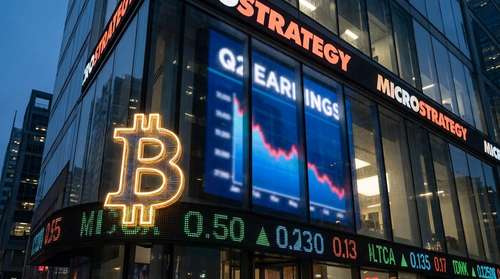

Bitcoin recorded a remarkable five-week high early Monday, breaking through major technical barriers to trade above $74,450. This impressive Bitcoin price surge $74k has reinvigorated investor confidence across digital asset classes, snapping a period of consolidation. The sudden momentum shift was largely catalyzed by easing geopolitical friction in the Middle East, which swiftly translated into massive crypto market liquidations today. With macroeconomic indicators stabilizing and aggressive institutional accumulation acting as a reliable tailwind, market participants are closely monitoring whether the leading cryptocurrency can maintain its upward trajectory.
Strait of Hormuz Geopolitical Impact on Crypto
For weeks, the escalating conflict between the United States and Iran has cast a long shadow over global risk assets, severely disrupting supply chains and heavily inflating energy markets. However, the international narrative shifted dramatically over the weekend. Two commercial liquefied gas tankers successfully navigated the Strait of Hormuz on Sunday, marking the first successful commercial transit since the blockade began.
The Strait of Hormuz geopolitical impact on crypto cannot be understated. Following Iranian authorities' clarification that shipping restrictions apply exclusively to "hostile states," alongside diplomatic remarks regarding potential negotiations, global oil prices immediately retreated from recent peaks. This rapid reduction in energy-driven inflationary pressure prompted a broader pivot back toward risk-on assets. It provided the exact macroeconomic catalyst Bitcoin needed to break out, reinforcing its narrative as a resilient asset capable of weathering severe geopolitical storms.
Crypto Market Liquidations Today and Key Resistance
The rapid 3.2% weekend rally caught many bearish traders entirely off guard, triggering a violent squeeze across derivative exchanges. Data from CoinGlass reveals that the crypto market liquidations today exceeded $344 million over a 24-hour window, with short positions absorbing roughly 83% of the damage. This equates to nearly $285 million in wiped-out bets against the market.
Bitcoin shorts alone accounted for $124.5 million of the liquidations. The largest single forced closure occurred on the Bitfinex exchange, where one trader lost a staggering $6.94 million position in an instant. Ethereum bore an even heavier brunt with $127.9 million in shorts liquidated as the asset rallied 7.7% to reclaim $2,260. Solana also joined the broader recovery, jumping over 6% to top $93.
As trading volumes accelerate, Bitcoin resistance levels $75,000 and above remain the primary hurdle for the bulls. Market analysts project that a decisive and sustained weekly close above this psychological boundary could establish an open-air run toward the $80,000 mark, an area that served as firm support before the early-2026 market correction.
Institutional Push: Bitcoin ETF Inflows March 2026
Beyond geopolitical relief, underlying institutional bid strength continues to floor the market and absorb selling pressure. The highly anticipated Bitcoin ETF inflows March 2026 data showcases resilient demand, with United States spot funds attracting $767 million in net positive capital between March 9 and March 13 alone. This consistent Wall Street accumulation is systematically soaking up the limited post-halving supply.
Adding tremendous fuel to the supply squeeze is the ambitious MicroStrategy 1 million Bitcoin goal. Led by Executive Chairman Michael Saylor, the corporate software firm is aggressively acquiring the digital asset to reach seven figures by the end of 2026. As of mid-March 2026, MicroStrategy's treasury holds approximately 738,731 BTC. To bridge the remaining gap, the firm must acquire roughly 6,150 BTC weekly. The corporate treasury race is heating up; while BlackRock's iShares Bitcoin Trust (IBIT) currently holds around 777,872 BTC, MicroStrategy is leveraging its "Stretch" (STRC) preferred shares to fund billions in new purchases, effectively shielding Bitcoin from deeper macroeconomic pullbacks.
Eyes on the Fed Meeting March 2026 Interest Rates
While the immediate geopolitical environment is cooling, United States monetary policy remains a focal point for the week ahead. Investors are tightly bracing for the Fed meeting March 2026 interest rates decision, scheduled for March 17-18. Despite the recent weekend drop in crude oil, the lingering effects of the Middle Eastern energy shock have fundamentally altered first-quarter inflation projections.
Federal Open Market Committee (FOMC) members are universally expected to hold the benchmark federal funds rate steady at 3.50% to 3.75%. Prior forecasts of aggressive short-term cuts have vanished, with current data indicating the earliest realistic probability for a rate cut has been pushed to June. The specter of persistent inflation complicates the outlook; recent Personal Consumption Expenditures (PCE) data revealed consumer costs creeping higher even before the latest energy shocks materialized.
Consequently, Wall Street will be hyper-focused on Wednesday's release of the FOMC's Summary of Economic Projections (SEP) to gauge if policymakers still forecast any easing later this year. Despite this "higher for longer" interest rate environment, Bitcoin's simultaneous rally highlights its strengthening appeal as an inflation-resistant digital gold.