
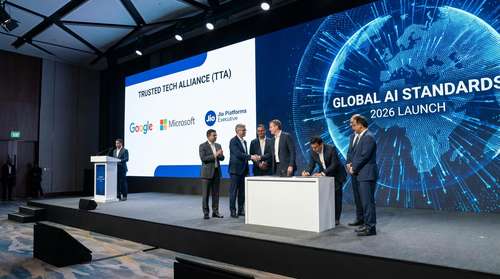
In a historic move that could redefine the future of the global digital economy, 15 of the world's most influential technology companies—including Google, Microsoft, Amazon, and Jio Platforms—have officially launched the Trusted Tech Alliance (TTA). Announced this weekend at the Munich Security Conference, the coalition aims to establish a unified "trusted technology stack" to safeguard critical infrastructure and Artificial Intelligence (AI) from rising geopolitical fragmentation.
The 'United Nations of Tech' Takes Shape
Dubbed by industry insiders as the "United Nations of Tech," the alliance represents a coordinated response to the growing trend of "digital sovereignty," where nations are increasingly building protectionist walls around their digital ecosystems. The TTA launch 2026 marks a pivot toward cross-border cooperation, with members pledging to adhere to rigorous, verifiable standards regardless of their country of origin.
"In the current geopolitical environment, it is critical that like-minded companies work together to protect security and advance high global standards to preserve trust in technology across borders," said Brad Smith, Vice Chair and President of Microsoft, during the unveiling in Munich.
The founding members span North America, Europe, Asia, and Africa, creating a truly global front. The list includes heavyweights such as Amazon Web Services (AWS), Google Cloud, Microsoft, Jio Platforms, Ericsson, Nokia, SAP, Samsung's Hanwha, and AI innovators like Anthropic and Cohere. Together, they cover every layer of the modern tech stack, from semiconductors and cloud infrastructure to 6G connectivity and generative AI.
Defining the Sovereign Technology Stack
At the heart of the alliance is the concept of a sovereign technology stack—a framework that ensures technology is secure, transparent, and resilient, no matter where it is deployed. The group argues that trust should be based on verifiable principles rather than the passport of the supplier. To operationalize this, the TTA has ratified five core operating principles that all signatories must adopt:
- Transparent Corporate Governance: Commitments to ethical conduct and clear accountability structures.
- Secure Development & Oversight: Rigorous security protocols during the development lifecycle, subject to independent assessment.
- Robust Supply Chain Security: ensuring integrity across the complex global web of hardware and software components.
- Open Digital Ecosystems: Promoting interoperability to prevent vendor lock-in and encourage innovation.
- Respect for Rule of Law: Strict adherence to data protection and privacy regulations in all operating jurisdictions.
Countering Geopolitical Fragmentation
The formation of the tech giant alliance comes at a time when the "splinternet"—the fragmentation of the internet into separate national enclaves—threatens to stifle innovation and economic growth. By setting a high bar for global AI standards and security, the TTA hopes to offer governments a viable alternative to isolationist policies.
Börje Ekholm, CEO of Ericsson, highlighted the practical necessity of this approach. "There are no countries on this planet that alone can be fully sovereign," Ekholm noted, emphasizing that modern digital infrastructure relies on a complex, global supply chain that no single nation can replicate entirely on its own.
A New Era for Digital Sovereignty
For emerging markets and established economies alike, the TTA promises a more stable path forward. Kiran Thomas, CEO of Jio Platforms, emphasized the alliance's role in democratizing access to secure tech. "Trusted, secure, and transparent technology is essential to unlocking inclusive digital growth at a global scale," Thomas stated. By aligning with the TTA, companies in India, Africa, and beyond can integrate into the global value chain with the assurance that their infrastructure meets the highest security benchmarks.
The initiative also places a heavy emphasis on Munich Security Conference tech discussions, shifting the narrative from cyber warfare to cyber cooperation. As AI systems become more autonomous and integrated into critical national infrastructure, the need for a shared