
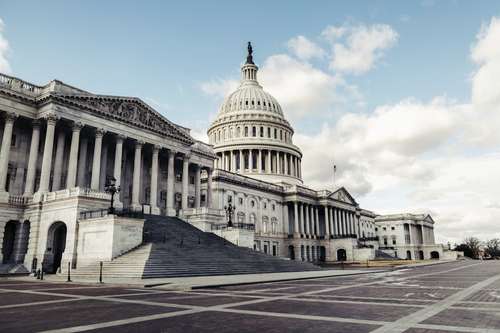
The U.S. Senate Banking Committee has abruptly postponed its scheduled vote on the Digital Asset Market Clarity Act following a sharp public rebuke from Coinbase CEO Brian Armstrong. The decision to halt the markup, originally set for Thursday, January 15, marks a significant setback for crypto market structure legislation that many hoped would finally bring regulatory certainty to the industry in 2026.
The 'Materially Worse' Verdict: Why Coinbase Pulled Support
The legislative process ground to a halt late Wednesday after Armstrong took to social media to withdraw Coinbase's support for the bill. In a widely circulated statement, the executive argued that the latest draft of the legislation had drifted too far from its original goals, becoming a liability rather than a framework for growth.
"We appreciate all the hard work by members of the Senate to reach a bipartisan outcome, but this version would be materially worse than the current status quo," Armstrong wrote. "We'd rather have no bill than a bad bill."
Armstrong's Coinbase Brian Armstrong opposition focused on several late-stage amendments that he claims would stifle innovation. specifically, the proposed Digital Asset Market Clarity Act would have imposed a near-total ban on stablecoin rewards—a feature that allows holders of digital dollars to earn yield. Armstrong also criticized the bill's heavy-handed approach to DeFi (Decentralized Finance), arguing that the new provisions would effectively make self-custody and software development legally hazardous.
The Stablecoin Yield Battle: Banks vs. Crypto
At the heart of the conflict is the contention over U.S. stablecoin regulation 2026. The banking lobby, represented prominently by groups like the North Carolina Bankers Association, has aggressively campaigned against allowing non-bank stablecoin issuers to offer yield-bearing products. They argue that if stablecoins like USDC can offer 5% APY while functioning like checking accounts, they would drain deposits from traditional community banks.
Stifling Innovation to Protect Incumbents?
Crypto advocates counter that this provision is a clear example of regulatory capture designed to protect legacy financial institutions from competition. The halted bill would have prohibited platforms from paying interest solely for holding payment stablecoins, permitting rewards only for "activity-based" actions—a distinction critics call vague and restrictive.
"We can't really have banks come in and try to kill their competition at the expense of the American consumer," Armstrong told CNBC in an interview from the Russell Senate Office Building just before the vote was canceled. This clash highlights the deepening rift between blockchain regulatory news today and traditional financial interests.
A Legislative Stalemate: H.R. 3633 and the SEC
The Digital Asset Market Clarity Act (based on H.R. 3633 which passed the House in 2025) was intended to solve the perennial SEC vs CFTC crypto jurisdiction turf war. Ideally, it would have classified digital assets clearly as commodities or securities, giving the CFTC more oversight over the spot market.
However, the Senate's revised text appeared to lean back toward SEC primacy, a move that alienated many in the crypto sector who view the agency's "regulation by enforcement" approach as hostile. By failing to provide a clear "off-ramp" for tokens to transition from securities to commodities, the bill risked entrenching the very legal ambiguity it sought to resolve.
Industry Divide and Political Fallout
While Armstrong led the charge against the bill, the industry was not entirely united. Ripple CEO Brad Garlinghouse offered a more conciliatory tone, suggesting that while the bill was imperfect, it was a necessary "milestone" that could still be fixed during the amendment process. "It would be a positive for crypto if this bill passes," Garlinghouse stated, highlighting the desperation some firms feel for any form of legislative standing.
Senate Banking Committee Chairman Tim Scott (R-SC) attempted to downplay the collapse, stating that "everyone remains at the table working in good faith." However, without the backing of the largest U.S. exchange, the political capital required to move the bill forward has evaporated. With the 2026 election cycle heating up, the window for passing comprehensive crypto market structure legislation is closing rapidly.
What's Next for U.S. Crypto Regulation?
The indefinite postponement of the Digital Asset Market Clarity Act leaves the U.S. market in a continued state of limbo. For now, the status quo remains: a patchwork of state laws and federal enforcement actions. Market participants must now wait to see if a compromise can be reached regarding stablecoin yields and DeFi liability, or if the industry will have to wait for a new Congress to try again.