After more than a decade of industry-crippling ambiguity, the era of "regulation by enforcement" is officially over. In a historic joint move on March 17, 2026, the Securities and Exchange Commission (SEC) and the Commodity Futures Trading Commission (CFTC) released a 68-page interpretive rule fundamentally reshaping digital asset classification US markets. The comprehensive SEC CFTC crypto framework 2026 provides the long-sought answer to a multibillion-dollar question: is crypto a security or commodity? By explicitly recognizing 16 major digital assets as commodities, regulators have finally drawn clear lines for innovators, exchanges, and financial institutions.
The SEC CFTC Crypto Framework 2026: A Paradigm Shift
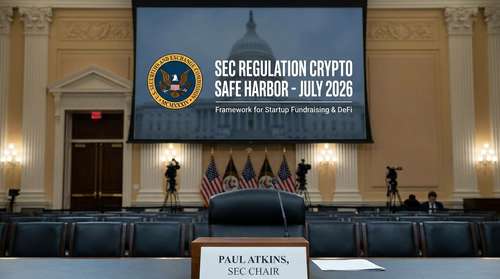
For years, digital asset companies operated under the constant threat of sudden lawsuits, forcing them to guess how decades-old financial laws applied to modern blockchain technology. The newly signed interpretive release replaces that fractured approach with an actionable, binding rule that applies federal law symmetrically. SEC Chairman Paul S. Atkins and CFTC Chairman Michael S. Selig simultaneously approved the document at the DC Blockchain Summit, marking an unprecedented level of inter-agency cooperation.
"This is what regulatory agencies are supposed to do: draw clear lines in clear terms," SEC Chairman Atkins noted, emphasizing that the Commission will no longer default to treating all digital assets as securities. CFTC Chairman Selig echoed the sentiment, confirming that American builders and entrepreneurs finally have the rational rules of the road required to flourish domestically. This united front delivers essential crypto legal clarity 2026 and removes the regulatory overhang that has historically driven blockchain developers offshore.
Resolving the Debate: Is Crypto a Security or Commodity?
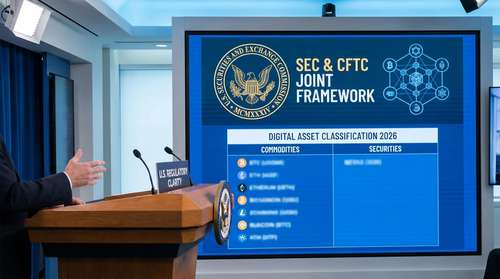
The most immediate market impact of this US cryptocurrency regulation news comes from the explicit classification of widely traded networks. The joint rule formally designates Bitcoin (BTC), Ether (ETH), Solana (SOL), XRP, Cardano (ADA), Chainlink (LINK), Avalanche (AVAX), Polkadot (DOT), Hedera (HBAR), Litecoin (LTC), Tezos (XTZ), Bitcoin Cash (BCH), Aptos (APT), and Stellar (XLM) as digital commodities.
Strikingly, regulators also extended this commodity status to high-activity meme tokens, specifically Dogecoin (DOGE) and Shiba Inu (SHIB). By including assets regardless of their origin story, the agencies affirmed that an asset's economic reality and market dynamics dictate its legal standing. Because these tokens derive their value from the programmatic operation of a functional network rather than the managerial efforts of a central enterprise, they fall firmly outside the scope of traditional securities laws.
Decoding the SEC Digital Asset Taxonomy
To future-proof the regulatory landscape, the 68-page document establishes a definitive five-category SEC digital asset taxonomy:
- Digital Commodities: Assets linked to supply and demand dynamics on functional networks.
- Digital Collectibles: Non-fungible assets governed by verifiable scarcity.
- Digital Tools: Tokens utilized primarily for network utility or access.
- Stablecoins: Fiat-pegged assets designed for payments and settlement.
- Digital Securities: Tokens representing traditional investment contracts or equity.
Crucially, the agencies also settled years of debate surrounding blockchain maintenance activities. The framework clarifies that protocol mining, token staking, and airdrops do not inherently constitute securities transactions. This specific exemption protects everyday network validators and node operators from burdensome compliance requirements. Under this new system, the guidance outlines how a non-security crypto asset can still trigger securities laws if an issuer actively markets it with promises of future profit generated from a central team's efforts.
Accelerating the Institutional Crypto Adoption Roadmap
The March 17 release effectively serves as a comprehensive institutional crypto adoption roadmap. Banks, wealth managers, and institutional custodians have historically hesitated to interact with assets like Solana or XRP due to the risk of retroactive SEC penalties. With this new framework, Wall Street firms possess the legal cover necessary to aggressively expand their digital asset product suites.
Market analysts anticipate a surge in exchange-traded funds (ETFs), complex derivatives, and structured financial products built around these 16 recognized digital commodities. Exchanges can now list these assets without fear of immediate subpoenas, paving the way for deeper liquidity and expanded custody solutions. Furthermore, the transition of oversight for these spot markets directly to the CFTC streamlines the compliance process. Now, with a clearly defined perimeter, crypto-native exchanges and traditional brokerage firms can confidently map out their long-term growth strategies.
The Path Forward for US Cryptocurrency Regulation News
While the interpretive rule takes effect immediately, bringing instant relief to the market, it also acts as a bridge to permanent legislative action. Regulators explicitly designed the guidance to complement the pending CLARITY Act, a digital asset market structure bill that cleared the Senate Agriculture Committee earlier in the year. If passed, the legislation will codify this precise commodity-versus-security classification into federal statute.
International entities eyeing the American market must now evaluate their digital asset offerings through this specific five-pillar framework. Foreign blockchain developers and offshore trading platforms finally have a reliable blueprint for entering the U.S. ecosystem compliantly. By delivering transparent guidelines, the SEC and CFTC have transformed the United States from a hostile environment for crypto innovation into a structured, regulated hub for the future of finance.