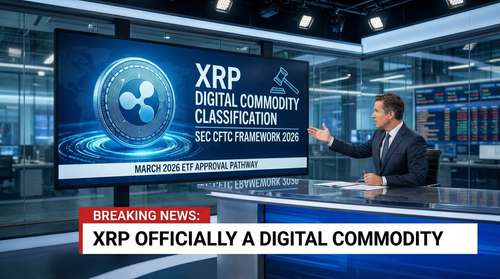
In a landmark shift that promises to reshape the global financial landscape, the U.S. Securities and Exchange Commission (SEC) and the Commodity Futures Trading Commission (CFTC) have jointly issued a comprehensive new taxonomy for digital assets. At the heart of this sweeping crypto regulatory clarity news is the formal XRP digital commodity classification, a move that places the asset on the identical regulatory footing as Bitcoin and Ethereum. Issued on March 17, 2026, the 68-page interpretative release permanently ends years of contentious litigation and opens the floodgates for widespread institutional adoption.
Breaking Down the SEC CFTC Crypto Framework 2026
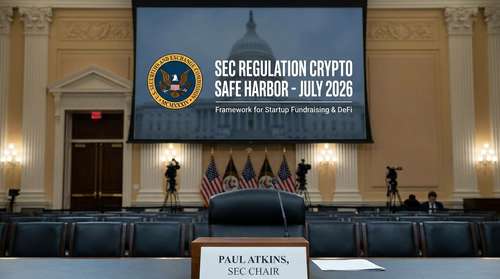
Under the stewardship of SEC Chairman Paul Atkins, the newly finalized SEC CFTC crypto framework 2026 categorizes the market into five distinct asset types: digital commodities, digital collectibles, digital tools, payment stablecoins, and digital securities. By explicitly placing XRP among the 16 recognized digital commodities, regulators have acknowledged that its value stems from network utility and market supply-and-demand dynamics—not from the managerial efforts of a centralized corporate entity.
"This is what regulatory agencies are supposed to do: draw clear lines in clear terms," Atkins noted in the joint release. This definitive stance signals a stark pivot away from previous administrations' reliance on regulation by enforcement, offering the exact compliance blueprint that Wall Street asset managers have been demanding.
The Five Pillars of Digital Asset Regulation
The 68-page framework does more than just isolate XRP; it provides a comprehensive map for the entire digital economy. The five categories established ensure that developers and investors know exactly which jurisdictional lines they are crossing. Only digital securities will remain under the strict purview of the SEC, while the CFTC assumes the bulk of oversight for assets like XRP, Solana, and Cardano. This delineation drastically reduces the compliance costs for cryptocurrency exchanges operating within the United States.
Ripple vs SEC Final Ruling and Leadership Shakeups
For Ripple Labs and its global community of supporters, this classification is the ultimate vindication. The regulatory clarity builds upon the momentum of the Ripple vs SEC final ruling, effectively neutralizing any residual fears of future appellate litigation regarding the asset's core status. Ripple Chief Legal Officer Stuart Alderoty publicly celebrated the milestone, emphasizing that the token has officially shed the security label that has suppressed its institutional integration since December 2020.
The agency's pivot toward clear guidelines has not come without internal friction. In a surprising development just one day prior to the framework's release, the industry witnessed a high-profile SEC enforcement director resignation. Margaret A. Ryan abruptly stepped down from her position on March 16 after merely six months on the job, paving the way for Sam Waldon to step in as Acting Director. Analysts view this swift departure as a clear indicator of the agency's dramatic cultural shift, aggressively moving away from an era characterized by hostile crypto litigation toward one of structural compliance.
Institutional Inflows and the XRP ETF Approval Deadline
Perhaps the most immediate consequence of XRP's newly minted commodity status is the rapid acceleration of institutional investment vehicles. Because commodity regulation under the CFTC is structurally different and considerably more streamlined than strict securities compliance under the SEC, major banks and hedge funds are now greenlit to custody and trade the token without fearing regulatory reprisal.
Unlocking Wall Street Capital
The transition from a contested asset to a recognized digital commodity is already reshaping order books. Financial institutions that were previously sidelined by strict internal compliance mandates are suddenly free to allocate capital to XRP. Furthermore, this regulatory shift directly validates the mechanics of the XRP Ledger, recognizing its utility as a decentralized payment and transfer network rather than an investment contract tied to the profitability of Ripple Labs.
The market is now laser-focused on the upcoming XRP ETF approval deadline. With spot XRP ETFs already live and boasting roughly $1.44 billion in cumulative inflows, the SEC is actively reviewing the final batch of prospective applications, with a hard decision deadline set for March 27, 2026. Industry experts broadly anticipate that the recent digital commodity classification will act as the ultimate catalyst, compelling the SEC to greenlight the remaining trusts and fully integrate XRP into traditional equity markets.
XRP Price Prediction March 2026: What's Next for the Market?
The immediate market reaction to the joint framework was electric. Following the announcement, XRP trading volume surged dramatically across major exchanges, and the token spiked to $1.60 before macroeconomic factors—namely a recent Federal Reserve interest rate decision—caused a brief pullback to the $1.46 range.
As liquidity providers tighten spreads and derivative platforms launch new perpetual pairs referencing the CFTC commodity framing, the overarching XRP price prediction March 2026 remains heavily bullish. Market analysts suggest that if the final ETF applications are approved by the late March deadline, the resulting institutional supply shock could provide the necessary momentum to push the asset confidently past the psychological $2.00 resistance level.
Ultimately, the joint agency framework represents more than just a bureaucratic update. It is a fundamental rewiring of the American crypto marketplace. By cementing XRP's status alongside the industry's heaviest hitters, regulators have successfully closed a turbulent chapter of legal ambiguity, replacing it with a concrete foundation for the next generation of digital finance.