In an unprecedented pivot that has sent shockwaves through traditional finance, Wall Street is tearing down its remaining barriers to digital assets. The biggest bombshell to drop at this week's Consensus conference in Miami is the formalization of the JPMorgan Bitcoin mortgage framework. After years of dismissing cryptocurrency as a speculative bubble, the world's largest banking institutions are actively accepting Bitcoin as premium collateral for real estate lending. This shift marks a definitive turning point for global markets.
The Era of Crypto Real Estate Finance Begins
Just 18 months ago, JPMorgan Chase leadership publicly dismissed Bitcoin as a "joke asset" and a "pet rock". Today, the narrative has flipped entirely. The financial titan now allows clients to leverage their digital wealth through a structured lending program. Instead of forcing investors to liquidate their portfolios—triggering massive capital gains taxes—the bank facilitates loans against these holdings.
CEO Jamie Dimon famously defended clients' right to buy cryptocurrency while simultaneously comparing it to smoking and calling it a "Ponzi scheme" in past years. Yet, client demand and the undeniable performance of digital assets have forced a pragmatic business shift. High-net-worth clients holding millions in decentralized assets were simply taking their business to crypto-native lending platforms. Wall Street realized that losing out on this massive lending opportunity was a tactical error.
The integration proves that crypto real estate finance is no longer a fringe concept but a highly viable wealth management tool. Using approved third-party custodians to hold the digital assets securely, the bank originates traditional fiat mortgages. It is a win-win scenario for individuals who want to maintain their market exposure while unlocking liquidity to purchase tangible property.
Consensus 2026 News: Wall Street Capitulates
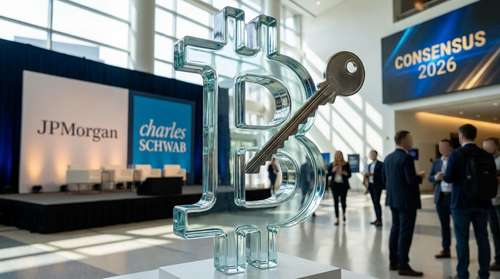
The reality of this transformation took center stage during the explosive Consensus 2026 news cycle in Miami. Industry leaders highlighted the stark contrast between Wall Street's historical hostility toward crypto and its current rush to build infrastructure.
Speaking to a packed audience of 20,000 attendees on May 6, Eric Trump pointed out the undeniable irony of banks that once ostracized crypto companies now racing to underwrite Bitcoin home loan collateral. He noted that traditional financial institutions have effectively realized they lost the battle against digital currency. When the financial elite realize they are losing market share to decentralized alternatives, they adapt rapidly. The current Bitcoin banking 2026 landscape shows traditional firms are choosing integration over isolation, prioritizing client demands over past skepticism.
Expanding Charles Schwab Crypto Services
JPMorgan isn't acting in a vacuum. Major brokerage firms are aggressively expanding their digital footprints to retain capital. Charles Schwab crypto services have evolved significantly beyond basic ETF access and thematic equity investing. The brokerage giant recognizes that modern investors view digital assets as foundational portfolio components rather than speculative bets.
By building out comprehensive crypto infrastructure alongside traditional equities, firms like Schwab and Bank of America's Merrill Lynch are signaling that decentralized finance is permanently entwined with conventional markets. Clients want unified dashboards where they can view their treasury bills, mutual funds, and Bitcoin holdings side-by-side. The traditional gatekeepers are finally providing the keys.
How Bitcoin Home Loan Collateral Actually Works
How exactly does a crypto-backed mortgage function in practice? It relies on robust custody solutions and strict over-collateralization parameters.
- Secure Custody: The borrower transfers their digital holdings to an institutional-grade, regulated custodian like Coinbase Custody or Anchorage, rather than the originating bank directly holding the private keys.
- Loan-to-Value (LTV) Ratios: Banks typically issue fiat loans representing 40% to 60% of the asset's market value. This conservative ratio buffers the lender against the notorious volatility of crypto markets.
- Margin Mechanisms: If the asset's price drops significantly, borrowers receive a margin call. They must either post additional collateral or face partial liquidations to maintain the required LTV ratio.
Institutional Bitcoin Adoption Reaches the Housing Market
What we are witnessing is the final stage of institutional Bitcoin adoption. When a tier-one bank integrates a decentralized protocol into its most traditional product—the home mortgage—it permanently alters the asset's risk profile in the eyes of regulators and retail investors alike.
Furthermore, this adoption creates a fascinating dynamic for local housing markets. Real estate has always been an illiquid, slow-moving asset class. By collateralizing highly liquid, globally traded digital assets to fund local property purchases, banks are merging the fastest-moving financial technology with the oldest form of wealth. For the broader economy, this means a massive injection of previously sidelined capital into the real estate sector. Borrowers can leverage their digital upside to secure physical shelter, hedging their bets across both physical and digital realms.
A JPMorgan Bitcoin mortgage would have sounded like science fiction in 2020. Today, it is a standard offering for clients looking to diversify into real estate without selling their best-performing assets. The stigma has evaporated, replaced by aggressive competition among lenders to capture the immense wealth generated by the crypto ecosystem.
As we move deeper into the year, the race to provide sophisticated crypto financial products will only intensify. Wall Street tried to ignore the digital asset revolution, but capital efficiency and client demand always dictate market direction. The bridge between the blockchain and the traditional banking sector is fully operational, and the housing market is its first major thoroughfare.