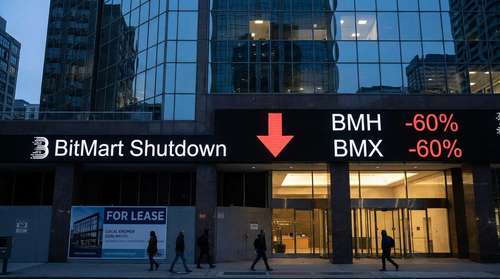

The cryptocurrency market is facing a brutal reality check. Following a highly anticipated policy update from the U.S. central bank on June 18, risk assets hit a wall the very next morning. The Bitcoin price crash June 2026 has officially begun, catalyzed by a surprisingly hawkish posture from the new Federal Reserve Chair. By Friday, June 19, the market witnessed a staggering reversal of its recent steady gains, sending shockwaves through derivative exchanges and altcoin networks alike.
The Kevin Warsh Federal Reserve: A Hawkish Wake-Up Call
The Kevin Warsh Federal Reserve made its highly anticipated debut this week, and the resulting message was unambiguous. Going into Wednesday's FOMC interest rate decision, many institutional investors harbored hopes that the central bank might signal a softer monetary approach, perhaps justifying preemptive rate cuts based on incoming AI-driven productivity gains. Warsh completely shattered that optimistic narrative.
While the committee delivered the widely expected decision to hold the benchmark policy rate steady at 3.50% to 3.75%, the accompanying rhetoric terrified risk markets. Warsh explicitly stripped the policy statement of its predictable forward guidance, emphasizing that the central bank remains fiercely committed to price stability while outright de-emphasizing the labor side of the Fed's dual mandate. Furthermore, Warsh announced the formation of five internal task forces designed to overhaul the Fed's communication and inflation framework.
By effectively ending the era of predictable, market-soothing liquidity promises, he signaled that the central bank will rely heavily on independent market price discovery rather than pacifying Wall Street. This hawkish shift immediately dismantled the dollar debasement trade—a macroeconomic strategy that had recently fueled rallies in gold and Bitcoin on the assumption that a captured Fed would tolerate higher inflation.
Crypto Liquidations Today: $180M Erased in 60 Minutes
The immediate fallout in the digital asset sector was catastrophic for leveraged traders. As the hawkish reality set in across Asian and early European trading hours, order books thinned out dramatically. Bitcoin, which had been coasting comfortably higher earlier in the week, slipped below the psychological $65,000 barrier. The descent quickly accelerated into a free-fall, sending Bitcoin under 63k and triggering a cascading wave of forced liquidations.
According to real-time derivatives data, the sudden flush generated massive crypto liquidations today, erasing more than $180 million in leveraged contracts in a span of just 60 minutes. The overwhelming majority of these wiped-out accounts were long positions held by retail and institutional traders who had aggressively front-run a potential dovish pivot. When a trader's margin account can no longer support their open positions due to rapid price drops, exchanges forcibly close these contracts at market price. This mechanical selling pressure compounds the downward momentum, creating a vicious cycle that pushed Bitcoin directly into the $62,000 support zone.
The Ripple Effect Causes a Severe Ethereum Price Drop
While Bitcoin's violent slide dominated mainstream financial headlines, the altcoin sector suffered proportionally heavier losses. The subsequent Ethereum price drop below $1,700 broke a multi-month structural support channel, sparking intense panic among decentralized finance participants. With the $1,800 sentiment marker shattered, leveraged staking positions and heavily margined protocols faced an immediate, brutal stress test. When macro liquidity tightens—a reality the market is now aggressively pricing in—high-beta digital assets like Ethereum traditionally face immense downward pressure.
Crypto Market Analysis: Can the $62K Floor Survive?
From a technical perspective, the market is now testing one of its most critical historical defense lines. Our current crypto market analysis shows that the $62,000 to $63,000 zone serves as a massive liquidity cluster and psychological barrier. This area previously held strong during the shakeouts earlier this year, but the fundamental macroeconomic backdrop has now entirely shifted.
Traders are grappling with an environment where the perceived central bank safety net appears drastically diminished. Warsh's refusal to spoon-feed forward guidance means institutional volatility will likely remain elevated throughout the summer. Spot Bitcoin ETFs have also reflected this macro hesitation, seeing notable outflows over the past week as money managers rotate capital into safer havens. If Bitcoin fails to maintain this crucial $62,000 floor, technical analysts warn that the next major demand zone does not materialize until the upper $50,000s, opening the door for a much deeper and protracted correction.
Navigating the New Monetary Regime
The brutal market action on June 19 highlights a harsh truth for cryptocurrency investors: digital assets remain fiercely tethered to traditional macroeconomic forces. The days of blindly buying the dip in anticipation of impending rate cuts are effectively over. With the central bank establishing a tougher, reform-minded regime under its new leadership, the speculative excess that characterized earlier market cycles is being violently flushed out.
Investors must now adjust to a landscape where global capital flows favor risk-adjusted yields over highly leveraged speculative bets. Until core inflation data definitively aligns with the Fed's strict 2% target, the ceiling for digital assets may remain heavily capped. Market participants should prepare their portfolios for continued turbulence as the global financial system digests the new rules of monetary engagement dictated by Chair Warsh.