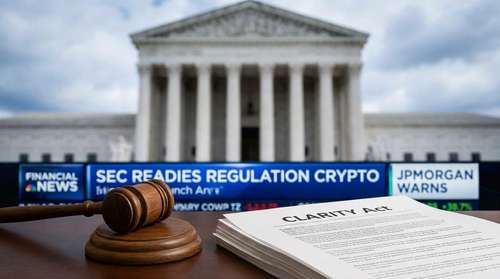

In a watershed moment for the digital asset industry, the U.S. Securities and Exchange Commission (SEC) has officially approved the 19b-4 filings for eight major spot Ethereum ETFs. This surprise decision, delivered late Thursday, marks a massive pivot in SEC crypto regulations and clears a significant regulatory hurdle for institutional giants like BlackRock and Fidelity to list Ether-based investment products. As the Ethereum ETF approval reverberates through the market, analysts are already revising their ETH price prediction 2024 models in anticipation of billions in potential inflows.
A Massive Regulatory Pivot for Crypto
The SEC's approval of the 19b-4 forms represents a historic shift in the agency's stance toward cryptocurrencies beyond Bitcoin. Just a week ago, market sentiment was bearish, with Bloomberg analysts pegging the odds of approval at a mere 25%. However, a sudden request from the SEC for exchanges to accelerate their filings flipped the narrative, signaling that spot Ether ETF news was about to turn positive.
While this approval is a critical milestone, it is important to understand the nuance. The SEC has approved the 19b-4 rule changes, which allow the exchanges to list these products. However, the issuers still require approval on their S-1 registration statements before trading can officially commence. Industry experts anticipate this second phase could take weeks or months, potentially positioning the actual launch for later in the summer of 2024.
The "Staking" Concession
To secure this regulatory green light, issuers had to make a notable concession: the removal of staking rewards. Major applicants, including Fidelity and ARK 21Shares, amended their filings to explicitly state that the Ether held by the trusts would not be staked. This move likely addressed SEC concerns regarding whether staking services constitute an investment contract under securities laws.
Institutional Giants Enter the Ethereum Arena
The approval covers filings from eight heavyweight issuers: BlackRock, Fidelity, Grayscale, Bitwise, VanEck, ARK 21Shares, Invesco Galaxy, and Franklin Templeton. The entry of the BlackRock Ethereum ETF is particularly significant, as the world's largest asset manager has a near-perfect record with ETF applications and was a primary driver behind the success of spot Bitcoin ETFs earlier this year.
This development cements institutional crypto adoption as a dominant theme for 2024. With Ethereum now effectively recognized as an investable commodity by the regulator, traditional financial advisors and institutional allocators have a compliant vehicle to gain exposure to the leading smart contract platform. The approval validates Ethereum's status and could drastically reduce the reputational risk for firms looking to enter the crypto market news today.
Market Reaction and ETH Price Prediction 2024
The market responded swiftly to the news, with Ethereum surging past key resistance levels. The approval has ignited fresh bullish sentiment, leading many analysts to update their ETH price prediction 2024 targets. Standard Chartered, for instance, has previously suggested that ETF approvals could propel Ether to $8,000 by year-end, driven by the same supply-demand dynamics that fueled Bitcoin's rally post-ETF launch.
Unlike Bitcoin, Ethereum has a mechanism where a portion of transaction fees are burned, reducing supply. Coupled with the new demand shock from ETFs, this deflationary pressure could create a perfect storm for price appreciation. However, traders should remain cautious of short-term volatility as the market digests the gap between the 19b-4 approval and the eventual S-1 sign-off.
What Comes Next for Investors?
All eyes now turn to the Division of Corporation Finance, which will review the S-1 registration statements. This process involves a back-and-forth dialogue on disclosures and risk factors. While there is no fixed deadline for this phase, the political and regulatory winds have clearly shifted in favor of approval.
For investors, this period offers a window to assess their portfolios before the ETFs go live. The Ethereum ETF approval is not just a win for one asset; it signals a broader acceptance of blockchain technology in the U.S. financial system. As the industry awaits the final bell to ring for trading, the crypto landscape has undeniably changed forever.