
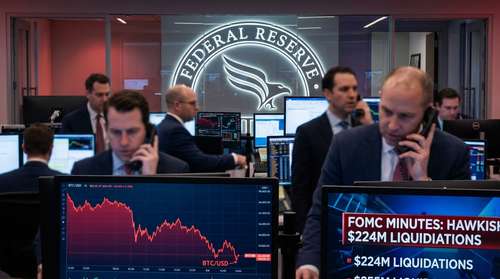
The cryptocurrency market faced a brutal reality check on Wednesday as Bitcoin (BTC) plummeted below the psychological $66,000 threshold, sending shockwaves through the broader digital asset landscape. The sharp downturn was precipitated by the release of the Federal Reserve's latest meeting minutes, which revealed a surprisingly hawkish stance from policymakers regarding interest rates. This macroeconomic jolt triggered a cascade of liquidations, wiping out over $224 million in leveraged positions within a single 24-hour window, leaving bullish traders scrambling for cover.
Fed Minutes Spark 'Rate Hike' Fears
The primary catalyst for the sudden market correction was the release of minutes from the Federal Open Market Committee's (FOMC) January 27-28 meeting. released on February 18, 2026. While the market had largely priced in a "higher for longer" narrative, investors were caught off guard by the intensity of the inflation debate inside the central bank.
According to the documents, several officials expressed distinct unease about sticky inflation data, with some even floating the possibility of resuming rate hikes if price pressures fail to abate toward the 2% target. This discussion of a potential "two-sided" policy path—where rates could go up as well as down—shattered the market's fragile optimism for imminent easing. The mere mention of rate hikes, a scenario many traders had written off, strengthened the U.S. dollar and immediately sapped appetite for risk assets like Bitcoin.
Inflation Concerns Persist
Policymakers noted that while the labor market shows signs of stabilizing, inflation remains stubbornly elevated above the Fed's comfort zone. The minutes highlighted that "upward adjustments" to the federal funds rate might be necessary if disinflation progress stalls. For crypto investors, who thrive on liquidity and cheap capital, this signal suggests that the monetary tightening cycle may not be as firmly in the rearview mirror as previously hoped.
Liquidation Cascade: Bulls Take a $162M Hit
The market's reaction was swift and unforgiving. As Bitcoin slipped from its intraday highs of around $68,500 to trade near $66,200, leverage was flushed out of the system with violent efficiency. Data from CoinGlass indicates that total crypto market liquidations surged to approximately $224 million in just 24 hours.
Long positions bore the brunt of the damage, accounting for roughly $162 million of the total wiped out. Traders betting on a breakout above $70,000 were caught on the wrong side of the trade as stop-losses triggered a domino effect of selling pressure. The pain wasn't limited to Bitcoin; major altcoins like Solana (SOL) and XRP led losses among the top ten assets, reacting even more sensitively to the liquidity-draining news.
This rapid repricing has severely impacted investor sentiment. The Crypto Fear and Greed Index has plunged into "Extreme Fear" territory, registering a reading of 9—a stark contrast to the optimism seen just weeks prior. This level of fear often indicates capitulation but can also signal a potential contrarian buying opportunity for those with high risk tolerance.
Critical Support Levels to Watch
Technical analysts are now laser-focused on whether Bitcoin can defend the $66,000 level on a daily closing basis. This price point represents a critical support zone; a decisive break below it could open the floodgates for a deeper correction.
Market watchers are identifying $64,000 as the next immediate line of defense. If bears manage to push the price below this channel, the door could open for a retest of the psychological $60,000 mark. Conversely, for the bulls to regain control, Bitcoin needs to reclaim the $67,000 level and consolidate above it to invalidate the current bearish structure.
Macroeconomic Headwinds and Leadership Uncertainty
Beyond the immediate price action, the crypto market is grappling with broader macroeconomic uncertainty. The potential nomination of Kevin Warsh as the next Fed Chair by President Trump has added another layer of complexity. Warsh is perceived by some as an inflation hawk, and his potential appointment could signal a departure from the current policy consensus, further complicating the outlook for rate cuts in 2026.
As the market digests the implications of the Fed's stance, volatility is expected to remain high. With the "Fed put" seemingly off the table for now, crypto assets are left to trade on fundamental drivers and liquidity flows, both of which are currently facing significant headwinds.