Bitcoin (BTC) has emphatically reclaimed the psychological $70,000 milestone, signaling a decisive shift in market sentiment as traders react to a double-header of bullish macroeconomic and regulatory news. The world's largest cryptocurrency surged past the key resistance level early Saturday, February 14, 2026, fueled by fresh data showing U.S. inflation has cooled significantly and renewed momentum behind the landmark CLARITY Act currently under debate in the Senate.
Inflation Falls to 2.4%, Fueling Rate Cut Hopes
The primary catalyst for the weekend rally was the release of the January 2026 Consumer Price Index (CPI) report by the Bureau of Labor Statistics on Friday. The data revealed that annual inflation in the United States has cooled to 2.4%, the lowest reading since May 2025 and slightly below economist forecasts of 2.5%.
This "Goldilocks" reading suggests that the Federal Reserve's aggressive monetary policy—and the broader economic strategy under the Trump administration—is finally taming stubborn price pressures. Core CPI, which excludes volatile food and energy costs, also moderated, settling at 2.5%. For crypto markets, the implication is clear: the path is now wide open for the Federal Reserve to implement interest rate cuts as early as March. Lower rates typically weaken the dollar and drive capital toward risk assets like Bitcoin.
"The 2.4% print is the green light the market has been waiting for," said a senior analyst at CoinDesk. "With inflation near the Fed's 2% target, the argument for keeping rates restrictive is evaporating. Liquidity is about to return to the system, and Bitcoin is front-running that reality."
Senate Debate heats up over 'CLARITY Act'
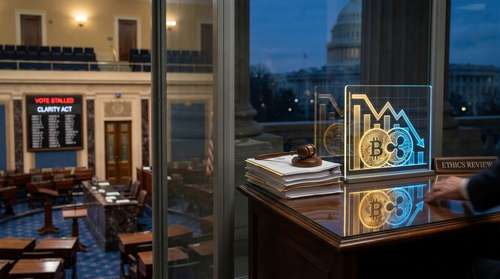
Beyond the macroeconomic tailwinds, the crypto market is pricing in a potential regulatory breakthrough. The U.S. Senate is actively debating the Digital Asset Market CLARITY Act (Crypto-Asset Legal Framework and Regulatory Innovation Transparency Act), a bill that promises to finally end the "regulation by enforcement" era.
The legislation, which passed the House in mid-2025, aims to establish clear jurisdictional lines between the Securities and Exchange Commission (SEC) and the Commodity Futures Trading Commission (CFTC). Crucially, it creates a distinct asset class for digital commodities, a move that would likely classify Bitcoin and Ethereum firmly outside the SEC's securities net.
Treasury Secretary Scott Bessent added fuel to the fire on Friday, explicitly urging Congress to pass the bill "this spring." Speaking to reporters, Bessent argued that the legislation would provide "great comfort to the market" and ensure American competitiveness in the digital asset space. His comments have been interpreted as a strong signal that the White House is ready to sign the bill into law, potentially before the mid-term election cycle heats up later this year.
Key Provisions of the CLARITY Act
The act is viewed as a game-changer for institutional adoption. Its key pillars include:
- Jurisdictional Certainty: Defines clear criteria for when a token is a security versus a commodity.
- Stablecoin Framework: Allows state-qualified issuers to operate under federal standards, potentially unlocking billions in liquidity.
- Consumer Protection: Mandates proof-of-reserves and strict custody requirements for exchanges, preventing another FTX-style collapse.
Market Sentiment Shifts from Fear to Greed
The resurgence to $70,000 comes after a shaky start to 2026, where Bitcoin dipped as low as $60,000 earlier in February amid "Extreme Fear" sentiment. However, the quick reversal has caught bears off guard. On-chain data indicates that whales have been accumulating aggressively during the dip, with over $350 million in BTC withdrawn from exchanges in the last 48 hours alone.
Institutional flows are also rebounding. Spot Bitcoin ETFs, which saw outflows earlier in the month, recorded their highest single-day inflow of the year on Friday following the CPI release. This suggests that traditional finance (TradFi) players are positioning themselves for a "risk-on" environment driven by cheaper capital and regulatory clarity.
What's Next for Bitcoin in February 2026?
As Bitcoin stabilizes above $70,000, analysts are eyeing the all-time highs of 2025 as the next logical target. If the CLARITY Act passes the Senate Banking Committee this month, it could serve as a historic catalyst, potentially pushing BTC toward the elusive $100,000 mark by Q2 2026.
However, risks remain. The Senate debate is contentious, with some lawmakers pushing for stricter amendments regarding DeFi (Decentralized Finance) and privacy coins. Additionally, while inflation has cooled, any surprise uptick in February's data could derail the Federal Reserve's rate cut timeline.
For now, the combination of cooling inflation and the prospect of a defined U.S. crypto rulebook has created a perfect storm for bulls. As the Senate resumes debate next week, all eyes will be on Washington—and the charts.